


Beware: the 8 dishes you might prefer not to have on your plate in Spain
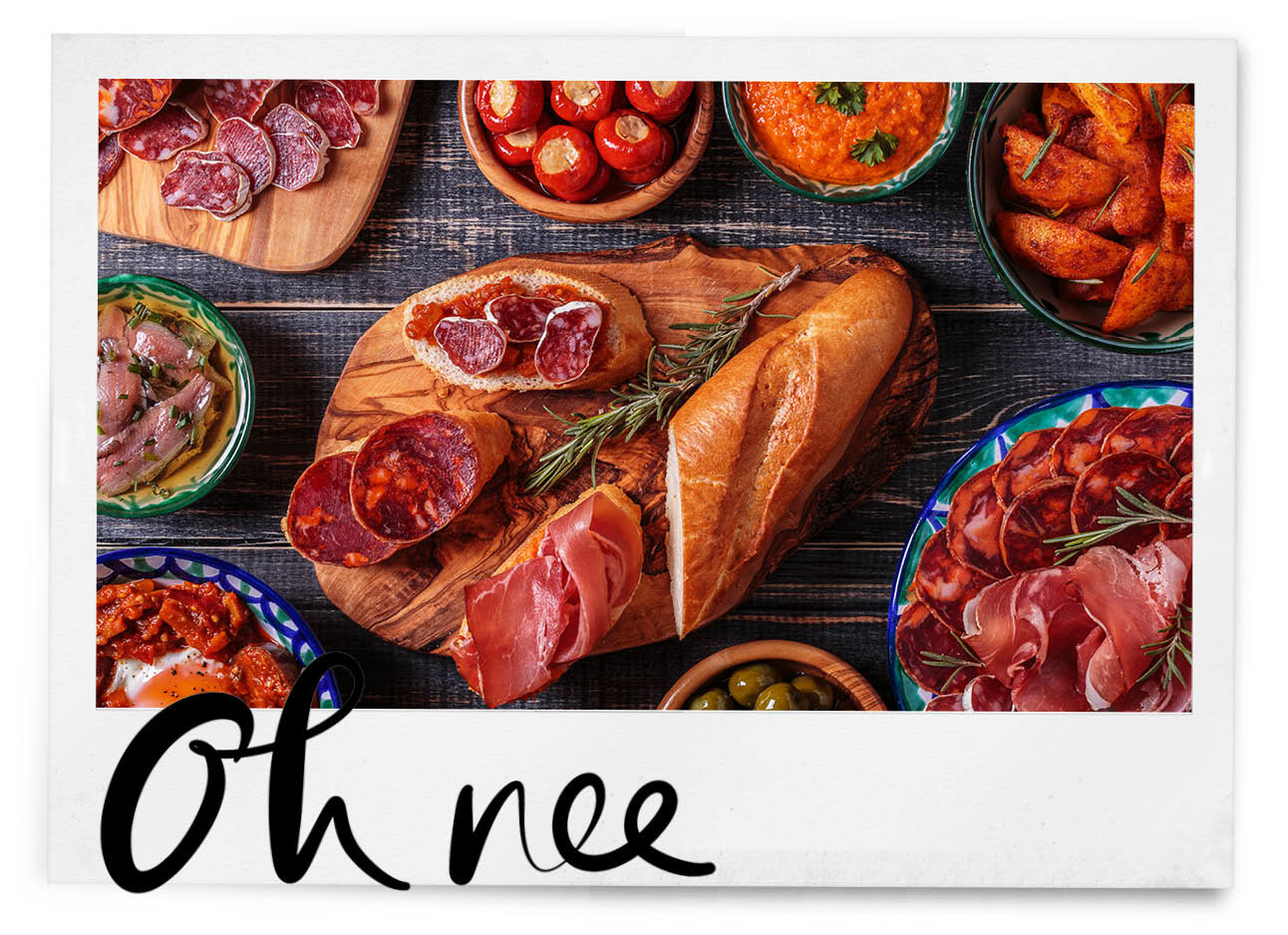
Come on boys and girls, off to Spain. Bring on the Rioja, because we could definitely enjoy a glass (or two) of that on the terrace. By the way, you might want to do some research before you open the menu at the Spaniards. Before you know it, you might be biting into a certain sausage or a bull's testicle. Yes, that bull's testicle. Our neighbors from FavorFlav suggest 8 dishes that you might prefer to skip. In the category: know before you go.
Do you find paella exotic already? Then memorize the following Spanish dishes, because before you know it, you’ll have bull testicles, pig ears, and rooster combs on your plate. Thank us later!
Criadillas
Bull testicles. For Ferdinand the Catholic (1452-1516), the Viagra of his time. He devoured them to keep up sexually with his young second bride. That they have that effect is not scientifically proven. But you know, try it yourself. In the north of Spain, they are served as tapas, with a spicy vinaigrette.
Caracoles
It's funny that France always gets away with the snail thing, because especially in Spain, they are very popular. The north is particularly known for snail preparation, but in southern Seville, they can also do something with it. In May and June, the little snails are available everywhere: boiled in a pot of water to which bags of herbs have been added. Traditionally, you order a cold glass of beer with it. That should work, right?
Crestas de gallo
Rooster combs then. It’s a real delicacy here. You mainly find them around Cuenca and Zamora, where the cartilage-like combs usually end up in a stew. They always look like rooster combs in there, which is fair, but also, um, quite off-putting.
Zarajos
For the diehards among us, we stay a little longer in Cuenca for another local delicacy: zarajos. These are marinated and rolled sheep intestines around sticks. They are fried in olive oil or roasted in the oven. A typical case of ‘for the acquired taste’. In other Spanish regions, you find similar dishes: madejas in Aragón and embuchados in La Rioja. Rolled sheep intestines then. Don’t forget.
Morcilla
A typical Spanish delicacy is blood sausage. The base material is pig's blood. You also find all sorts of other things in it. Rice, often, and onions and lard. And depending on the region, all sorts of other things: pine nuts, anise, hazelnuts, ginger, cumin, pumpkin, cinnamon, sugar. That all sounds very tasty and it is of course. In moderation.
Oricios
Someone must have fished a sea urchin and thought: let's taste it. That person must have realized that putting spikes in your mouth is a bad idea and cut it in half. There he promptly encountered the bright orange inside. And still, that person did not respect the wish of the animal. We mean: if your outside consists of spikes and your inside is bright orange, then all signals should be red, right? But Pedro (or Carmen) didn’t care and so you can enjoy the salty orange tongues (which are actually the animal's genitals, but that aside) on the coasts of Spain – in Asturias or Galicia on the Atlantic Ocean, but just as well in Catalonia on the Mediterranean Sea.
Orejas
In Spain, nothing is wasted and that also applies to the ears of the pig (and other animals). Are they tasty? Well, if you like them… And they do in Madrid. Hundreds of bars and restaurants know just as many ways to share their love for the fried ear.
Gallinejas
Also typically Madrilenian are gallinejas: the entrails of the lamb. Leftovers, originally. Intestines, stomach, sweetbreads, the whole inside of the lamb is fried in its own fat and served on a bed of… fries. And so it all turns out well. Buen provecho!
Text: FavorFlav


