


Science says: no one is 100 percent straight
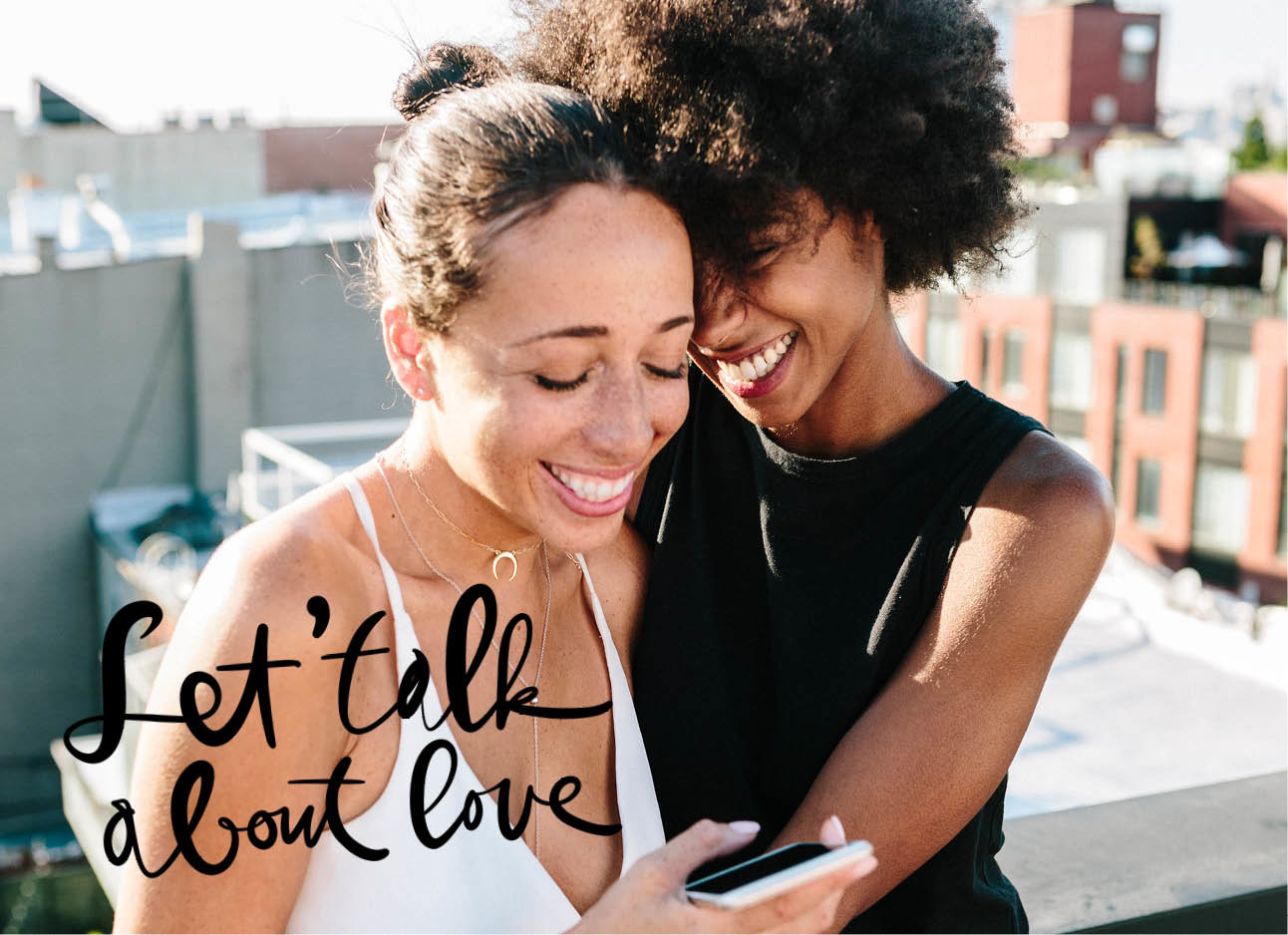
Well, how could it be otherwise. Today is the Canal Parade of Amsterdam Pride (at the time of publication, I am dancing on a houseboat on the Prinsengracht, so much fun), so I wanted to talk to you about sexuality. About all kinds of sexualities. Because today is of course a day to celebrate love, love for everyone. I thought it was time to dive into the books (well, books, the Great Oracle a.k.a. Google) to find out exactly how our sexuality works. And well, many scientists agree: no one is a hundred percent heterosexual.
This idea was first made public in 1948, when Alfred Kinsey wrote ‘Sexual behavior in the human male’. According to his ideas, the Kinsey scale was born: a scale from 1 to 9, indicating how someone experiences their sexuality. 1 is completely heterosexual, 9 is completely homosexual. In between are different degrees of bisexuality – in 1948 these were the only three sexualities they distinguished. Then we also have a tenth variable, the x, which stands for asexuality. Sounds a bit black-and-white now and it is, sexuality can't really be defined by a number, but you can imagine that this was revolutionary in 1948. It meant a bit of the end of black-and-white thinking in sexual science. Sexologists today find that this Kinsey scale is far too simplistic. I agree with that, but for 1948 I indeed find it progressive.
But we are of course living in 2019 now, so it's time for new research, and that came about a year ago in March 2018. And it also turned out from that: no one is a hundred percent heterosexual. Researcher Ritch C. Savin-Williams (from Cornell University) wrote a book about it: ‘Mostly Straight: Sexual Fluidity Among Men’. Although the title suggests otherwise, female sexuality is also involved. His research showed that especially younger generations are open to experimenting and that they get aroused by the same sex. He investigated this by showing porn to the test subjects and monitoring their pupils. Pupils would indeed be an indication of arousal.
Well, what turns out? Those pupils in women dilated in a man-woman situation, but also in a woman-woman situation. The same was true for men: a masturbating woman worked just as well as a masturbating man. However, Savin-Williams said in 2018 that it is now easier for women to openly express their sexual fantasies and preferences. According to him, this is still not the case for men, who face a stigma that heterosexual men do not dare to admit to each other that they sometimes get aroused by the same sex. Let's all start today to put an end to that. Love has no gender, happy Pride everyone.


