


Lightning to that
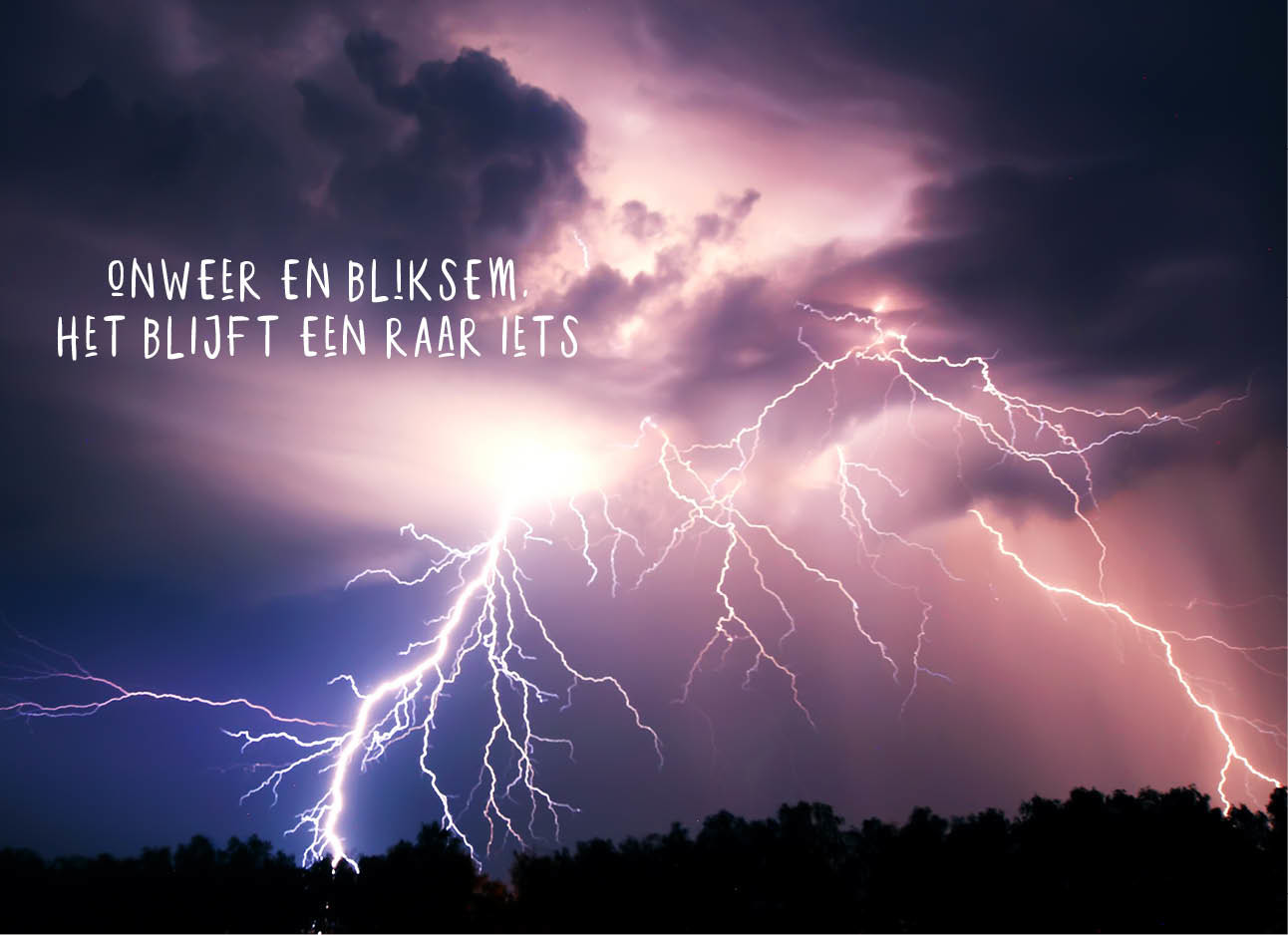
Mother Nature is angry. Furious. What am I saying? Seething. I don't know about you, but I can't remember the last time my windows shook this hard.
The KNMI is issuing warnings for orange code across the country, with heavy showers this morning and gusts of wind in the afternoon. While some people run outside with a big grin + camera, I'm more of the scaredy-cat type. Thunder, storms, and lightning, it's still a strange thing. Here are some reassuring (and less reassuring, uh, sorry) facts.
1. The chance that something really happens to you is actually very small. There. We've tackled that right away. According to the KNMI, on average one or two people die from lightning strikes in our country each year. For comparison: last year, 629 Dutch people died in traffic.
2. It's also a nice thought: lightning is rare in Europe. The place with the most strikes is Central Africa, particularly in Congo.
3. Does it start to thunder while you're outside? In principle, you only run the risk if you stand out from your surroundings. Where should you stay away from? Open fields, lakes, beaches, generally forests, and tall things like lamp posts and towers.
4. It's wise to not stand too close to the window in the house. And also not to touch washing machines for a while.
5. Okay, sorry, a bit less reassuring but not any less interesting: the temperature around a lightning bolt is 30,000 degrees Celsius and the voltage can reach millions of volts.
6. Uh... If you do get struck, statistically, there's a two out of three chance that you'll survive it.
7. An airplane is struck by lightning at least once every 10,000 flight hours. And that's no problem for them at all.
8. A vertical lightning bolt is up to five kilometers long, a horizontal one can be up to sixteen kilometers. Say whuttt.
9. Annually, the direct damage in the Netherlands due to lightning strikes amounts to one hundred million euros.


