


10x this is what you want to know about food
Say wine, snacks or haute cuisine and the gourmands of online food magazine FavorFlav know where to drink, how to eat it and what to cook. This time our chefs serve you: this is what you want to know about food.
Sometimes you come across facts that leave you stunned with amazement... Hilarious tidbits, unsavory trivia, things you can share when we cautiously start celebrating parties (with distance!) again after the lockdown; we love it!
Check out this list and marvel like we do at amazing inventions and remarkable things that turned out to be great in many cases. Do you know how Nutella came to be?!
1. Honey cannot spoil
Great, right? Then we are talking about honey in a jar from the store where nothing else has been added. Because it is a pure form of sugar that contains almost no water in its natural state, it is not a good breeding ground for bacteria and other microorganisms that cause spoilage. The sugars can crystallize, but putting the jar in a layer of hot water helps against that. And in the microwave without a lid? From my own experience and huge shock, I know that you have to be very careful that there is no metal form in the label, such as gold or silver letters and edges!
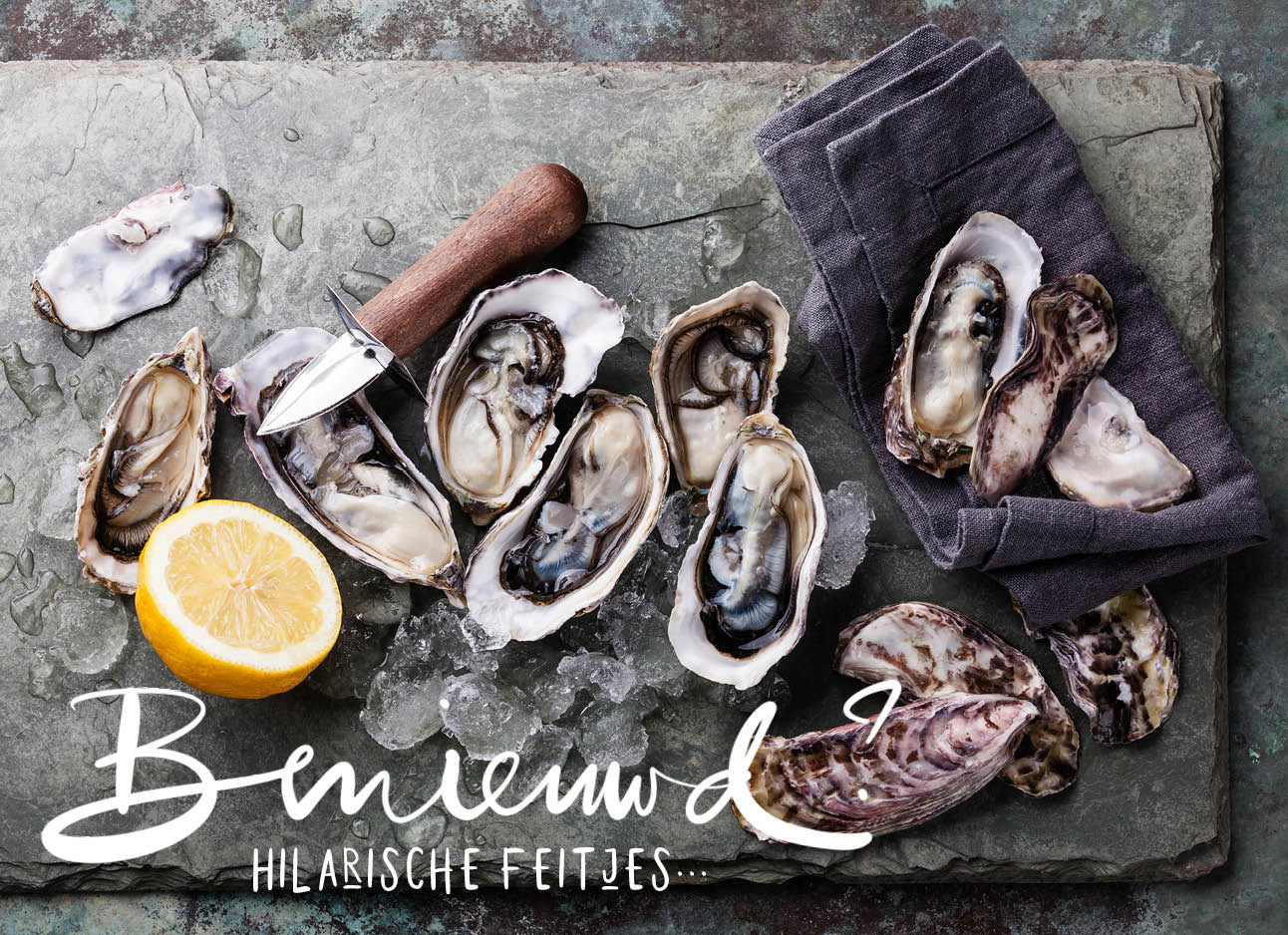
2. An oyster lives until the moment it comes off the shell
Knocking back half a dozen with a nice glass of white? Delicious! But know that these shellfish only die when that little muscle they are attached with is cut loose. And that’s a good thing, because a dead oyster can contain countless bacteria that can make you sick. So there should never be too much time between detaching the oysters and slurping them down.
3. Nutella was invented out of necessity during World War II
When food was rationed and there were obviously great shortages, cocoa was not readily available at all. Even right after the war, it was not easy to get cocoa and chocolate. That’s why Pietro Ferrero came up with a recipe with ground hazelnuts, sugar, and just a little bit of the exclusive cocoa. In 1946, the hazelnut paste was officially launched by the then newly established Ferrero company.
4. A yellow bell pepper is not a ripened red one
Or an orange one a half-ripened yellow… All colors of peppers come from different types of seeds and are therefore not one and the same plant. Not all green peppers are standard young reds, although red ones do start as green. But those from certain green pepper plants start green and stay green, no matter how long you wait. Red peppers are often more expensive than others because they need to hang on the plant longer to turn fully red.
5. Other (mammal) animals do not like spicy food
Except for one little creature: a special Chinese shrew species. Further: just us folks. It is a nearly entirely human form of masochism to want to eat plants that clearly want to be left alone in nature, just to feel that kick of victory over pain. Time and again. What mainly distinguishes us from other mammals, according to Yale researcher Dr. Paul Bloom? We love Tabasco.
6. Farmed salmon is pink due to colorants and they get pellets
Because consumers would likely leave whitish salmon in the supermarket's cooler, farmed salmon (which accounts for about sixty percent of global salmon consumption) gets a red powder in their feed, which makes the fish turn pink. However, this is not entirely unnatural. In the wild, the fish eat shrimp, which in turn have eaten algae that produce a substance called astaxanthin, causing those shrimp to be the first in this food chain to turn pink. The same applies to (wild) salmon for flamingos! They are also pink because they eat shrimp. The substance can also be synthetically produced from petroleum, and that is what the farmed fish get in their feed. That feed consists of pellets, which mainly contain soy, a portion of ground fish, and thus that red powder.
7. The inventor of the Pringles can is buried in one
In 1966 (!) Fredric Baur invented the Pringles can for the food company Procter & Gamble; those chips have been around for that long. Although people were initially not enthusiastic about chips that were all exactly the same, it would eventually become a huge success and the can is recognizable all over the world. Baur was so proud that he stated before his death in 2008 that his last wish was to be buried in a Pringles can. Which flavor? According to his children, there was only one appropriate: Original.
8. The tea bag exists due to incredible coincidence
We have written about this before, but it really belongs in this list: Thomas Sullivan wanted to send sample tea packages to potential customers, intending for them to brew it as loose tea. He carefully did this in small silk bags but without clear instructions. So they promptly dumped the whole bag into hot water, and thus the tea bag was born.
9. Those holes in your crackers are not for decoration
Fan of crackers with cheese at the drinks? (Who isn’t?!) Or ever been a child who starts to fuss about dinner around five o'clock in the afternoon, sweetened with a pack of mini crackers, ’look darling, all for you“? There’s a good chance you’ve never really thought about the hole pattern in those things, or thought they were purely decorative. That’s not the case. The dough is pricked before baking so that steam can escape and not too many air bubbles form. Cracker bakers also understand that people prefer their crackers to be as flat as possible, so that all those Johma salads and Chaource don’t immediately fall off.
10. McDonald’s fries did indeed taste different in the past
Child of the ’70s/’80s and already a fan of the fries back then? Have you always wondered why everything seemed different back then? In the case of McDonald's, that's true, although we don't necessarily want to say it was better back then. In 1990, McDonald's started frying their fries in vegetable oil, replacing the beef fat they had used until then – which was a good development on such a large scale worldwide.
Text: Favorflav


