


The most common mistakes made during squatting and how to do it right
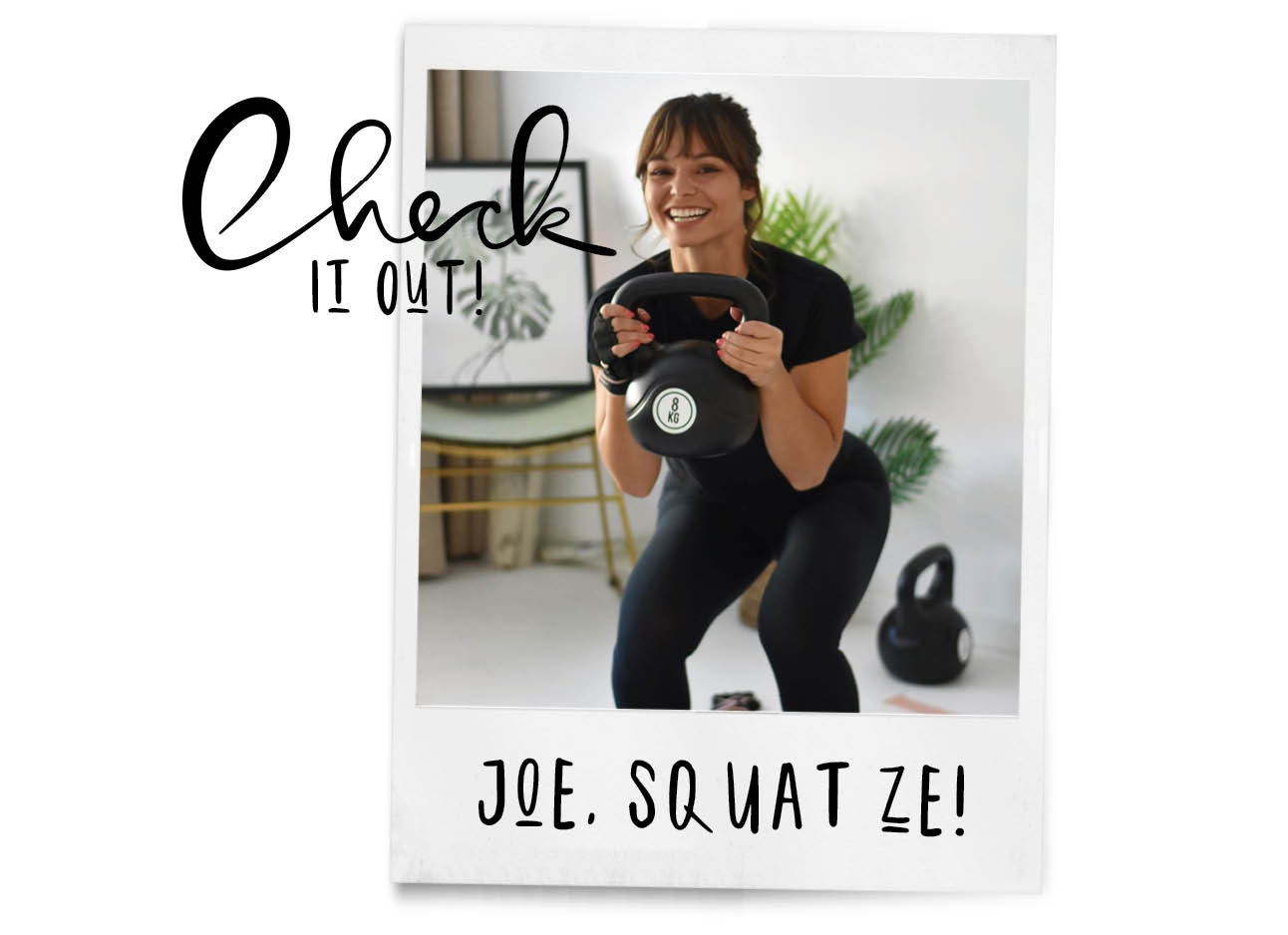
“Wow, Kiek, you are flexible, I am jealous!”, was one of the first things my trainer said to me. “Just make sure your knees don’t cave in.” Honestly, I think a squat is the simplest fitness exercise that is most often performed incorrectly.
‘Correct’ squats strengthen your legs and glutes, improve the mobility of your lower body, and keep your joints healthy. But, with ‘bad’ squats, you don’t activate the muscles you want at all and increase the risk of injuries. Yep, sitting on such an invisible stool turns out not to be so easy…
But no worries, by the end of this piece, you will know exactly how to squat comfortably and how to avoid mistakes. First of all: how are you going to stand?
1. Stand firmly.
2. Place your feet slightly wider than shoulder-width apart with your feet
turned about 15 degrees outward.
3. Engage your core. Brace yourself as if someone is going to hit you.
4. Look straight ahead and stand up straight!
5. Move your booty back and slowly sit down on the invisible stool. You can also practice with a real chair without sitting on it.
Pay attention to your knees
You may notice that your knees tend to cave in when you squat deeper. This may seem handy to go lower, but it puts too much pressure on your knees. Don’t do that. You actually want your knees to be slightly bent outward for a good squat. Keep your heels on the ground at all times.
How deep can/should you squat?
Your hips should be lower than your knees, but a deep squat requires extra mobility. Squat as low as you can while maintaining the correct form. Pay attention to the curve of your lower back; it should not be rounded. If it does, you are squatting too low.
P.S.: Squatting (and especially the question of what the correct technique is) remains a much-discussed topic in fitness. If you really want to dive hard into squats, follow @squatuniversity on Instagram. They show in chill videos how to find your ‘true strength’.
GO, SQUAT IT!


