


These are the inaccuracies in Dahmer on Netflix
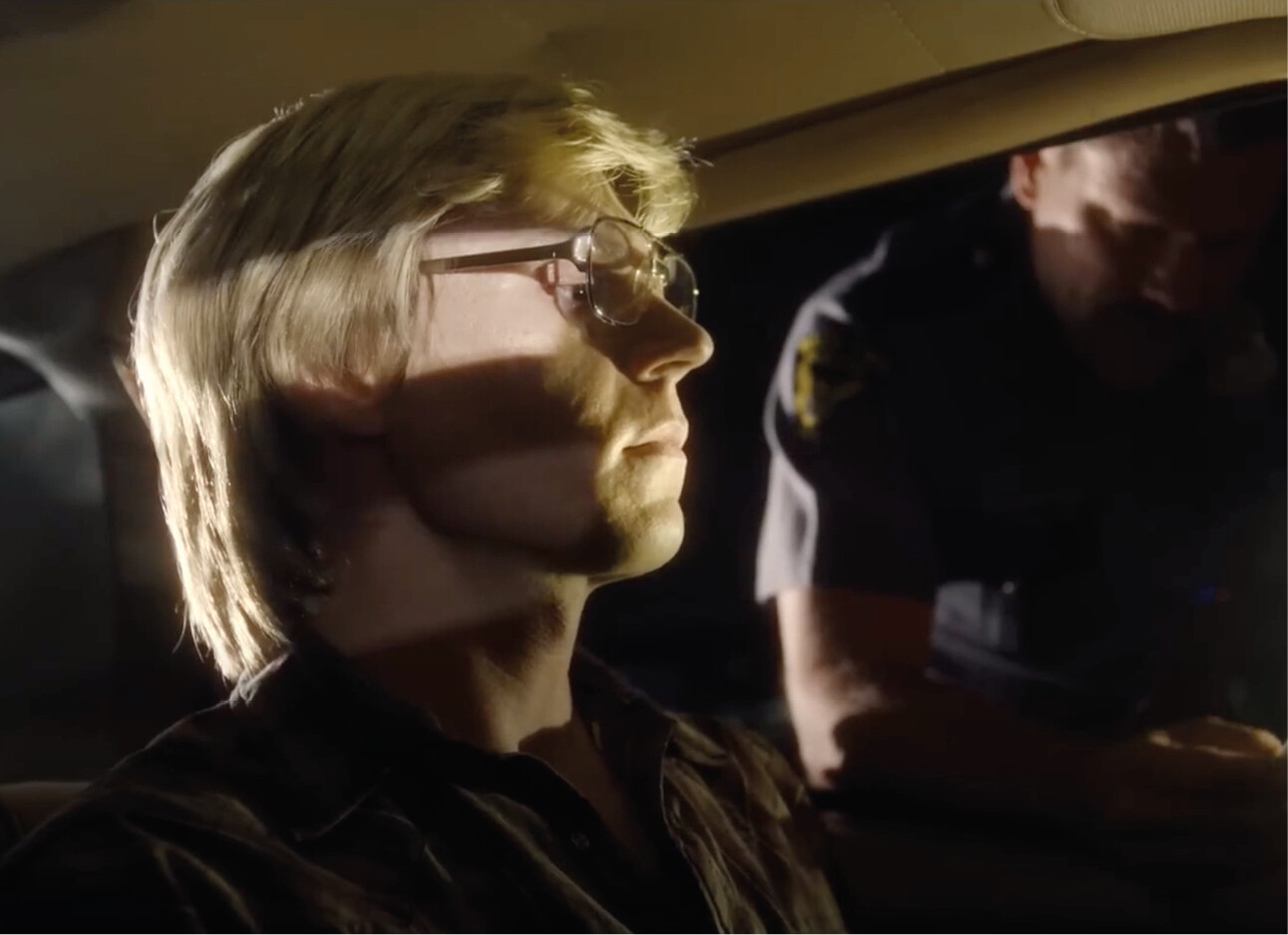
We do love a bizarre, disturbed, and frankly rather macabre story worldwide, because Dahmer is breaking significant records. At this moment, this series holds the record for ‘best streaming debut ever worldwide’, as it was watched by over 196 million people in the first week. Yep, you could say that Dahmer was quite a thing. And when you have nearly 200 million viewers, it’s inevitable that there will be some criticism here and there. There certainly was: from the families of the victims, who were not exactly pleased with this series. Rita Isbell (who is also portrayed in the series) wrote, for example: ‘It’s sad that they just want to make money off this tragedy.’ Eric Perry added: ‘No, they did not inform the families that they were working on this. The (Dahmer case) is all publicly available, so they don’t have to inform anyone or pay. My family found out when the rest of the world heard about this series.’ Ouch, not very nice indeed.
Additionally, the families of the victims were angry because Jeffrey Dahmer would be ‘romanticized’ in this series and because viewers might gain some understanding for him and his actions. Personally, that is absolutely not the case for me, and I can hardly imagine it. How can you have understanding for such a horror?
But now there has been even more criticism of Dahmer, this time from the journalist who first wrote about this case: Anne E. Schwartz. She worked as a journalist for the Milwaukee Journal and was the very first to come out with the story about Dahmer in 1991. She was also one of the first to arrive at the apartment, the place where he committed most of his murders.
According to her, there are quite a few untruths in the series, and she would like to clarify that. According to her, the series does not ‘portray a very accurate picture of the facts in this case’. Time to take stock: what is true and what is not?
- We see in the series that Jeffrey Dahmer's neighbor, Glenda Cleveland, is suspicious from the very beginning and does not trust him. We also see that she alerts the police multiple times, but nothing is done about it. That is not true. In fact, she was not even his neighbor; she lived in a completely different building. Yes, she did actually call the police (that is also heard in the series), but it is not the case that she had been suspicious of him for a long time.
- Anne E. Schwartz also disagrees with the portrayal of all police officers as homophobic and racist, as that did not align with her experience: ‘I spent a lot of time with them because I interviewed the officers who were present at the crime scene. In the series, that is made extra dramatic, at a time when it is not exactly easy for officers to gain trust – that is not a very favorable representation.’
- Small but important detail: the infamous glasses that Jeffrey Dahmer wore (which are now being auctioned for $150K) he did not wear during his hearings.
- In the series, we see how Jeffrey's father teaches him to dissect animals, which is where his fascination begins. That is incorrect: his father did teach him how to preserve bones as best as possible (following Jeffrey's fascination with chemistry and biology), but he never taught or showed him how to dissect animals.
- As I mentioned above, Glenda Cleveland was never his (rightfully) suspicious neighbor. However, his actual neighbors were also unaware of any wrongdoing. After Jeffrey Dahmer was arrested, they said about him: ‘He was somewhat friendly, but also somewhat introverted.’ Pamela Bass, the woman who actually lived in his building, also said that she occasionally had a beer at Jeffrey's place and noticed nothing. She described him as someone ‘who always shared everything’. In terms of nuisance, she never heard anything; she only stated that she sometimes heard music coming from his apartment.
Not everything is accurate in the Netflix series Dahmer, but the gist remains the same: what a terrifying man.


