


If the food of your dining companion is so much tastier
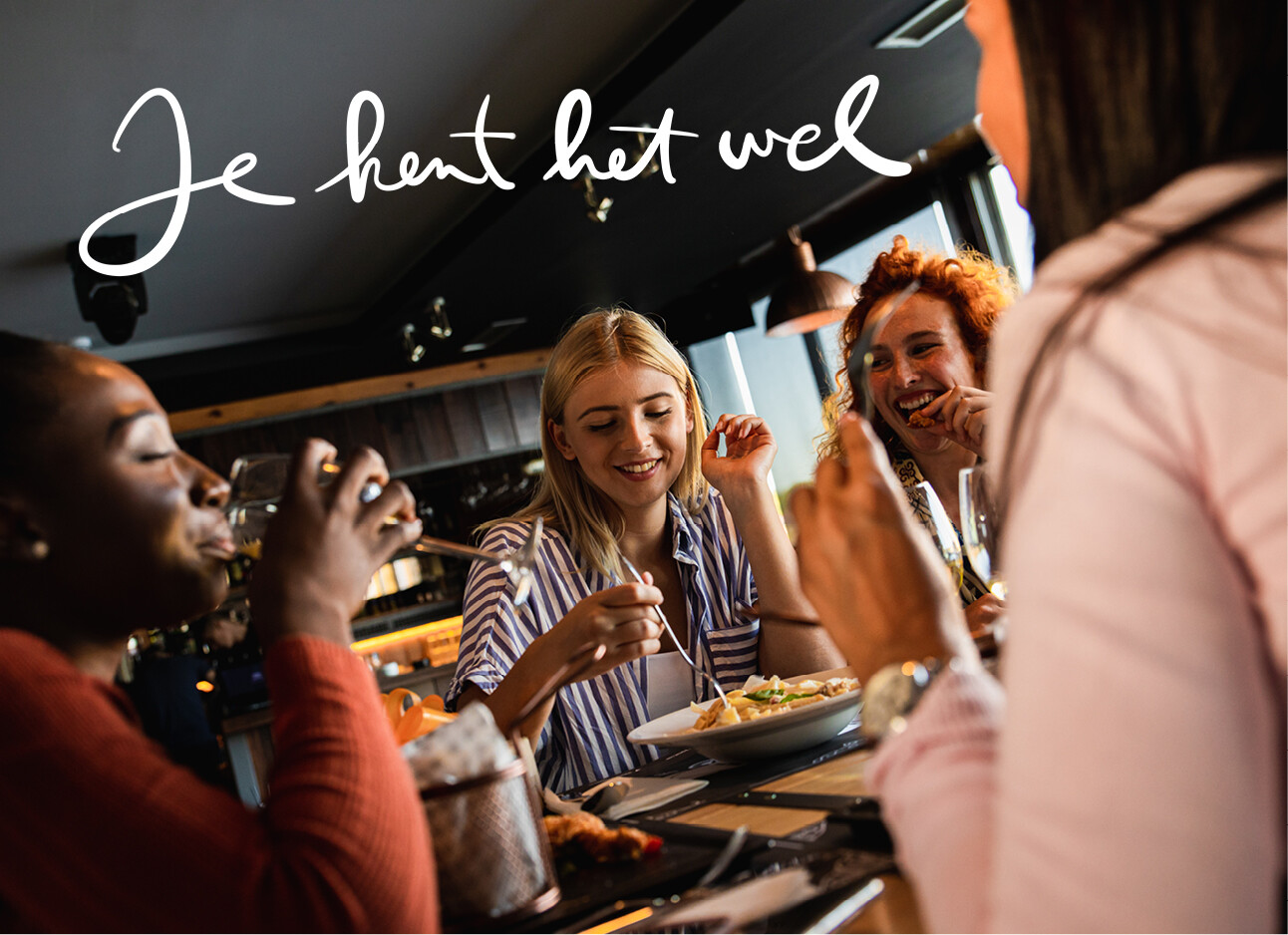
Say wine, snacks or haute cuisine and the gourmands at online food magazine FavorFlav know where to drink, how to eat it and what to cook. This time our cheffies serve you: if the food of your dining companion is so much tastier.
Adeline loves to eat, a lot and often, both at home and out. Most of the time this goes well, but sometimes it doesn't. In the series Eddies Eetergernissen she shares her wonders. This week her dining companion was served something tastier than she was.
Ordering food in a restaurant has always been a bit Sophie’s Choice, because what if you don't choose the best from the menu? That's already a risk in itself, but it's really disappointing if your dining companion has just a bit better on their plate than you. When your plate is set down and you look across the table and you just know. The color is nicer, everything is just a bit shinier and it smells out of this world.
There's almost a sign hanging above it that says: ‘Nananananaaa, this is tastier!’
Against all odds
You would think that what you don't know doesn't hurt, but I'm the type that always wants a bite, which means I know that the other dish really tastes a thousand times better. In these kinds of tricky situations, you're actually better off with the ostrich tactic: just bury your head in that not-so-tasty dish and hum away like it's a joy. Preferably so skilled that the person on the other side of the table thinks they have the lesser dish.
But no, I know it and still pretend. So it can happen that I reluctantly scoop my rather disappointing dish and then have to pretend it's delicious. This is possibly even worse than ordering the wrong thing.
In oblivion
The unfortunate thing is that in these kinds of situations you play it a bit safe. Once I realize that the entrecôte at a restaurant is hard to grill well, just get me away from that entrecôte while the risotto of, let's say, long-forgotten vegetables might taste a lot more divine. But then you run the risk of it suddenly becoming a very unsatisfying night out if those long-forgotten vegetables don't do their best and should have been forgotten.
Double order
Going out to eat thus becomes a carefully calculated risk analysis. At a restaurant you know, you choose the standout from the menu. At a new establishment, you first try to work in shared dining. If this doesn't turn out as desired, you switch to the same recipe. This literally means you order exactly the same as your dining companion to minimize the damage.
You do need to make sure that you are the last to order, because imagine if that rascal suddenly changes their mind? Then you're stuck with the not-so-well-cooked pears. By the way, it is a bit sad to order the same, but at least you can semi-uncomfortably exclaim that you are being original together. After all, everyone does that with the infamous double order.
Going out to eat, no one said it would be easy.


