


Learn these 16 wine terms and you will seem like a true connoisseur
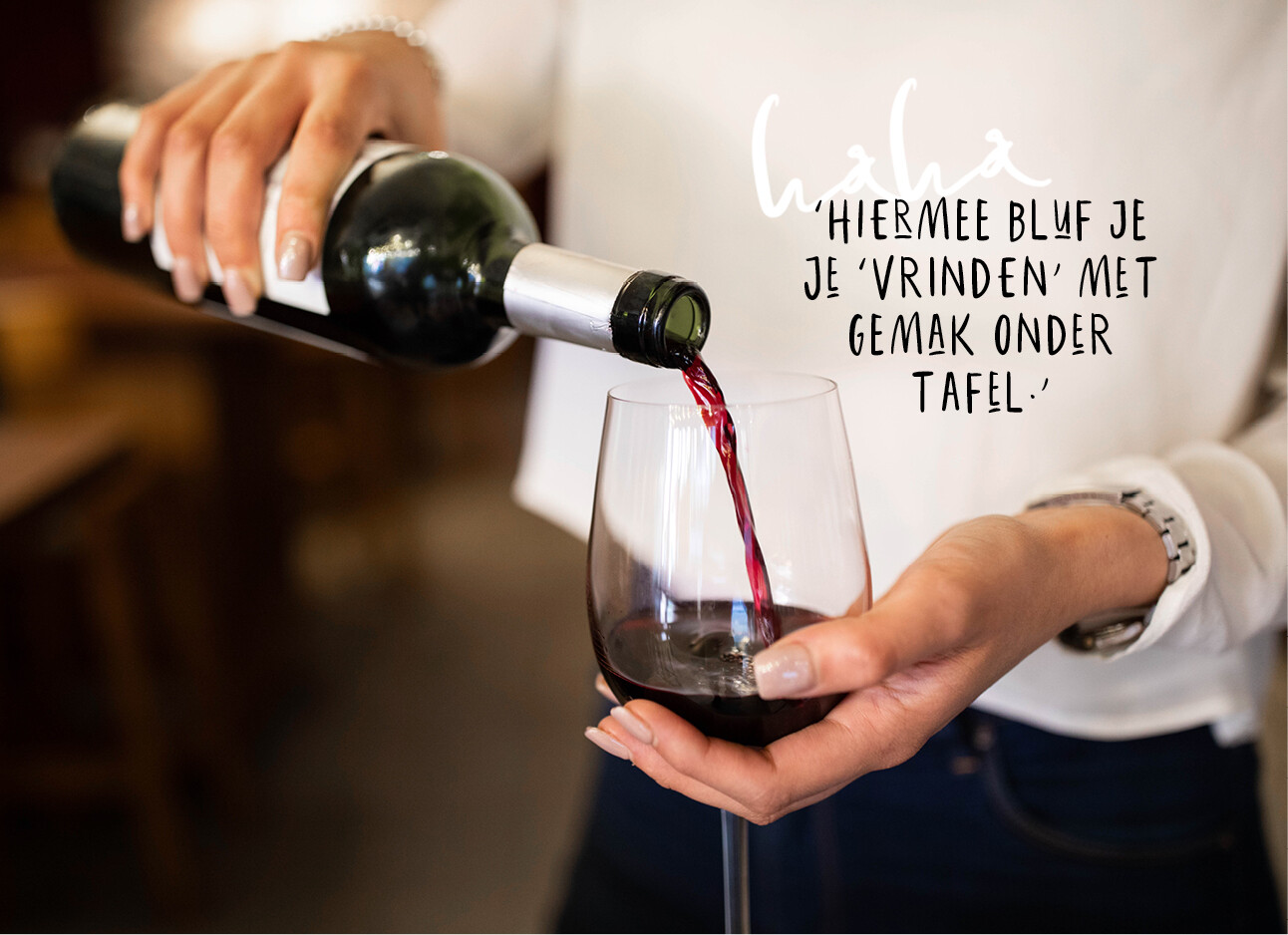
Say wine, snacks or haute cuisine and the gourmands at online food magazine FavorFlav know where to drink, how to eat it and what to cook. This time our cheffies serve you: Learn these 16 wine terms and you will seem like a true connoisseur.
Wine, oh wine. No other drink can excite people so much and at the same time make them so uncertain. But they won't easily get you down: with the wine terms below, you'll easily impress your friends. Remember and impress!
1. Tasting
Difficult word for wine tasting. Use it when you invite your ‘friends’ to come taste wine.
2. Deposit
The sediment (or lees) at the bottom of the bottle. Found in red wines that are not filtered before bottling and wines that have aged long in the bottle.
3. Chambrer
When a too cool (red) wine is brought to room temperature. Don't take it too literally: room temperature here is quickly 21 degrees. The French word chambre means ‘room’; in this case, one without central heating.
4. Vintage
Indicates that the champagne is made from one harvest year, which is exceptional, as champagne is often a blend of different years. Champagne from a very good year, and you can beautifully explain this to your table companions.
5. Bouquet
All the aroma and flavor characteristics of a wine, which you best absorb when you have your nose in the glass.
6. Aroma/parfum/nose
All good alternatives for the everyday ‘smell’. Act like a wine snob and say something nonchalant after a sip like: ‘What a beautiful nose!’
7. Astringent
A rough, puckering feeling in your mouth, caused by tannins and acids in young red wine. Feels like biting into a too sour apple.
8. Sparkling
French for sparkling, with tiny bubbles. Use it for tingly fresh sparkling wines. Not for champagne, as those bubbles are often stronger and larger.
9. Floral
Flowers, fruitiness, and freshness. The wine smells and tastes like the Keukenhof on a sunny spring day before opening time.
10. Body
How does the wine taste feel in your mouth: light or rather full-bodied? In the latter case, the wine has body.
11. Tannic
Difficult term for astringent, to be used for powerful red wine that you actually need to store for a few more years so it can lose its tannins (from the skins, seeds, and oak barrels) and become smooth.
12. Elegant
A term that you can use at will and that sounds just a bit better than ‘tasty’. In fact, you are saying that the wine possesses a certain finesse and style.
13. Botrytis
Latin word for ‘noble rot’, a rotting process that has its advantages. The fungus Botrytis Cinerea creates small holes in the skin of the grapes, causing moisture to evaporate and the concentration of sugars in the grapes to increase. You don't need to remember all this, only for (intensely) sweet white wines, like those from the world-famous Chateau d’Yquem. Then mumble something about ‘noble rot’ and you will greatly increase in esteem.
14. Finish
The taste that lingers in your mouth after swallowing the wine. Does it have a good finish, a long finish? If you taste nothing after a few seconds, then the wine has no finish.
15. Maderized
Due to too much oxygen, the wine has acquired a too dark color and overly ripe taste (reminiscent of madeira or cognac), especially in white wine that has been stored too long. Just watch your dining companion's mouth drop open when you signal this fault in the wine and calmly ask the waiter for a new bottle.
16. Animal
The wine reminds you of the Big Five from Africa or a grizzly bear from Canada that has just awakened from its hibernation. In short: wild beasts with thick (sometimes leathery) skin. You especially smell this in older red wines that have aged in oak.


