


Hollywood star Famke Janssen on Netflix series Amsterdam Empire
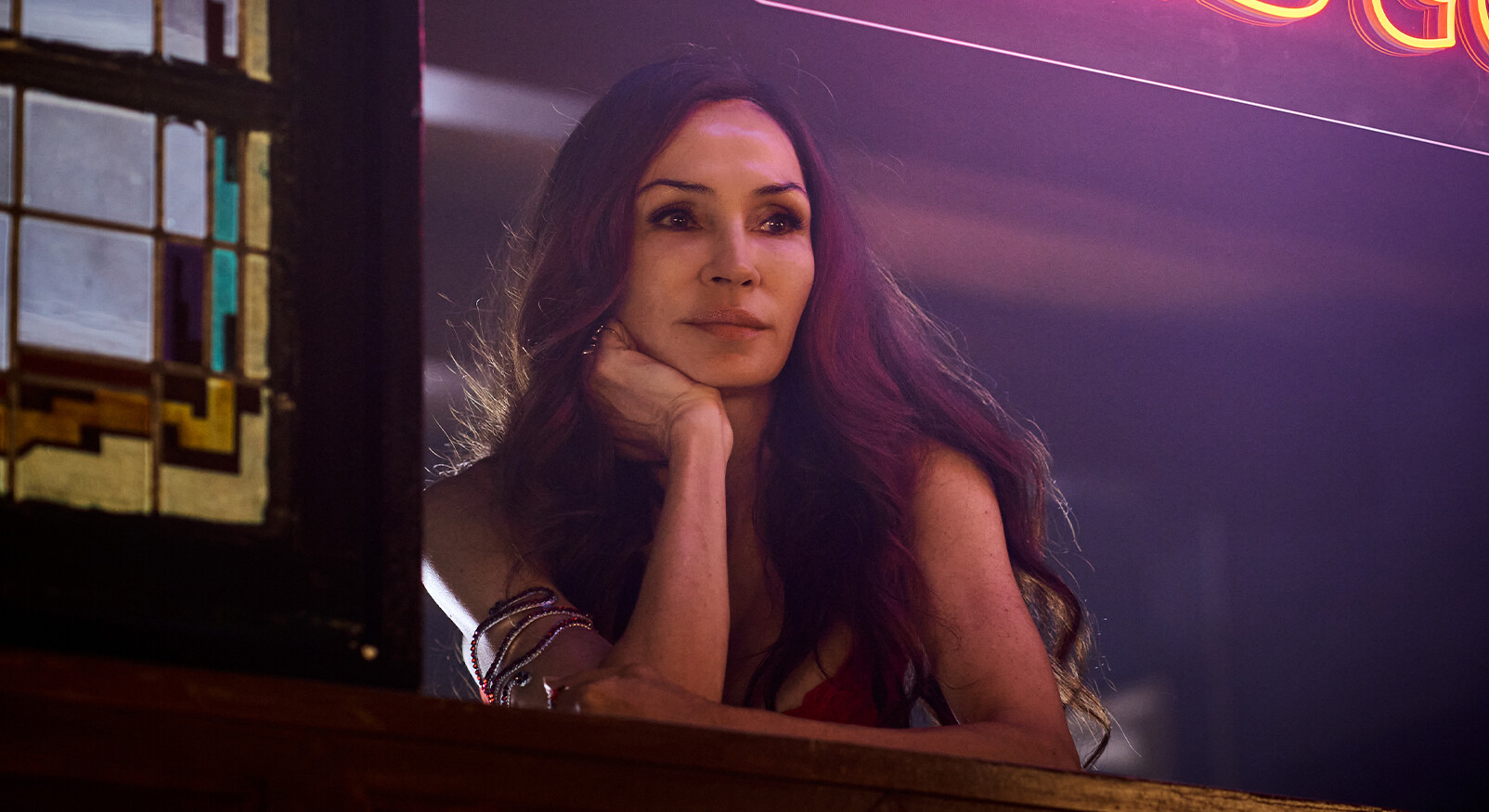
Amsterdam Rijk is the recent passion project of Famke Janssen. The Hollywood actress we know from GoldenEye, the X-Men-films, the Taken-trilogy and much more, returned to Dutch soil for her very first Dutch-language production. We dive into the series and her experiences: how does it feel to be back in the Netherlands? And when does she put on the producer's hat? (Because yes, she is that too). From her favorite licorice to her own designed costume designs: these are all the ins and outs.
Let's go back to the beginning: it's Tuesday afternoon. I get a call from my editor-in-chief: whether I dare to interview Famke Janssen. I hear myself say: “Sure!” What starts as a quiet day quickly turns into an entertainment conveyor belt of researching, emailing, and watching episodes. As the moment approaches, I realize that I am really going to interview a global star. As the curfew strikes, the moment supreme arrives: showtime.
There I am, on the other side of a laptop screen. With dozens of questions in my head. I start with the first: why is Famke now stepping into the Dutch film industry for the first time? Well, it has everything to do with perfect timing. “We are now living in such a different time; in the past, no one in America wanted to watch series or films with subtitles. That has changed enormously due to Squid Game. I find Dutch projects so fantastic, so this is the moment to release something like this. Especially with Netflix, it gives a way to know that it can be seen all over the world,” Famke tells. And she is certainly right: whether you are talking about the Korean Oscar-winning film Parasite or the Spanish-language series Elite: international productions are becoming increasingly popular. The world craves authentic stories, especially when they come from the other side of the world. “Just like us Dutch, many people in the world have a certain idea about a country. That's why I find this series so fun to do, because this is very authentic.”
Exactly that real image is reflected in Amsterdam Rijk. In the crime drama, we dive into the glamour and crime at the heart of the Amsterdam cannabis scene. As if we are watching a documentary, we get a glimpse into the life of Jack van Doorn (Jacob Derwig), the founder of the coffee shop empire Jackal. When his affair with a well-known journalist (Elise Schaap) comes to light, his wife Betty (Famke Janssen) decides to mercilessly get back at him. Betrayed and hurt, she knows all his weak spots – and she won't rest until his life is a hell.

The extravagant Betty is very different from Famke
After watching a few episodes, I already know for sure: I think that Betty is a fantastic character. If anyone in this series is outspoken and extravagant, it's Betty. With her style of clothing and statements, just the way she walks, she says one thing: I am a star. Of course, I want to know how this personality came about. Did the inspiration perhaps come from Famke's years of Hollywood experience? Or was there something else behind it? “The inspiration for Betty's character mainly comes from the music world. How those people dress and how much attention they draw to themselves all the time. Betty is of course a star in her head, but she actually only had one hit in the 90s,” Famke laughs loudly. She can shape the character exactly as she wants: “As executive producer and Betty's costume designer, I can exert so much influence on her character, much more than I could have done in the past. Betty just never wanted to grow up. That past as a hit sensation has never left her, you can see that reflected in her clothing. We chose a childish way of dressing. Something that was very playful, just like real girls. When I see them walking down the street, I find it so fun how they dress as if every day is a holiday, with those tutus, sparkles, and everything that comes with it.”
She can't stop talking about that role as Betty. “It was fantastic to play Betty,” she tells. “But Betty is not at all like I am. Betty is more extravagant and extroverted, I am more introverted and shy. When I play a character, it is an excuse for me to do all sorts of extreme things in such a safe set environment. You can say anything, dress up, and do whatever, where in the real world there are all consequences attached to it. I love that, you get all the permission to do that. To completely let yourself go, especially because I am not like that at all.”
Back on Dutch soil
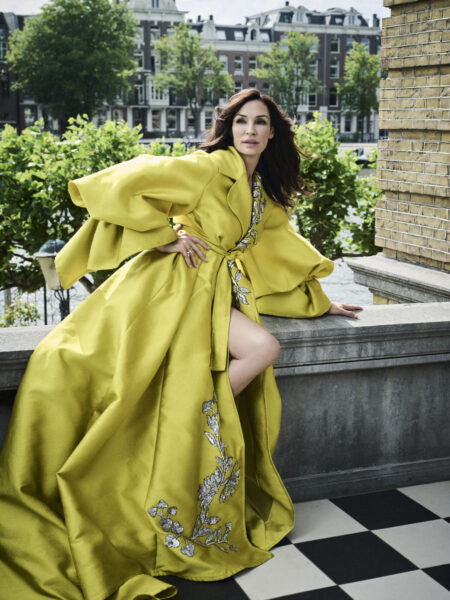
If there is one thing I wonder, it is how it was to shoot in the Netherlands for the first time and to live in the Netherlands for a longer period. “I have missed so much all those years in New York. That was a whole list, like licorice, fries with mayonnaise, and those delicious foam cakes. When I had lived here for almost eight months, I had stuffed myself with fries,” she smiles. “Really, so stuffed with fries. I still can't get enough of it, but it has helped a bit with that ‘addiction’. And yes, licorice. Licorice is my biggest addiction, so I really try not to take too much back with me, because yes: I just eat it all at once. I find it so delicious.”
After acting in James Bond and alongside Liam Neeson in Taken, it was quite different to act in Dutch. She had never done this before. “I left at 18 as a model and returned as an actress. And honestly? I actually found it a bit scary. I thought: ‘Can I do that? And how will it sound? How will the character be?’, but it actually went very well. Partly because this became such a different character than I had ever played before.” And then we haven't even talked about the cultural differences. That Dutch way of working is quite different from the American one. “I have been away from the Netherlands for so long. We found out that I sometimes looked at certain things differently. I started to wonder: ‘Have I changed? Has the country changed? Have we all changed?’ That culture was sometimes difficult to understand. Of course, I grew up in it, but by traveling around the world, I have become a kind of global citizen, instead of just being Dutch. That made me really confront the cultural differences I had to get used to. Duh, of course, a lot has changed. The film world differs from country to country, and I can generally adapt to that, but especially the whole Dutch ‘Just act normal, then you're already acting crazy’ mentality I found hard to get used to. That's not good for actors, that's the opposite of what we do. So then I realized that I shouldn't think about how people think of me. I know Betty best and this character is quite extreme, so I had to put that advice out of my head. ‘Just don't act crazy’? I do act crazy as Betty. All the time.”

Keeping all the balls in the air on set
While we talk about Betty and the Dutch set, I can't help but look at all the balls Famke is juggling. Actress, co-costume designer, and executive producer. How does she keep it all separate? She finds it not difficult at all: “It felt like coming home. And that moment when everything was ready and came together? That was a full circle moment. Fifteen years ago, I directed, co-produced, and wrote the feature film Bringing up Bobby , with Milla Jonovich, so I already had experience, but to do it this way... Acting, and the costumes, almost everything, yes, it just went very organically. I also naturally come from the fashion world, and clothing is something I spend a lot of time on, so the more I got into Betty's character, the more I thought: ‘Yes, her clothing has to become a kind of character.’” She enjoyed that creative part. One moment she wore the producer's hat and thought the scripts could be better, the next moment she looked at what was in the background, or whether there needed to be more diversity in the scenes.
Famke laughs loudly as she reflects on what was the most fun for her: “And the real ‘cherry on top of the cake’ was the music video we did. That was really what I was looking forward to the most. Every week I was trained by Vincent Vianen, who is simply the best choreographer in the world, who is also Dutch. The video was about Betty when she was younger, so this was really the challenge of all challenges. First of all, I had to sing, dance, and do everything. Act 20 years younger than I am, or well, more than I actually am.” It had to be perfect, and luckily for her, Vincent was just as much of a perfectionist. “The moment I will never forget is the first time I danced with those dancers. That was the day before we were going to shoot. And of course, they learn it in five minutes, and – I'm not going to say how long it took me – but longer. That moment when everything came together and I felt the energy of those two professional dancers behind me, I really thought: ‘Wow, this is so beautiful. You are working on something and then everything comes together. Really. Wow.’”

This Dutch adventure leaves me wanting more
“Now I only think, bring me more of these kinds of things. I am ready to do anything,” Famke speaks from her hotel room in Sofia, Bulgaria. In the film she is currently in, she also does her own costumes, which is now a creative outlet for her. As she reflects on Amsterdam Empire, she proudly looks at the strong female roles in the series. “What I find so beautiful is how many female characters there are and how wonderfully they are acted. It really feels like female empowerment. That is something I always stand for, in the roles I choose and how I grew up, it is something I want to pass on to the generations after us. So I think we can be very proud of that. We women must keep fighting hard, and that is why you see so many good actresses in this. And how fun was it that we (Famke, Elise Schaap, Jade Olieberg, and Romana Vrede) were on the cover of ELLE ?”
She wants to carry that topic into her further career. “Amsterdam Empire is such an authentic Dutch thing. We are not making it for the international market to score, but to show our country. I find these stories very beautiful to make. And yes, I am of course Dutch: I still have a passport, I was born and raised here, so yes, I would really like to look at what stories are still to be told. About Dutch women in history, for example. We still mainly see it as ‘HIS-story’; history was always written and conceived by men. Who knows what stories we have missed because they are about women? There were so few role models for me when I was younger, so it is important for us as women to tell those stories. So that there are more role models for girls to look up to: ‘Wow, what did they do back then.’”
Then Famke turns to me and asks: “Where does your name come from? Which remarkable woman are you named after?” And then I suddenly realize: my first interview with a major global star is behind me. Yes, it was exciting, but above all very fun. Another checkmark on the bucket list.


