


Side effects of the pill: everything from A to Z

One swears by a spiral and the other tries to keep track of their cycle with an aura ring: there are many forms of contraception, but the pill has been the go-to method for years. Although there has been much debate about using this good old reliable pill, there is now a group that chooses other methods. Because yes, the side effects are immense. Right? I don't know that whole list, so you probably don't either. Are you curious about what might be waiting for you? Then you should keep reading. Here are all the ins and outs about the side effects of the pill.
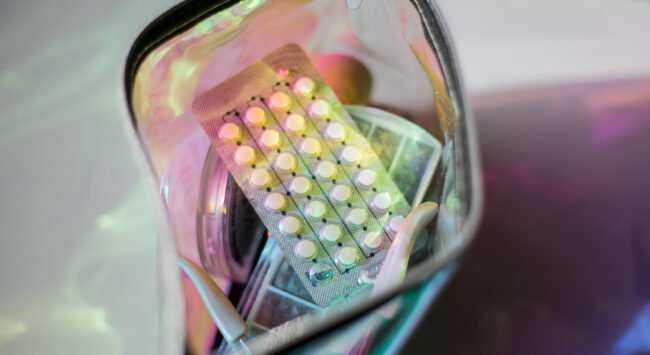
In short: how does the pill work
That little strip prevents you from getting pregnant, but how does that actually work? By taking that pill, you receive a synthetic form of the female hormones estrogen and progesterone. These suppress ovulation (aka egg release), causing your body to think it is already pregnant. As a result, no eggs are prepared to be fertilized. Therefore, you actually have no natural cycle.
That break week is not the same as the process that occurs when all preparations for a pregnancy need to be halted, as some might think. Because that whole process does not happen, because you do not have ovulation. It is a ‘withdrawal bleed’, an artificial reaction to stopping the hormones. It is a sign that the pill is working and that you are not pregnant. If you were to be pregnant, you would (in most cases) not get your period.

What side effects can you experience from the pill?
Okay, okay, now you know how the pill works, but what is the reason that some still choose not to take the pill? That is due to the side effects. You just can't resist that, can you? can be:
Vaginal dryness
Well, that's not something you want to hear during your meal, but this is indeed a side effect you could experience. Estrogen plays an important role in keeping the vagina naturally moist. The pill can reduce natural production, leading to dryness. This can cause pain during sex, but also affect your vaginal health.
Sensitive breasts
Due to all the hormonal changes, you may experience sensitive breasts. The amount of hormones estrogen and progesterone can cause changes in breast tissue, such as increased blood flow or fluid retention. This makes them more sensitive.
Headaches
This is a side effect that is common when starting the pill. Due to all the hormonal fluctuations, this can also lead to more frequent headaches in the long term. Are you sensitive to migraines and headaches? Then it might be a good idea to switch to a non-hormonal form of contraception.
Nausea
This is usually because the hormones can irritate the stomach lining. It can help to take the pill during a meal or just before going to bed. This way, you are also less likely to forget it.


Breakthrough bleeding
Does that sound familiar? It can, because it is one of the most common side effects. Especially at the beginning of using the pill, you may experience this. This can be because your body still needs to adjust to the pill, because you use the pill irregularly, you smoke, or take certain medications. Smoking can accelerate the breakdown of hormones, causing your pill to work less effectively and you to experience more bleeding. And regarding medications, this doesn't happen often, but with, for example, anti-epileptics or self-care products containing St. John's Wort, the effectiveness of the pill can be affected.
Weight gain
Look, the pill doesn't create fat on your belly, but it can increase your appetite and cause you to retain more fluid. Because you constantly want to snack, you automatically gain weight. Due to the different phases (menstrual phase, follicular phase, ovulatory phase, and luteal phase), you have different needs. One period you want to exercise a lot and eat healthily, and the next you just want to lounge on the couch and eat junk food. This is all due to your hormones and can be exacerbated by the pill.
Mood swings
We still don't know exactly what those hormones do to our brain, but research has been done on this. There are women who feel irritable, anxious, or gloomy in the week before their period starts. This is the moment when progesterone and estradiol drop. Because the pill suppresses these hormones, it can change the way women experience emotions.
Bloating
Due to that daily pill, you may start to retain fluid. Many women complain about this. This is due to fluctuations in estrogen and progesterone, which can lead to changes in your body weight. In other words: you gain weight faster.
Lack of interest in sex
Not great, but the pill can lead to a decreased libido. This is because the production of testosterone can decrease, as the pill disrupts your natural cycle. That hormone plays an important role in how much desire you have for such a romp.


Hair loss
This doesn't happen often, but if you are sensitive to hormonal changes, you may notice it in your hair. The hair growth cycle is disrupted, causing your hair to become thinner or even fall out.
Fungal infections
Yes... You may experience those annoying fungal infections more often. The pill can disrupt the vaginal flora, allowing fungi to thrive. This means you have more itching and can't get rid of those infections.
Skin problems
You often hear that the pill is prescribed to prevent acne, but it can actually cause acne in some people. This usually concerns acne around your chin and T-zone. And even if the pill helps against pimples, the underlying cause is not resolved. So when you stop, they often come back.
Fatigue
All those synthetic hormones can affect your natural hormone levels. This causes you to become tired more quickly. It can also mean that your body absorbs certain nutrients less effectively, which is bad for your energy and sleep.
Brain fog
Not everyone experiences this, but in some individuals, the pill can affect cognitive functions, such as memory and concentration.
Depressive feelings
Unfortunately, not much research has been done on this yet. There is a connection with depression, but how this comes about is still a question. Of course, many factors play a role in the onset of depression, so it is difficult to say whether this is purely due to the pill.

Increased risk of a blood clot/thrombosis (small risk)
The risk of thrombosis is actually highest in the first year of pill use. Thrombosis is simply a blood clot in a vein, usually in the leg. It then becomes thick, red, and painful. You may also become short of breath or experience chest pain. This risk is very small and mainly occurs in women who have had it before, have a family history, have a hereditary condition that causes blood to clot more quickly, are over 35 years old, are severely overweight, have just given birth, or are less mobile. The greatest risk (still very small) is associated with pills containing desogestrel and gestodene.
Risk of breast cancer (small risk)
This sounds scary, and I understand that. The pill carries a small risk of breast cancer. For some women, this risk is greater, such as older women and those who have had breast cancer before. Also, long-term use increases the risk. Various studies have been conducted on this, but they did not provide a clear picture: many other factors play a role in developing the disease.
Danish research showed that the risk was 20 percent higher in women who used hormonal contraception for a year or longer. They followed 1.8 million Danish women aged 15 to 49 for 11 years. All women were healthy at the start of the study, and 11,517 of them developed the disease. This applied not only to the pill but also to other forms such as the injection, the IUD, and the implant.
Now, don't panic right away, because the risk remains very low. NOS explained this well: “If the risk of a 25-year-old woman getting breast cancer is 0.02 percent, then a 20 percent increase means her risk is 0.024 percent when using the pill.” So that is still very low, and after stopping, the risk decreases further.

That's a lot of side effects, so I understand if you're doubting your pill. Is not getting pregnant worth it? Hmm, only you can answer that, but it's important to discuss all these questions with your doctor. Regulating your cycle yourself with an aura ring or an app tracker is possible, but it only gives you a small certainty and protection against pregnancy. So you know: consult with experts and everything will be fine.


