


Why reality TV drama wants your attention
(it's in your brain)
You know that moment. You tell yourself: just one more episode and then I’ll really go to sleep. And before you know it, it’s half past one at night and you’re breathlessly watching someone say ‘I do” to someone they’ve only known for three weeks. You just know: this is going to go wrong. Secretly, you love watching how people argue and situations get worse and worse. Is there going to be a fight? Even better. Yes, we humans are thrill-seekers. Isn’t it great to text your friends about that one red flag in Love Is Blind “what they did? We laugh, we judge, and we enjoy. But why do we get such a kick out of gossiping about people we don’t even know? Does it always have to be juicy? That has everything to do with your brain. Temptation Island Your brain loves a dose of drama.

Let’s be honest: reality TV is the bad ex you just can’t unfollow. It’s that bowl of tiramisu after dinner: you know you’ve had enough, but still… one more bite. One more episode. When we turn on our favorite reality show, there’s more going on than just ‘relaxing’. According to
psychologist Chivonna Childs watching reality works like taking a mini-vacation. “You escape from your own problems for a moment and ‘go along’ in someone else’s life. All the exciting things that happen activate the reward system in your brain. Just like a dog getting a treat, you want to keep seeing what happens. Because you crave that dopamine. That’s why you keep watching. So yes: every flirt, argument, and slap does something in your brain. It strokes your ego.

You won’t admit this, but honestly? After seeing a couple break up after that guy cheated again, it makes you feel better about yourself. You’re actually doing fine compared to that. Your best friend hasn’t stabbed you in the back while you’re trying to win a prize together. You just have an angry boss and an occasional bad day. We humans are simply more sensitive to comparison. We don’t just watch because it’s fun, but because it secretly makes us feel good. Your brain enjoys comparing with other people: it learns from it. It stimulates something.
But why does it always have to be so juicy?.

Can’t we enjoy a sweet story where everything goes well and two people fall in love? Why does there always have to be a fight or the favorite couple of the week breaking up? That’s simple: we don’t like boring. Our brain switches off at harmony. It wants excitement, arguments, jealousy, intrigue. In prehistoric times, emotion meant something important was happening. Aka danger, status, survival. And those same primal instincts are still triggered when someone cries in a villa, flips a table, or yells: “I’m not here for the followers!” We want to feel that. Emotion makes us pay attention. That’s why a season without drama is just… meh. In
for example, you see it too: it’s no longer just about making fire or eating coconuts. It’s about who is conspiring with whom, who betrays whom, and who stabs someone in the back at the right moment (figuratively speaking). Our brain feasts on social strategy. It’s excitement without real danger – and that’s exactly where the attraction lies. experienced Expedition Robinson Watching reality TV is just like gossiping (and that’s good for you).
These shows are the modern campfire. Only now we’re not sitting around a roasting pig talking about how that one stinky caveman failed to hunt, but with pizza and prosecco in front of the television. In this era where there’s less and less social contact, you have to do something. And instead of gossiping about the neighbors, we do it about total strangers with microphones in their bikini bottoms. Judging gives us a sense of control. Psychologists call that
social comparison theory : we have a natural need to know where we stand in relation to others. So yes, we feel morally superior when someone on TV cries because they “didn’t know their ex was kissing their best friend in the hot tub.” At least you know better. Right?And believe it or not, gossiping isn’t just bad.
Evolutionary biologists. say that gossiping was once essential for survival. By talking about others – who is trustworthy, who isn’t – we kept our social group strong. Reality TV is the modern, shiny version of that. It’s basically collective gossiping with an HD filter and a ring light. You could almost say it’s an addiction.
Reality TV is escapism with mascara and sunscreen. Somewhere we know we’re not learning anything from it and that it might feel a bit dirty, but it’s so human. It’s the soap opera of real life that gives you a dopamine boost from here to New York. That’s very human.
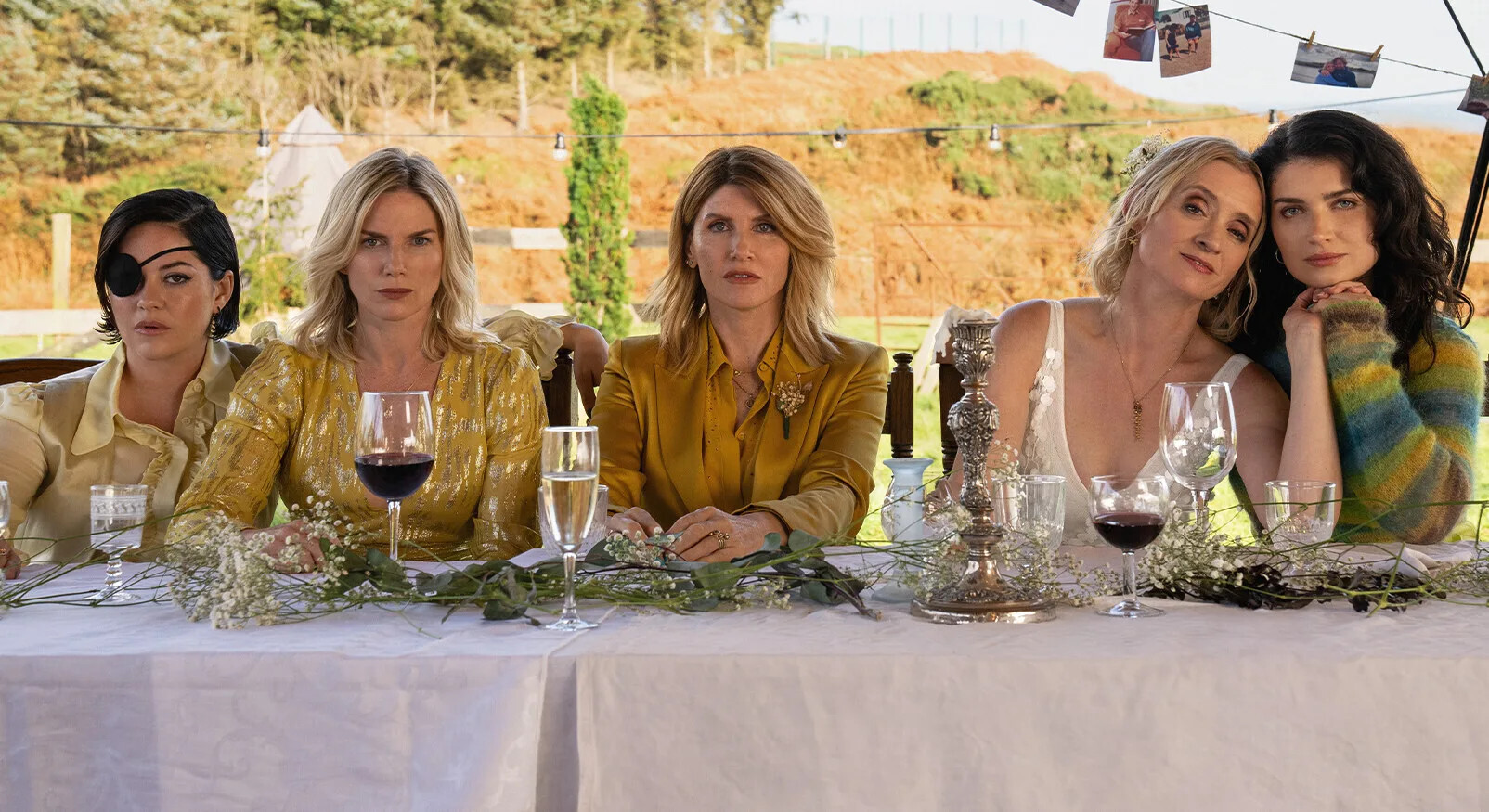
Five women with intense facial expressions are sitting at a table, illustrating the social strategy and drama in reality TV and series, and explaining why our brain is attracted to this.


