


What the hell is ‘chinamaxxing’?
What ‘chinamaxxing’ refers to
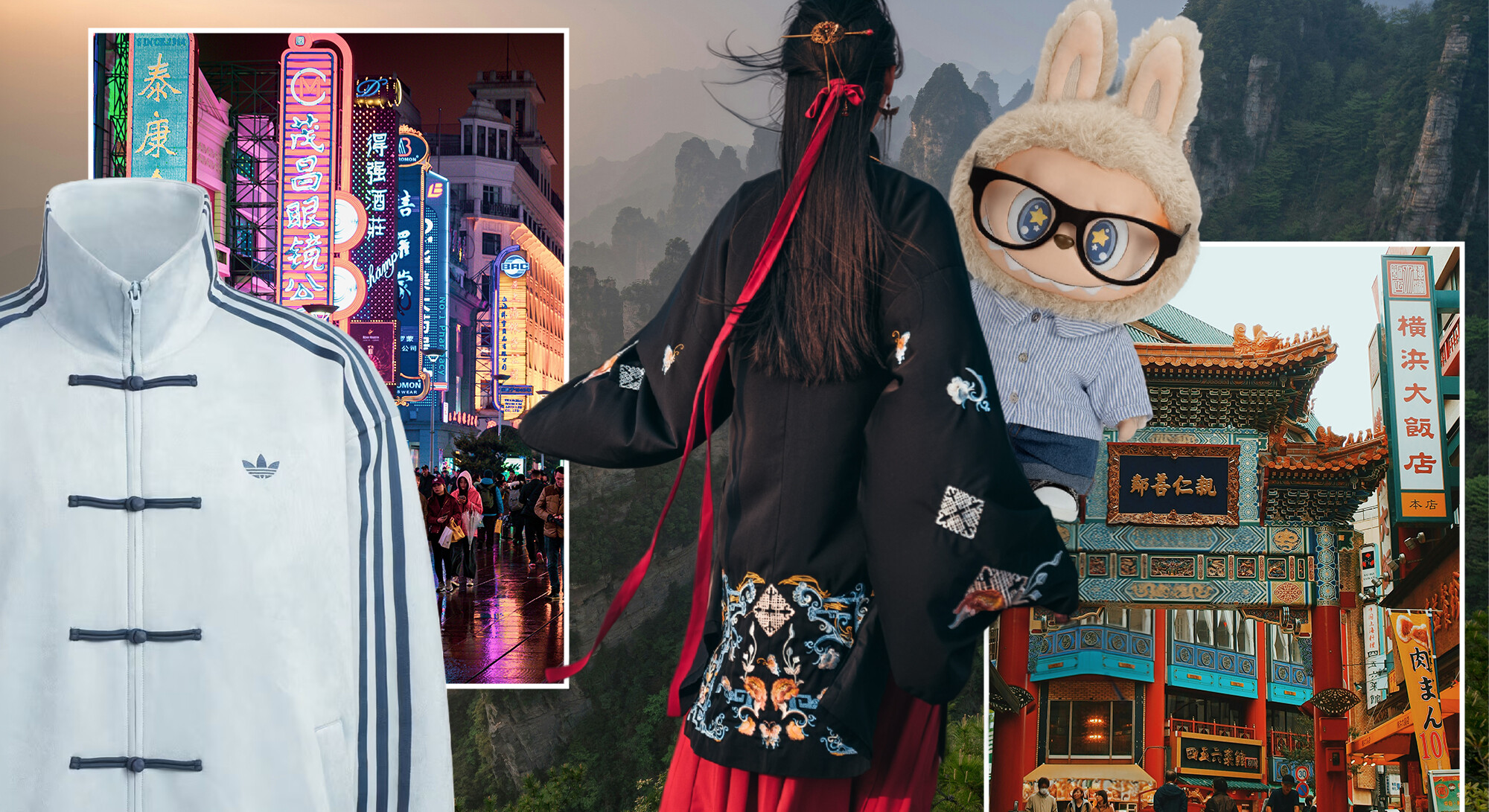
Apparently, behind that sold-out Adidas jacket lies a much larger trend. Where millennials once looked en masse to India (yoga, ayurveda, spiritual retreats) and then embraced Japan (sushi, minimalism, Marie Kondo), it now seems to be China. Warm drinks instead of iced, tai chi, and facial massages with the gua sha stone. Do you have a bit of an idea where “chinamaxxing” refers to? Exactly: Westerners mixing Chinese customs, aesthetics, and lifestyle into their daily lives.
By now, you see on TikTok and Instagram that ‘chinamaxxing’ has become a way of life for some. Video after video where people start their day with warm water on an empty stomach, a habit from traditional Chinese medicine, to then let apples simmer on the stove according to a ’traditional Chinese recipe’. All under the banner of their “Chinese era”. Well, we can also talk about that.
How TikTok suddenly landed in this era
But my curiosity was still not completely satisfied. Because how did China actually become the new thing? Then I was reminded of the panic on TikTok when Donald Trump wanted to ban the app in the United States. Americans started downloading VPNs en masse just to keep scrolling. What they also downloaded was Xiaohongshu, better known as RedNote, a gigantic Chinese social platform. The two cultures crossed paths like never before.
And from that contact moment, something entirely new emerged. Western influencers discovered Chinese routines, aesthetics, and trends and began translating them into their own. Some influencers now present themselves as so-called “Chinese baddies”. Apparently, the idea of calm, health, and rhythm appeals to us quite a bit.
Not everything about the trend is TikTok-proof
The downside of the trend is a bit less TikTok-proof. The nineteen-year-old Dutch-Chinese influencer Jamie Tang, with over 180,000 TikTok followers, talked about it with NRC. For her, the trend feels double-edged. On one hand, it's nice that her culture is appreciated, on the other hand, it simplifies ancient traditions. Customs like drinking hot water in the morning have a specific meaning within traditional Chinese medicine: bringing the body into balance according to the principle of yin and yang. And those traditional Chinese buttons on the Adidas jacket are typical of the local art form of the country. They are used to express good wishes and sometimes even to commemorate events. In ‘chinamaxxing’ videos, that context is usually left out.
Jamie also points out ‘casual racism’: racism disguised as a joke. When she brought Chinese crackers to lunch in high school, there was nothing ’trendy’ about being Chinese. And what about during the coronavirus pandemic? There, according to Jamie, racism reached a peak.
Look, in a way it's nice that something that was once a reason for bullying now suddenly evokes admiration. That people are curious about other customs, rhythms, and ways to care for your body. But it becomes uncomfortable when a culture only becomes “cool” when it has been filtered through the internet and pulled out of the context it comes from. Anyway: my closet is still without Adidas. Four hundred euros turned out to be enough to get me back on solid ground.
SOURCE: www.nrc.nl


