


Viewers thought they were piercings, but Djokovic really wore this at Wimbledon
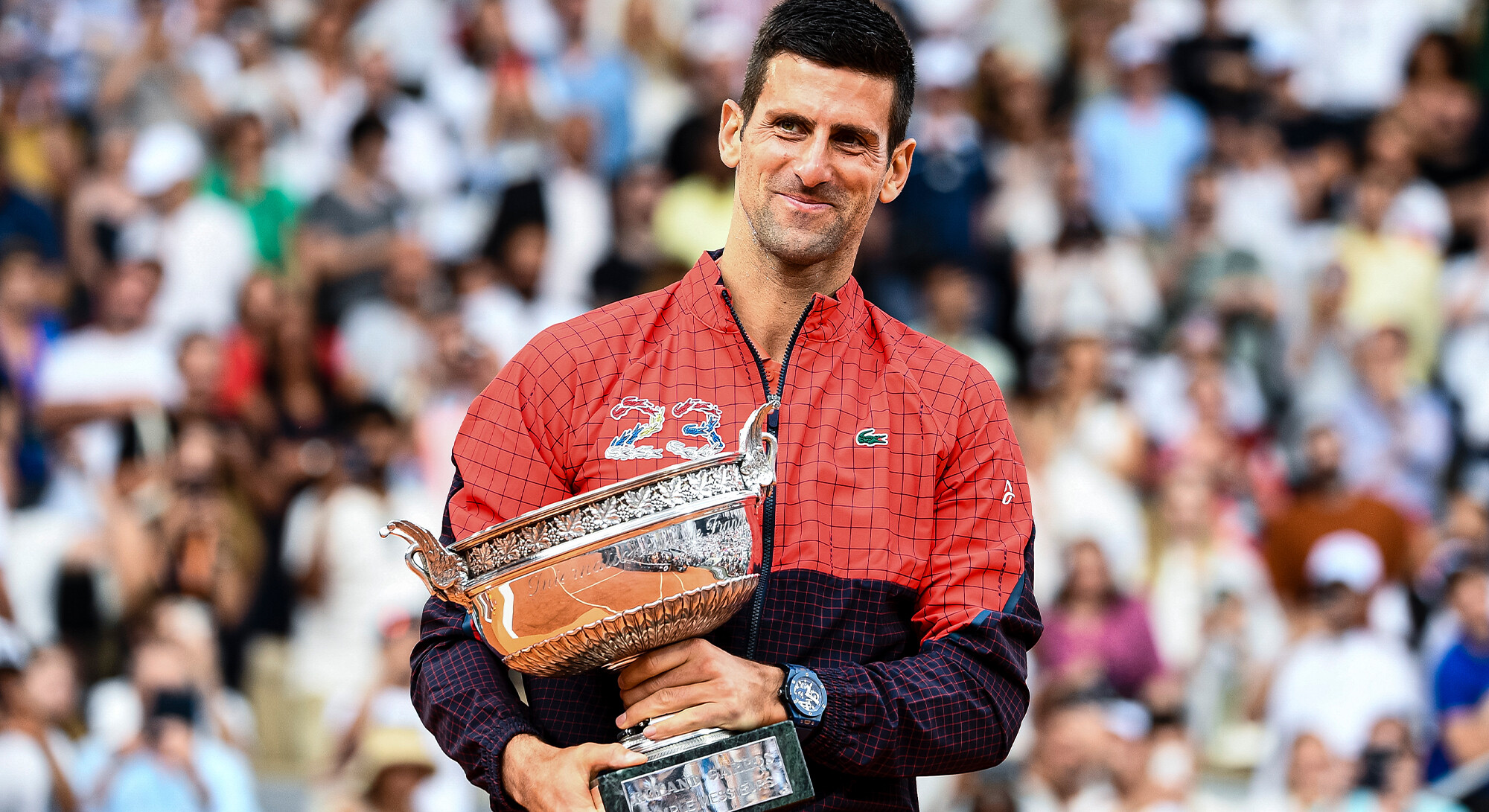
When during the semi-final of Wimbledon the cameras zoomed in on Novak Djokovic's face, there were small dots stuck in his ear. They almost looked like piercings, but turned out to have nothing to do with accessories. They were ear seeds, a treatment from Traditional Chinese Medicine. This has been done for thousands of years, but never before were these tools spotted in the ear of a top athlete during such a big match.
I have seen it come by on social media, but after I saw it being worn at such a large sporting event, I became curious: how does it work and why do people use this? Ear seeding is a form of auriculotherapy (ear acupressure), where seeds or metal balls are stuck with transparent plasters on specific points in the ear shell. There is a kind of map of the ear, where different pressure points are related to different organs, and based on that you can see which complaint corresponds to which point. For example, at the top of the ear is the Shen Men point, which is used against stress, anxiety, poor sleep, and pain. Point Zero, in the middle of the ear shell, is said to help with balance and regulating the nervous system. Other reasons for use include better sleep, recovery after exercise, and reduction of nausea. The intention is to press on the balls several times a day to stimulate the pressure points.
The form of auriculotherapy used today was further developed in the 1950s by Dr. Paul Nogier, a French doctor who developed the map with pressure points. Until recently, the treatment was mainly done by acupuncturists and was not known outside of that. In recent years, ear seeding has been receiving more attention, especially on TikTok and Instagram, where it is recommended by wellness influencers. The handy thing is that unlike acupuncture, no needles are used, so they can stay in for up to five days.
Other celebrities are also fans: Naomi Campbell and Penélope Cruz were already seen with it much earlier. Penélope was spotted with it in 2013 and Naomi was also early to adopt it; she said in a video on her YouTube channel about Covid that she uses it because it is good for her hormone balance.
The question remains whether it really works. The scientific evidence for it is limited. An analysis of studies with a total of 1689 participants on sleep showed that auricular acupressure may improve sleep quality, but researchers warned that many underlying studies are of low quality and therefore they could not say with complete certainty that it works. A similar study on its use for pain came to the same conclusion. It is therefore seen as a treatment that can possibly be used alongside regular care, but not as a replacement for it. It may also have a placebo effect, but personally I think: if it works for the person using it, then that is ultimately the most important.
Djokovic himself has not publicly explained why he wears ear seeds, but he has been talking for years about his interest in holistic medicine, mindfulness, and yoga. Whether the small balls actually made him perform better is of course hard to say. It certainly didn't help him win against Jannik Sinner.
Source:
https://www.frontiersin.org/journals/sleep/articles/10.3389/frsle.2024.1323967/full
https://pubmed.ncbi.nlm.nih.gov/32950391/
https://www.patientenfederatie.nl/onderwerpen/complementaire-zorg/complementaire-zorg


