


Still a bit about Robert Oey
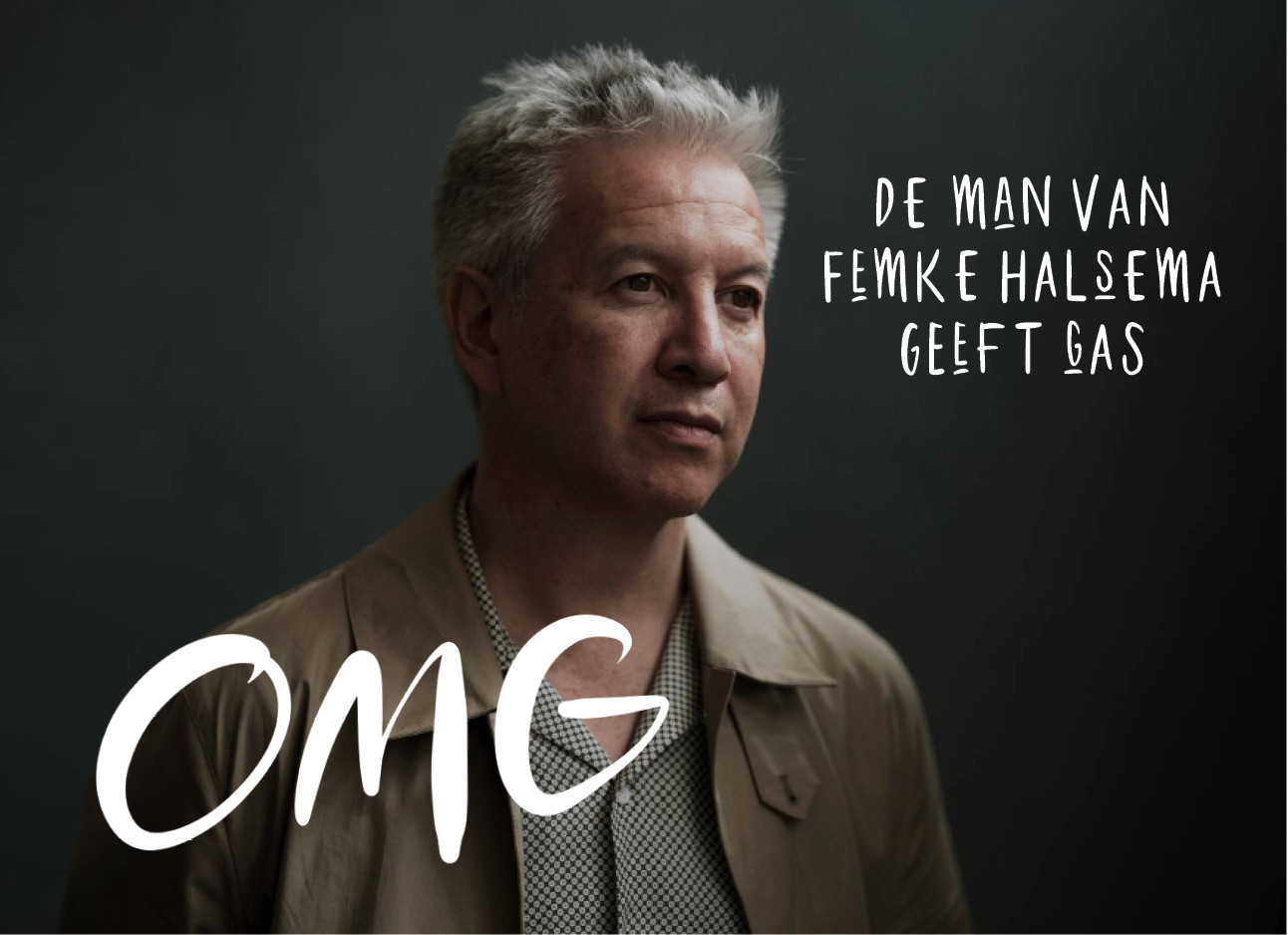
Wow, that was what I thought. And also: you have guts. Robert Oey, the partner of Femke Halsema, gave an interview to NRC. He was apparently done with the speculation, with painting his wife black and shaming his son. He wanted to bring forward the person behind the case. At least, that's what I think. And he succeeded. Because I read a nice man. An honest man too. But also a man who perhaps does not find his great happiness in an official residence.
There were about thirteen moments where I raised my eyebrow. I'll go through them with you.
1. The headline: “Then I think: fuck off with your official residence”
When I read the headline, I thought he was clenching his fist towards the murmuring crowd, but later I understood that he was explaining how the argument, which has not yet taken place by the way but is waiting for a good moment to come out, will look. Femke will accuse him of being negligent and of never having left a gun lying around in the official residence, and he will say that he also needs to be able to do his job (he is a film producer and needed the deactivated weapon as a prop) and then he will end with the statement: ‘Fuck off with your official residence.’ Or something along those lines.
2. The hate
Oey says that they (I read here ‘the family’) hoped to be rid of the constant anger and hate that Femke Halsema experienced during her Groen Links period. I found that heavy for her. And for him.
3. ‘Then you have to explain to your son that he is on the front page because they want to get his mother.’ Oey says he thought he was prepared for everything. ‘But that De Telegraaf would throw a fifteen-year-old boy under the bus, I never expected.’ I found it a beautiful metaphor, however bitter.
4. Oey did not immediately tell his wife that it must have been his weapon.
That struck me enormously. So your wife calls and tells you that your son has been arrested and had a weapon with him. You think: damn, that must have been the weapon I had for a shoot in my car and that I put in a jute bag in the drawer of the sideboard. But you don’t say that at that moment. Why not?
5. Femke said: ‘I want you to come back. I didn’t do that. I stayed in Bangkok for twelve days and threw myself completely into my work.”
I found it heavy to read. Your wife is in trouble and so is your son. You have unintentionally been an important link in that, but you do not come to their aid.
6. Femke didn’t even drive our son to the interrogation. To avoid giving the impression of: look, the mayor is sitting next to him.
Yet I read in everything a man who loves his wife very much and has admiration for her correctness.
7. Do I now have a criminal record?’
The moment the family hears that De Telegraaf is going to extensively cover the story. That moment. What must that be like? Knowing that tomorrow it will only be about you. About your child, for whom you want to build a wall around to protect him in his vulnerable teenage years.
8. Femke types a letter to all Amsterdammers. ‘Outside on the terrace. On her smartphone.’
They had just left the laptops at home. I have so much imagery with this sentence. The woman, the mother, the mayor: all roles in one. But still, the most important task is wanting to protect your child, writing on your phone.
9. ‘She typed all night. I just went to sleep and read the letter only the next morning.’
At times, Oey is not very good at his personal PR.
10. ‘I am very honest about this. This issue has not yet been discussed between Femke and me. But she is of course very angry.’
The interviewers ask further and Oey replies: ‘Only that we haven’t discussed yet. We can argue just fine, that’s not it. But she hasn’t said it to me yet, although she certainly wants to.’
I can imagine that such an argument can have really big consequences, but still. Not having talked about something so enormous together… Phew.
He continues: ‘She hasn’t yelled: ‘Horse’s ass, how can you…?’ And then I say to her: ‘This is just my job. Fuck off with your official residence.’ That is the argument we are both avoiding now.’
11. ‘Last time we had an argument when I parked our car in a loading and unloading spot.’
Look Robert, now I find you nice again.
12. ‘We are having a more intimate conversation here than I have had with my wife.’
But do you really mean that seriously?
13. ‘I am already committing an offense if I cycle against traffic on the Herengracht. But I just do it. I break the law every day.’
Now you’re talking, Robert. And take Femke with you. On the back of your bike. Against traffic. Let the wind blow under her skirt, her arms around your waist, her cheek against the bottom of your back. A glass of red wine at Hoppe, cycling through the most beautiful city in the world and hoping that later, on that bench in that square in Italy, you will chuckle softly when you think back to this. I wish it for you.


