


5 remarkable facts about peanut butter
Say wine, snacks or haute cuisine and the gourmands at online food magazine FavorFlav know where to drink, how to eat it and what to cook. This time our cheffies serve you: you didn't know this about peanut butter.
Every weekday morning, one of us stands there again, still half asleep, spreading peanut butter and jam on the sandwich for the lunchbox on autopilot. I mean, sure, peanut butter is nice, but every day the same? Yep. Are you also a peanut butter fanatic? Curious if you already knew the facts below.
Peanut butter was invented for people without teeth
No joke. Peanut butter has a lot of nutritional value, and inventor Dr. John Harvey Kellogg had the health of patients in mind who needed to get enough vitamins and proteins without being able to chew. That's why he came up with the idea of grinding peanuts for them in 1895.
About 550 peanuts are needed for a jar of 350 grams
So if you're wondering: why so many calories, just imagine how many peanuts that is, spread out on a carpet in front of you. But don't worry: mainly healthy fats, right? Especially if you skip the variants with palm oil (and there are many) and go for ‘pure’ peanut butter. Like Mister Kitchen’s super crunchy peanut butter without palm oil.
It takes almost 20 liters of water to shell about 30 grams of peanuts
Not the best news either. And yes, that sounds like a lot, but it's still less than what is needed to shell 30 grams of almonds (namely 290 liters) or 30 grams of walnuts (270 liters). Just sayin’.
Europeans eat much less peanut butter than Americans
But it must be said: in the Netherlands, the number of peanut butter lovers is growing. Just like in the United Kingdom and Germany, but in the rest of Europe, the stuff is much less popular. America is not happy about that, as the country has a huge number of peanut farmers who naturally prefer to see their market expand. Come on guys, one more sandwich peanut butter with pickles, we can do it.
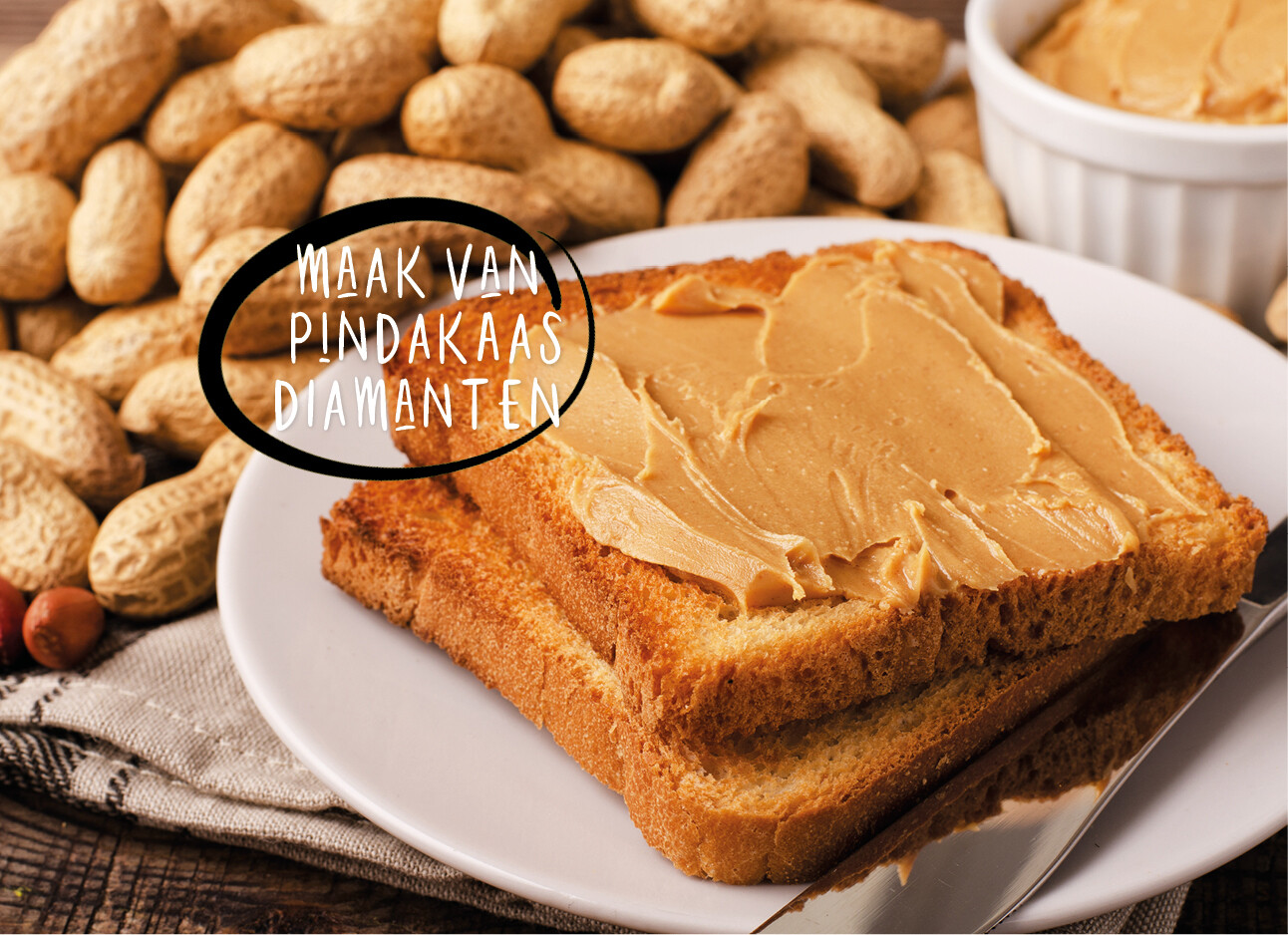
You can make diamonds from peanut butter
Whaaattt? Yes, not just at home in your shed or something, with your nephew's chemistry toy set. Scientists in Germany have managed to subject certain materials in a lab to pressure and heat in such a way that at the end of the process, after removing oxygen, a little diamond remained. Amazing! You know what? Let's start calmly with making peanut butter at all; you can easily do that at home.


