


Everything you need to know about the menstrual cup
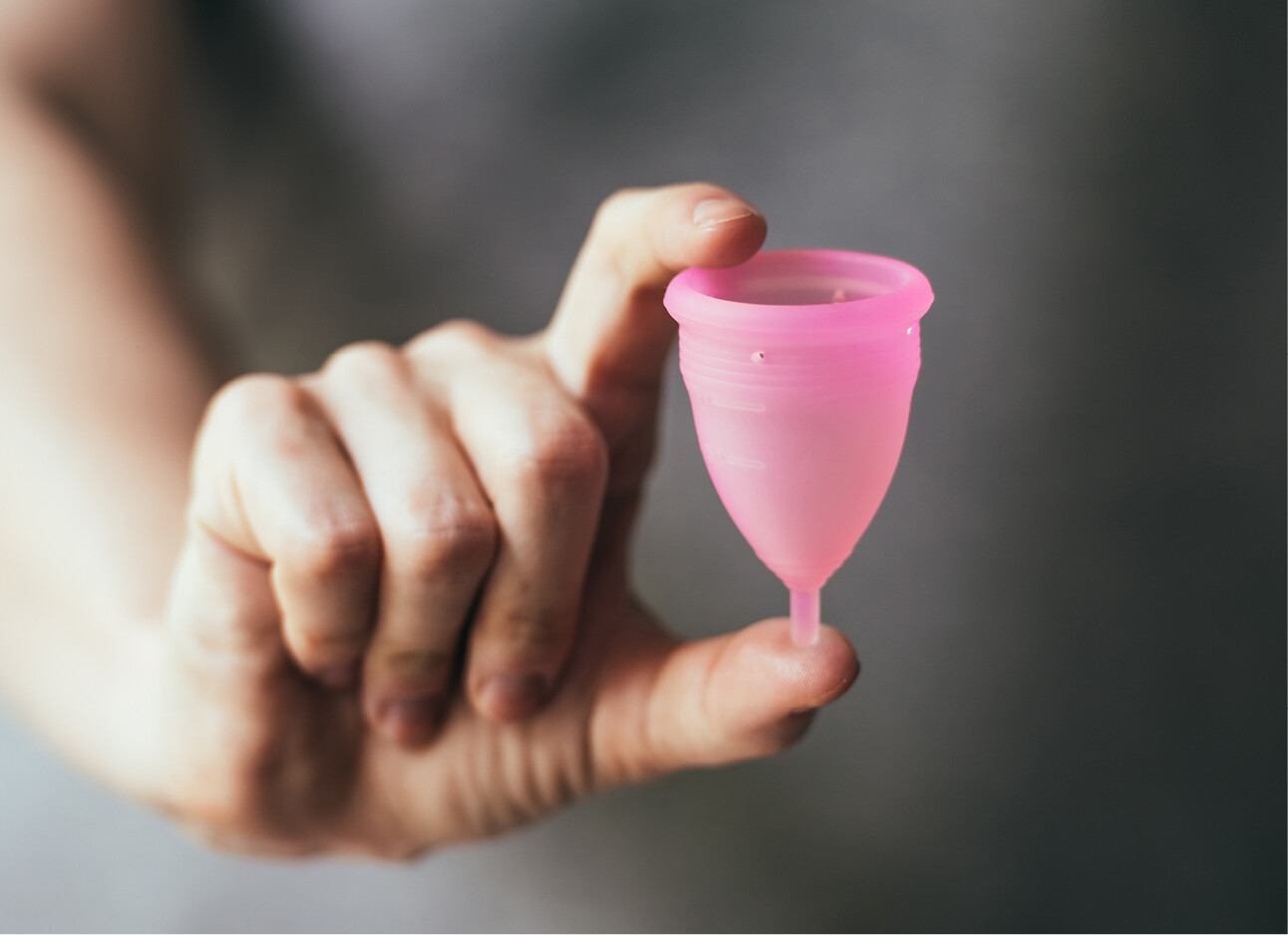
If you consider how many tampons with wrappers, panty liners with adhesive strips, and sanitary pads with flaps are used throughout a menstruating life, you immediately start hyperventilating about your carbon footprint. It's not surprising that more and more people are choosing a more sustainable alternative. The menstrual cup is currently a booming alternative, but what do you actually need to know about that cup before you start using it?
The cup is made of a flexible material, often silicone or TPE. This makes the menstrual cup easy to shape when you insert it into the vagina. You wear the cup slightly lower than you would with a tampon, so that the cup seals by creating a slight vacuum. In this way, it forms a sort of collection container. When removing it, you squeeze the cup to break the vacuum.
The menstrual cup is much friendlier to the environment than, for example, a tampon or sanitary pad. Did you know that you use an average of 10,000 tampons, which costs nearly 6000 euros? You simply boil the menstrual cup after use or clean it with a designated product, and it's ready for action again. So it's not only better for the environment, but also much friendlier to your budget. A good quality menstrual cup can easily last for years.
Throughout the day, it also requires much less changing. A tampon needs to be replaced every three to six hours. I was given the every-four-hour rule as a command by my mother. A menstrual cup can stay in for as long as eight to twelve hours, depending on the heaviness of your period. After that, you remove the cup, rinse it under the tap to prevent odors, and then clean the cup with a designated product.
What should you pay attention to when using a menstrual cup? Your IUD. It may be that your IUD shifts unnoticed when removing your cup, usually due to overly long strings on your IUD. So consult your doctor about what is wise if you plan to switch to using a menstrual cup. But that's not the only thing. Incorrect use can lead to prolapse of your organs, so read the instructions thoroughly to ensure that you use the cup only as intended.
If you prefer to skip the menstrual cup but still want to contribute to the preservation of our planet, consider tampons made from cotton or menstrual underwear. Both are also great environmentally friendly solutions.


