


Body language expert Denise Dechamps explains: ‘This is how you see that your partner is lying’

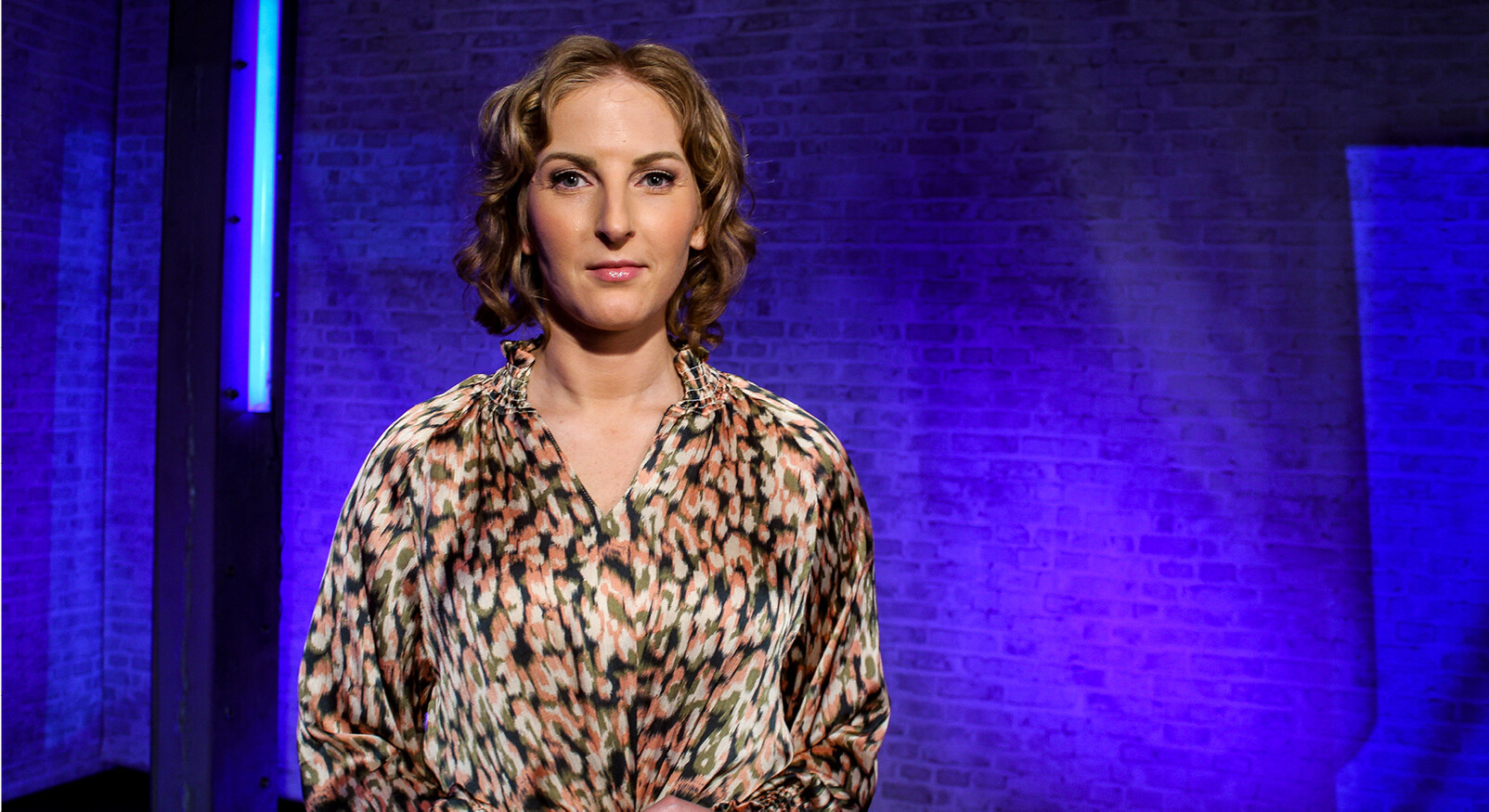
Flawlessly being able to see if someone is lying: who wouldn't want that? Psychologist and body language expert Denise Dechamps is such a human lie detector and provides training on understanding body language to companies, entrepreneurs, and high-level professionals through her Body Language Academy. In the Dutch edition of ‘A Faking It Special’ on Discovery, she investigates three notorious criminal cases involving Dutch individuals together with other experts. These cases are those of Joran van der Sloot, the Deventer Murder Case, and Frank Masmeijer. All of them have been convicted, but to this day they deny or have denied most of their cases. Mega interesting, and of course, we wanted to learn everything about her expertise and recognizing lies, especially what to do if you suspect your partner is lying.
How do you see that your partner is lying?
‘Recognizing lies is often more complicated than you see in movies. Unfortunately, there is no simple list of specific signals that you can directly see that someone is lying. Although there are no specific ‘lie signals’, non-verbal communication can give us insight into the emotions of the other person. Signals of emotions such as shame, sadness, or incongruence can indeed be read and may indicate possible lies. A common emotion when lying is discomfort, and this is often accompanied by fidgeting movements or actions where someone tries to reassure themselves. If you suspect someone is lying, it is important to ask follow-up questions. When someone becomes uncomfortable with their own lies, the discomfort often increases, causing the person to ultimately betray themselves through more uncomfortable signals. Another signal of lying is when someone tells a story but simultaneously shakes their head ‘no’; in that case, it is also useful to ask follow-up questions.’
Can someone lie so well that you really don't notice it?
‘Although some people are very good at hiding lies, the truth always leaks out somewhere. It is impossible for people to continuously control all non-verbal signals. If someone is extremely good at lying and does not experience guilt or tension regarding their lies, it can indeed be difficult to realize that someone is lying. Because non-verbal signals are primarily based on emotion, it becomes tricky when someone shows no emotion. This can cause us to notice nothing. Also, you may sometimes not place emotions well, making it harder to detect a lie. For example, I once sold an iPhone to a very nervous and tense boy. I assumed he was nervous about buying a phone from a stranger, but eventually, I found out he had scammed me with fake money. While I did notice his discomfort, he was still able to fool me. Recognizing lies can thus be complex and depends on various factors.’
Can the repetition of lies cause people to start believing their own lies?
‘Yes, it can. Research has even shown that it is possible for someone to influence your memory and recollections by repeatedly telling a story that is actually not true. The better someone knows you, the better this works. For example, if an event took place on the street, someone can give you the impression that the event happened very differently by repeating a different story. However, this can be traced: in most cases, when someone knows they have lied and often repeats this narrative, it will often not go into detail, as people often do not tell their lies in detail. Therefore, it can be effective to subtly ask follow-up questions about specific details. If a lie has been told, more and more discomfort will be shown as more questions are asked.’
Can you fake a confident body posture while lying?
‘It is possible to fake a confident body posture, but there will always be subtle signals visible. The better someone is at faking a confident body posture, the more trained the other person must be to notice these signals. The brain often unconsciously reveals signals of discomfort, which an untrained eye would not quickly notice. Think of a confident posture combined with red spots on the neck: for many people, that person will come across as powerful, but I do notice the discomfort.’
How do you ensure that you adopt a more confident body posture?
‘Women often tend to tilt their heads and show their necks during a presentation or when introducing themselves. This is a non-verbal action that can be seen as insecurity because showing the neck, a vulnerable part of the body, communicates to the other person that he or she is the ‘leader’. A simple solution to appear more confident is to keep your head straight during moments of uncertainty. Women also often tend to speak with loose wrists. Round and soft movements, such as flapping wrists, are more associated with approachability and softness (thus less leadership and confidence), while angular movements are associated with strength. This can easily be solved by keeping your wrists straight while talking. You can still use as many hand gestures as you want, but you will come across as stronger and more confident.’
How can you tell that someone is telling the truth?
‘Recognizing the truth can sometimes be harder than recognizing a lie. It is often based on congruence, or the consistency between words, emotions, and body language. When someone is genuinely happy to see you, this will be visible in their facial expression. If you are having a conversation that is not uncomfortable, you also do not want to notice signals of discomfort. In many relationships, it is a pitfall to assume that what someone says is the truth without question. We want a relationship to work, so we are less likely to assume that someone is lying. There are also many misconceptions about non-verbal signals, such as looking away and blinking, which are associated with lying, while making eye contact is seen as a sign of truth. Unfortunately, it doesn't work that simply and that is not true either. It is important to remain critical and look for consistency between words, emotions, and body language to get a better picture of the truth.’
From July 2 at 20:30, ‘A Faking It Special Netherlands’ will be available on Discovery (or can be binge-watched all at once via Discovery+).
Image: Netflix


