


This is how you recognize fake webshops
And there are actually many more (1 in 5!) than you think...
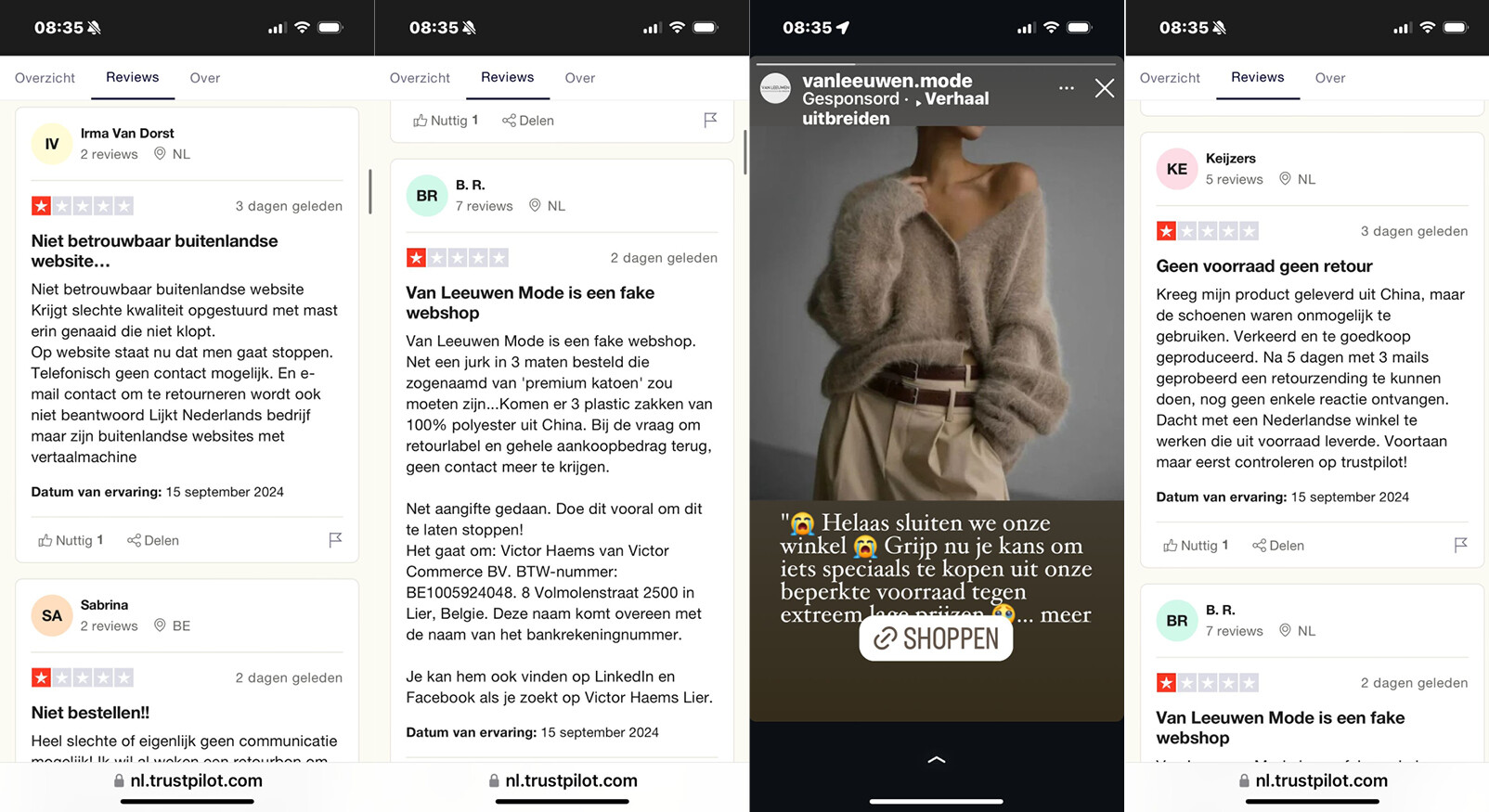
Look, if there's one thing we're good at when it comes to online sale shopping, it's at our editorial office. This week, a beauty of an oversized cashmere sweater was dropped via Instagram Stories, which due to the ‘closing’ of the store in question would no longer cost €150,- but €44.95. Well, that sounds almost too good to be true, and unfortunately, that's also the case... More and more often, we as consumers are being taken for a ride when buying online stuff. Sometimes we receive something (after a long wait), but the sizes, the model, and the material are far from what was promised to us. And then the horror begins: returning is not possible. So, we got scammed!
Where we were previously advised to check the URL of the webshop (which should be secured with an SSL connection – you can easily check this by looking for a padlock in front of the web address in your browser), the scammers are certainly not sitting still. They have already found quite a few new tricks to scam us. To prevent you from becoming a victim of this sneaky business, I'm giving you tips today on how to recognize a fake webshop. Here it comes:
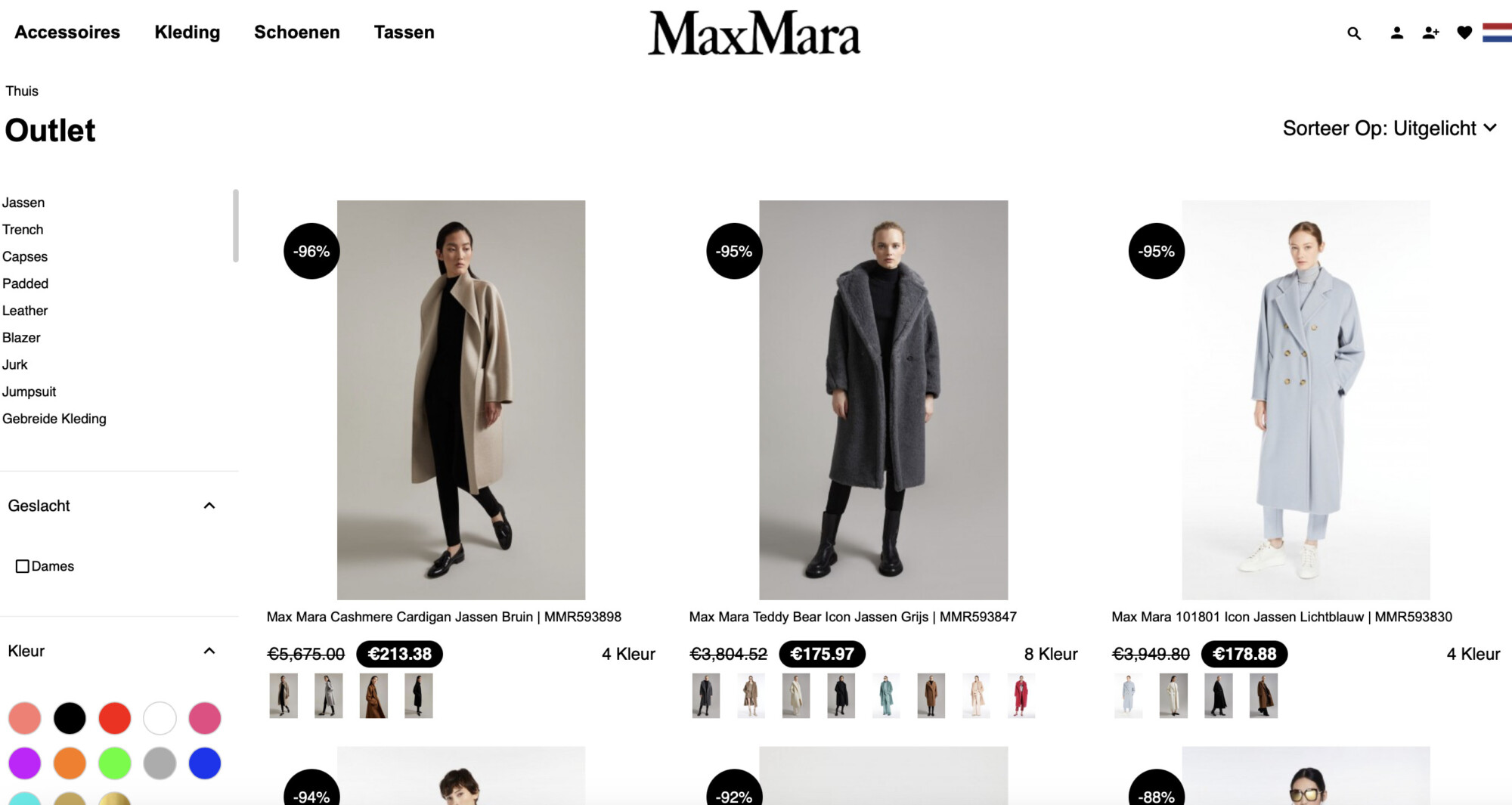
1. Although some offers make your heart race, it's first and foremost important to remain calm and think logically. Even if you wish it were different, an unknown webshop simply cannot offer too many beautiful items, right? And let's talk about that price tag: sometimes prices are really too good to be true. Prices far below market value or illogical prices (like €29.33, for example) can indicate a fraudulent website. Still in doubt? Then do a double-check on a comparison site to really compare the prices well.
2. Google is your best friend. We were told that the store had to close after 20 years. Of course, there was no article or news about this... Strange! Furthermore, it's smart to read the reviews to find out how other buyers feel about the webshop. You can do this by checking the reviews on the website or simply googling “Review + [webshop name].” Trustpilot, an online community for reviews, is also a good place to double-check.
3. Look up the address of the store. Do you see an empty industrial area or a dilapidated building? Then you know enough: this is bad news!
4. Check the payment options: PayPal and Klarna are often trustworthy. Fake webshops often offer only one way to pay (in advance), while shops are legally required to also allow (partially) paying afterwards. Can you only pay with your credit card? Then think very carefully.
5. What is the return policy of the webshop? A legitimate webshop should always provide the option to return the order.
6. Pay attention to quality marks: There are various webshop quality marks. Some quality marks conduct a strict certification at the webshop, others do not. So check carefully which quality mark you are dealing with.
7. What does the layout of the webshop look like? Does the webshop look like it was translated with Google Translate and are there many spelling mistakes on the website? Or are the contact details unclear? Then the webshop is probably fake.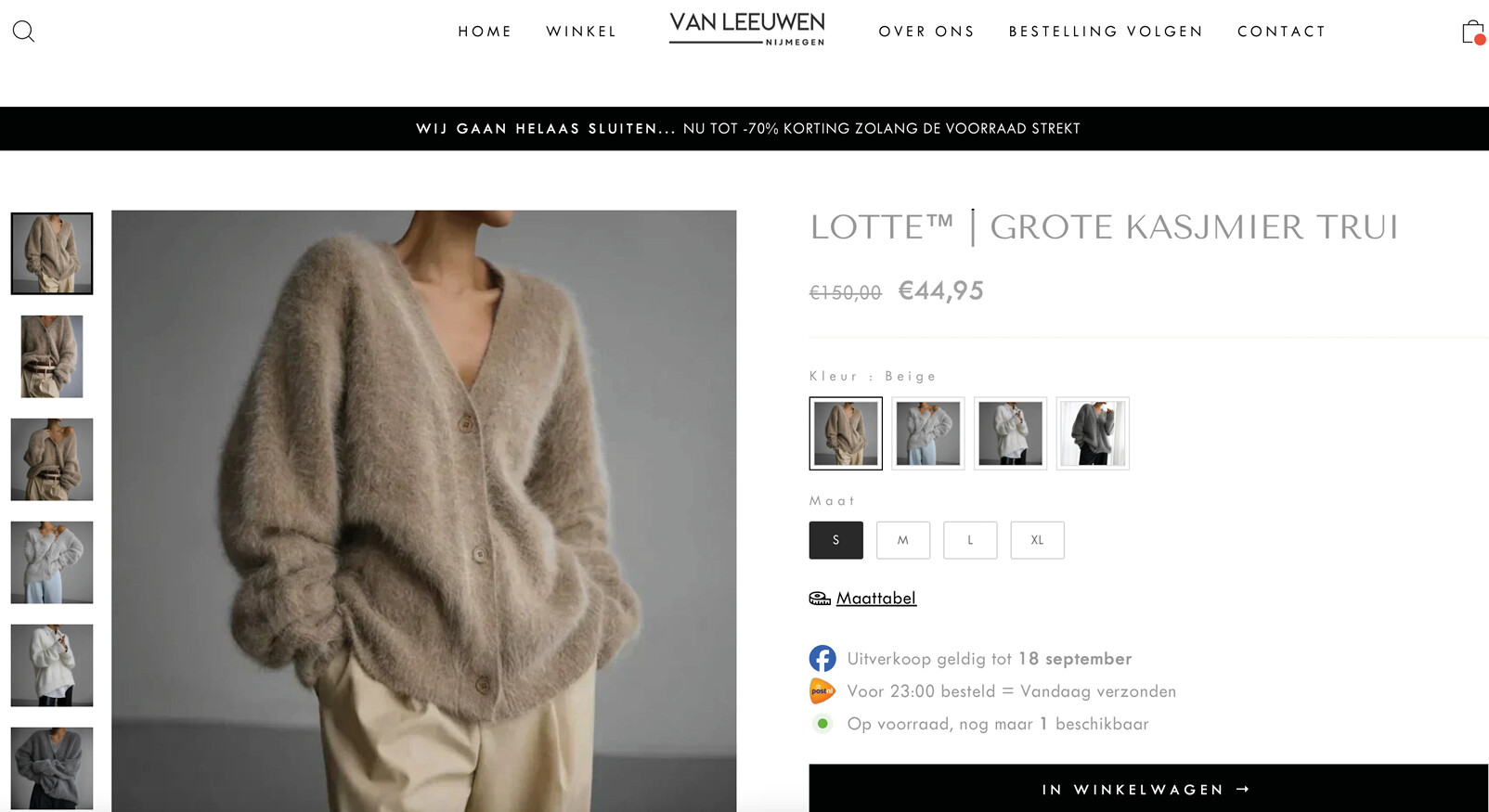
8. Still not trusting it? On Politie.nl you can view a blacklist of fake webshops. Who knows, it might already be on there... You can also check websites like Who.is and SIDN to see when a URL was created. If a website was only recently registered, this can be an indication that something is not right. And last but definitely not least: the KvK number and the VAT number must always be mentioned on the website. But be careful: even the details from the Chamber of Commerce can be fake. So don't use this as your only control measure.
9. What do their social media channels look like? Does the Instagram account, for example, have many followers? Are posts being made for a long time? And are there various responses from followers? If the answer is no? Then the chance is high that this account is linked to a fake webshop. So don't fall for it.
Have you been scammed anyway? Very unfortunate and of course not your fault. Try to share it as much as possible on social media, in your circle of friends, but also with the Police or file a report with ACM, so that hopefully you can warn further victims in time.
Hopefully, you find this helpful and those *pardon my French* types never earn another euro from their shameless scamming practices. Byeeee.


