


Tour de France for dummies
Despite being a huge sports fan, there are a few sports that I still have no understanding of at all. I'm talking about something like cycling. I don't get it, and I actually don't want to understand it because there are so many complications involved. But also because the person I ask for an explanation gets so enthusiastic that I show interest in their favorite sport, that a barrage of information follows, and I quickly tune out. It's a bit like overly complicated board games: just let me play 30 Seconds, I don't feel like coming up with strategies when it should be a form of relaxation.
But now that the Tour is underway and I've somehow let myself get swept up into participating in a prediction pool, I decided to delve into it. In the simplest way: the internet. So here I present, in as few words as possible and only with the most necessary information, the ‘Tour de France for Dummies’.
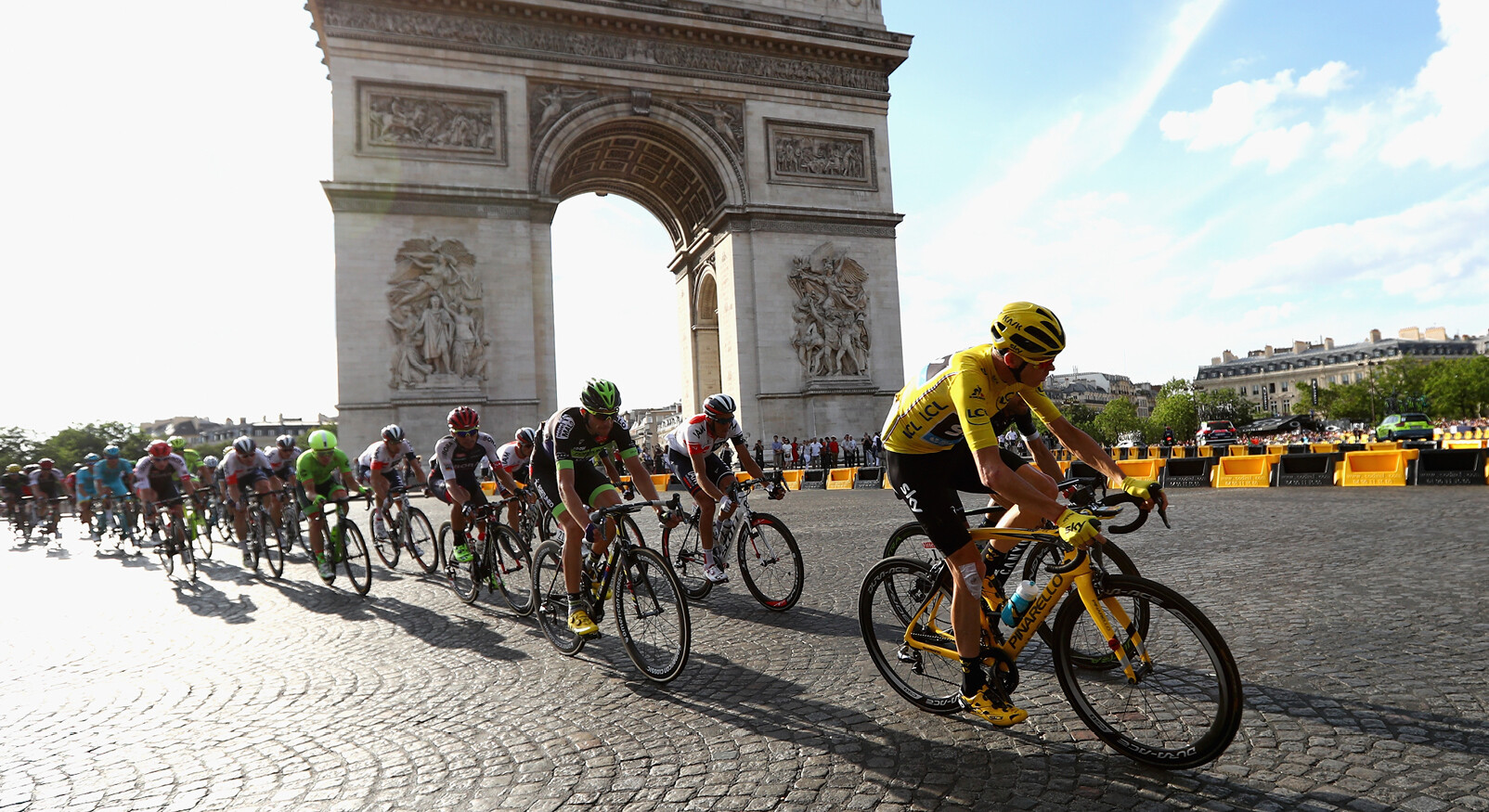
Okay, to start with, we talk about stages. These are the parts into which the tour is divided. Every day there is one stage: a section of the entire route that they ultimately have to cycle (it's called a tour for a reason). After each stage, different jerseys are awarded. For example, there is someone who is very good at climbing mountains: they get the white jersey with red polka dots. The sprinters, who usually have the best chance of winning a stage, earn points each time. The one who finishes first in the stage gets, for example, 50 points, the second 40 points, and so on. The sprinter who has collected the most points gets a green jersey. Then we have the one who is leading in the overall classification (who has the shortest total time over all the stages so far), recognizable by a yellow jersey. The best cyclist under 26 years earns a white one.
Each stage has different elements. Some sections have a lot of mountains, while others are flat. In the Tour de France, there are especially many mountains to be cycled. It takes quite a bit of energy, and to help the cyclist who has the best chance of winning the Tour as much as possible, there are a few cyclists who act as ‘domestiques’. They help that person, so to speak. They ensure that they have enough water and snacks and sometimes shield them from the wind. That simply costs less energy. If there is a lot of wind, they ride in ‘echelons’. Then one person is completely exposed, and the rest benefit from riding behind them so they don't face as much wind.
Then you have the ‘breakaway riders’. They ride at the front, sometimes with a ten-minute lead over the main group (which is called the peloton), so I always thought they were the best cyclists and that they would just win anyway. But that's not necessarily the case. They actually use a lot of energy. The cyclists in the peloton save energy because, as mentioned earlier, they also shield each other from the wind. As they get closer to the finish, they suddenly start cycling very hard to catch the breakaway riders, and then the teammates of the biggest contenders usually let their main guy go ahead. It has already been agreed in advance who from their team should go for the win. The rest are actually a bit in service of that person, and that's why fans also call cycling a team sport.
It’s still a jumble of rules, and all the jargon that is used I have also left out for now, because otherwise it will completely confuse us. But in any case, it is now interesting enough to watch a bit more often. Eventually, it will also become simpler to really follow it (and maybe even come to really enjoy it).


