


This is how to recognise real matcha
and no powdered sugar with a green filter

Matcha is hot. Or well, hahaha, usually cold — with oat milk, ice cubes, and a bamboo straw in a beautiful glass. But how do you know if that bright green hype in your glass is really top quality? Spoiler: there is so much bad fake Matcha for sale! But how to recognize good quality matcha (and especially which ones to avoid) I will tell you here. Don't be misled by the term Ceremonial grade, because they put that on all (fake matcha) packaging.
This is how to recognize real good Matcha
1. The color of the Matcha says it all
Good matcha tastes good bright, vibrant, and grass green or dark green (emerald green) Think of a green Japanese forest just after a rain shower. Do you see dull powder, or yellow to brown shades? Then it’s not good Matcha, or made from old leaves, or poor cultivation. But still, many brands add colorants to make it look extra green. Unfortunately.
2. Texture: velvet or grit?
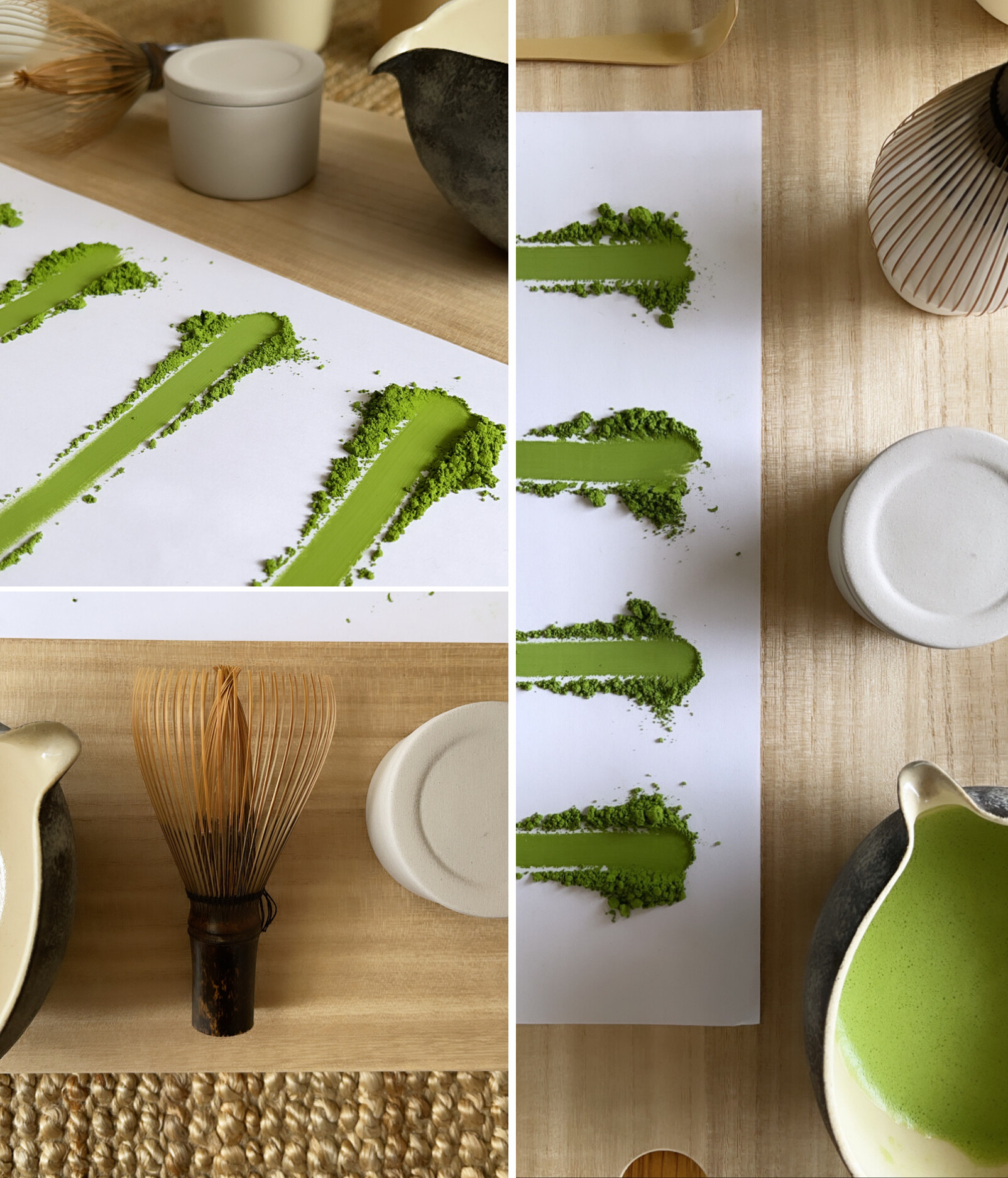
Quality matcha feels like soft baby powder. The finer and softer, the better. If matcha is traditionally ground with granite mills, it ensures that ultra-fine structure. Coarse powder = low quality. The very best matcha, once you spread it, creates a very nice even line.
3. Smell it
Matcha should smell fresh and lightly sweet. With good Matcha, you can immediately smell (and taste) the difference: coming from the first harvest, full of L-theanine. No smell? Then your powder is probably long expired.
4. Taste test: umami is your BFF
Top matcha tastes creamy, soft, and subtly sweet. Is your matcha bitter or astringent? Then you probably have a cheap culinary grade.
5. Foam party? Yes indeed.
Matcha should be whipped into a fine, creamy foam layer. No foam = no finesse.
6. Origin: hello Japan
Yes, here it is again. My beloved Japan. But again, if you really want matcha, it really only comes from Japan. And mainly from regions like Uji, Nishio, and Kagoshima. They are legendary when it comes to matcha. Much matcha, like for example at Starbucks, is mixed with green tea. Matcha is also green tea, but with Matcha, the tea bushes are covered with black nets for 25 days, so that the growth process is influenced and more catechins are released. That is a form of antioxidants. The place of origin is the most important. Generally, the best matcha comes from Uji (near Kyoto). The best organic matcha comes from Kagoshima, which is in the south of Japan.
7. Packaging is so important: protection = preservation
Light, air, and moisture are the enemies of matcha. You want the perfect UV-resistant, airtight packaging to maintain quality. Away with that translucent ziplock bag.
8. Price = quality
The best and real matcha costs on average between €25 and €40 per 30g. Do you see a deal for €6.99 with a free whisk? Run. Run. Run.
Test your matcha at home
Spread a small amount of matcha on a white piece of paper. Does it form an even, light green trail without interruptions? Then it is high-quality matcha. Dark, grainy, or blotchy trails indicate a lower grade or poor grinding.
Here you can buy the best matcha online
Here you can order the best matcha online
If I could give you one tip, and no this is not an advertisement, it would be this (tip comes directly from my brother Dustin, who lives in Japan and even temporarily had his own matcha brand). He knows. And he swears by it: at Nekohama they really sell very good matcha.
And even better, the brand was founded by Dutch model Sanne Vloet and her Japanese partner Max Ando. They also combine ancient Japanese tea traditions with a modern, minimalist look. The result? Perfect, pure matcha.
Best matcha for when you're in Japan, buy it here:
If you ever find yourself in Japan, you definitely have to stop by Ippodo. They have been selling top-quality matcha for centuries and have stores all over Japan — often even as beautiful counters in luxury department stores like Isetan or Mitsukoshi.
Want it even more exclusive? Then go for Tsujiki. This is really next-level matcha: they belong to the absolute top, win prestigious awards, and supply tea ceremony masters. Expensive, yes, but you really taste pure perfection in powdered form.
Finally…
Good matcha is not a hype. It is a moment of self-care, focus, and calm. So now that you know what to look for.
Would you also like to go to Japan once?
I have written two very nice articles about my travels to Japan.
Read here: my perfect round trip for Japan.
Or: This is what you should not do when you go on vacation to Japan
Image: @josefienweyns


