


SPF for children: these are the most frequently asked questions
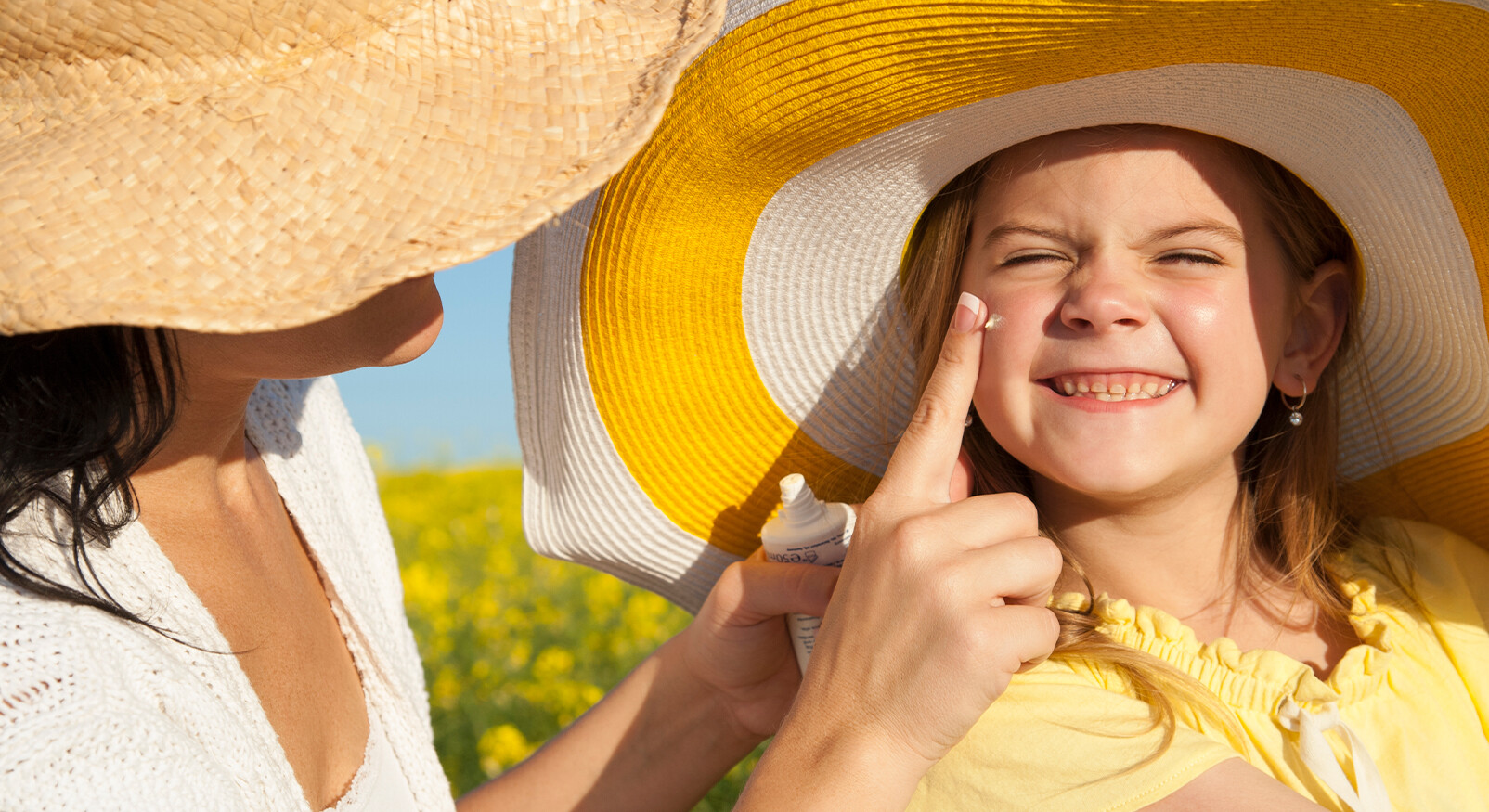
Confession time: I really find applying sunscreen on my kids a hassle. My boys are almost three and just turned one, and they never sit still when you want to put a layer of sunscreen on them. Once you finally succeed, he takes a dive into the sand, which means that besides that SPF, he also gets a big patch of sand on his skin. Which of course will irritate again, and then I'm left fumbling with talcum powder (which works really well to get rid of sand, by the way) to save the situation. You get it: a big mess.
But we have to apply it. And not just a little bit. Especially now that the sun is showing itself more often, sunscreen is not a nice-to-have but a must. Only: with all those types of SPF for babies and children, questions arise. How often should you actually apply it? Which factor is good? And what is really safe for a baby’s skin?
I looked it up. Here are the 7 most frequently asked questions about SPF for children – and the answers that you really need.
1. Which SPF is best for children?
At least SPF 30, but SPF 50+ is the absolute best, say all dermatologists. Children's skin is thinner, more sensitive, and does not have enough pigment to protect itself. According to the KWF, it is important that sunscreen for children protects against both UVA and UVB radiation. So check if ‘broad spectrum’ is mentioned on the packaging (that means UVA and UVB protection).
Good to know: the difference between UVA and UVB
UVB = burning, so sunburn. These rays cause a burned skin.
UVA = aging, or skin aging. These rays penetrate deeper into the skin, cause skin aging, and can cause long-term damage.
2. How often should you apply it?
This probably sounds familiar to you, but it's true: every two hours. Whatever the factor, you don't want to take risks with children. And always after swimming, drying off, or sweating a lot after playing or exercising. Even if it says “water-resistant” on the packaging. My tip: set a timer on your phone (also handy for yourself, because time flies) or make it a fixed moment (for example during snack time). And make sure you always have that sunscreen in your bag. Or, tip from the team of experienced moms: keep one in the stroller, one in the car, and one in the (diaper) bag. That way, you never run out.
3. When can you start using sunscreen on babies?
You can start applying sunscreen to your little one from birth, but do this carefully and only on uncovered areas. Think of hands, feet, and very importantly: (behind) the ears. For the rest of the body, you can cover it with light (UV-protective) clothing, preferably a long-sleeved shirt, pants, and a sun hat, but keep an eye on the body temperature by feeling the neck, because being too warm is also dangerous. Stay in the shade with a baby, that is really the most important thing. Preferably no sun for babies under six months, if possible.
4. Is special children's sunscreen really necessary?
Children's sunscreens are gentler on the skin and often free from perfume, alcohol, and other additives. They are specially developed for the more sensitive skin and often contain fewer allergens. So don't test whether your child can tolerate ‘adult’ sunscreen, because if your child gets a sunscreen allergy, you're in even more trouble. Irritation, red bumps, itching, and (blood) blisters can result from this. And you certainly don't want that. So prefer a special children's formula over your own SPF 30 from last year that you fished out of your beach bag. Good news: you can still use your child's sunscreen.
5. Should you also apply on cloudy days?
We should actually always protect our children, just as we should do for ourselves. The advice is to apply every day, because UV radiation also comes through clouds. Actually, as long as it is light outside, there is UV radiation. We often only think about it when the sun is shining and we are going to the park, pool, or beach, right? While young children play outside a lot (I hope). So let's teach ourselves that when the shoes go on, a layer of protection also goes on the body. So yes, apply. Always. Rain or shine.
6. What are safe sunscreen brands for children and babies?
There are of course so many sunscreen brands, even for children, but what you need to pay attention to is that not all sunscreens for children are also suitable for babies. There is a difference here as well. We have listed our favorites, and some have also been tested by the Consumers' Association and approved by dermatologists:
Weleda Baby & Kids Sunscreen SPF 50
A 100% natural sunscreen with mineral filters (without nanoparticles), specially developed for the delicate skin of babies and children. Fragrance-free, water-resistant, and organically certified. Suitable from birth – safe for babies, toddlers, and older kids.
Derma Sun Kids Sunscreen Lotion SPF 50+
A Danish brand known for its ultra-safe formulas. This lotion contains no perfume, colorants, or parabens and has a nice texture. Suitable from 6 months – contains chemical filters, so preferably not for newborns, but ideal for babies from half a year.
Biodermal Kids Sunscreen Milk SPF 50+
Contains soothing ingredients like canola oil and vitamin E, and absorbs quickly without stickiness. No perfume, but chemical filters. Not recommended for babies under 1 year – better suited for toddlers and older children.
La Roche-Posay Anthelios Dermo-Pediatrics SPF 50+
Very high protection against UVA and UVB radiation, free from perfume, alcohol, and parabens. Contains a combination of mineral and chemical filters. Suitable from 6 months – for younger babies, only use in consultation with a doctor or skin expert.
Drs Leenarts Suncare SPF 50
This sunscreen is fragrance-free, alcohol-free, and contains antioxidants like vitamin E. It leaves no white residue, spreads nicely, and is water-resistant. Suitable from birth – one of the few sunscreens that is truly safe for babies, even for the tiniest ones.
Kenko Sun SPF 50
A natural sunscreen with mineral filters, suitable for young and old. Contains nourishing oils like sunflower and shea butter and a subtle natural scent. Suitable from 6 months – due to the natural fragrance, preferably not for newborns, but from 6 months a mild and sustainable choice.
AH Care Sensitive Baby & Kids Spray SPF 50+
This budget-friendly sunscreen spray from Albert Heijn offers high protection and is specially developed for the sensitive skin of babies and children. The product is fragrance-free and water-resistant. In the Consumers‘ Association test, it received a score of 7.0 and was declared ’Best Buy'. Suitable for children from 6 months – due to the spray form, use on younger babies is still discouraged.
Etos Sensitive Baby & Kids Spray SPF 50+
This sunscreen spray from Etos is specially developed for the sensitive skin of babies and children. The product is fragrance-free, water-resistant, and offers high protection against UVA and UVB radiation. In the Consumers‘ Association test, it received a score of 7.0 and was also declared ’Best Buy', just like the AH variant. Suitable for children from 6 months – also due to the spray form. It can be done, but first apply it to your hands and then on the body.
7. Last but not least: tips to make application easier
- Use a large makeup brush: kids love to play dress-up and you can apply it without sticky hands. Ideal.
- Sunscreen stick for the face: no mess, and they can do it themselves. My tip? Agree together that your child can first do it on you, and then apply it to your child. They find it super interesting.
- Make it a game: who gets applied the fastest?
- Spray first on your hand, then on your child: prevents wrong spraying, for example in the eyes or mouth, and that it disappears more into the air than on the skin. Often a spray is also quite cold when your child's skin is warm from playing and sun, they get startled and don't want it anymore. So warming it a bit in your hands doesn't hurt.
- Draw figures with SPF – suns on their arms, hearts on their legs. Don't make it too complicated for yourself and let your child apply it themselves.
Equally important: sunscreens with lower protection than claimed
The Consumers' Association has conducted several tests and it turns out that some sunscreens for children offer less protection than stated on the packaging. Whuuuut? Check them out below:
Nivea Sun Kids Ultra Protect and Play SPF 50: measured SPF 41.3.
Kruidvat Solait Sunmilk SPF 50: measured SPF 32.7.
Cien Sun Kids Sun Protect Cream SPF 50: measured SPF 36.
Credits for sunscreen with lower protection: MAX Meldpunt


