


How does Steve Madden get away with it time and again?
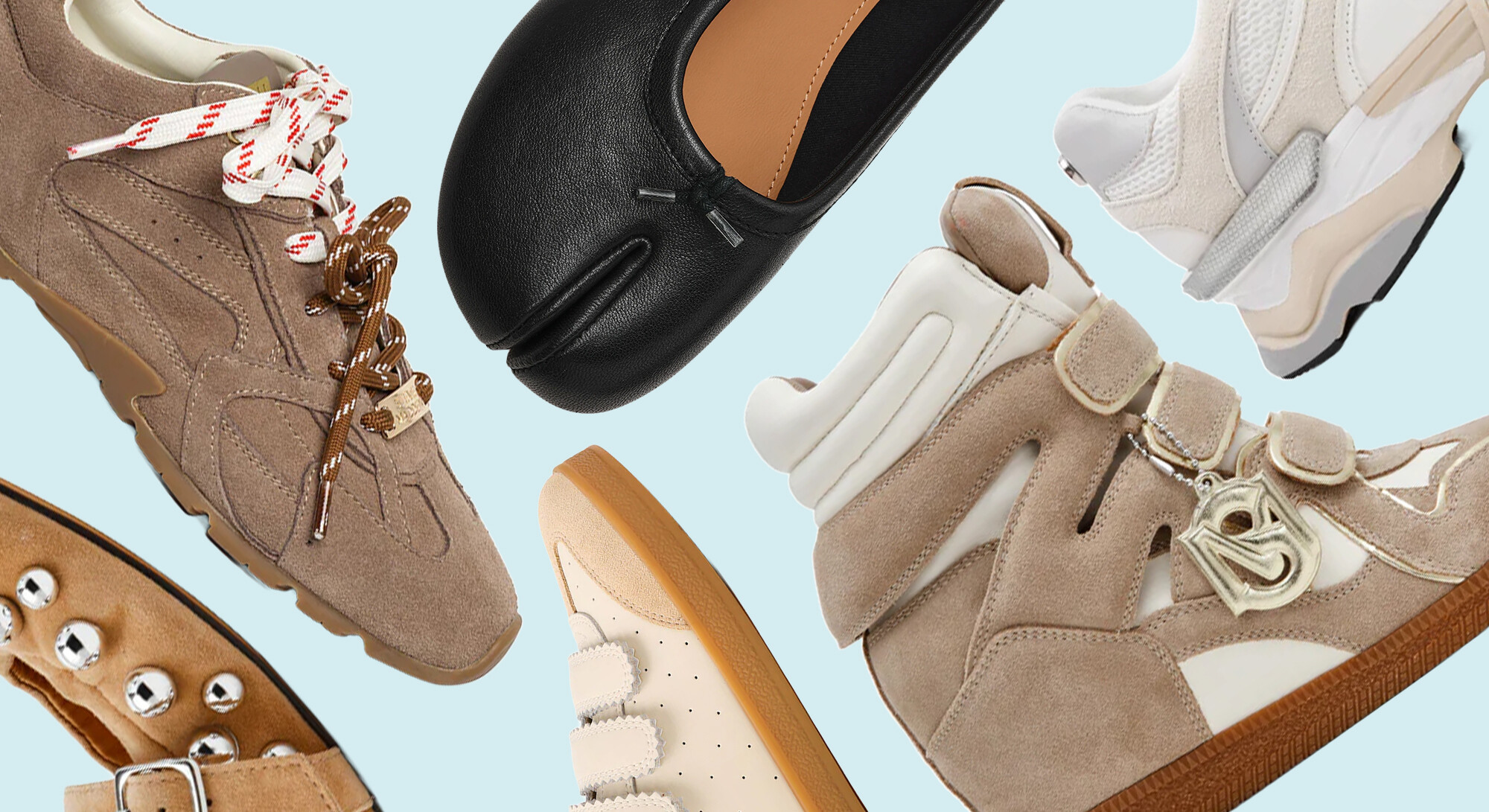
Earlier this year, a Steve Madden store opened in Eindhoven, and as one does, I walked in. In less than five minutes, I spotted the Isabel Marant Bekett sneaker wedge, the Miu Miu Tyre Ballerina, and the Christian Louboutin Cassia Lace-Up. At least, almost. The price tags of around a hundred euros revealed that these were not the originals, but versions that resembled the designer shoes.
The observant buyer sees the small differences, but those with a quick walking pace won't be immediately corrected by a passerby. Steve Madden has a talent for that. The brand makes dupes, sells them for a fraction of the price, and affectionately calls the women who wear them ‘my girls’. A formula that is hard for consumers to dislike.
But how has the company gotten away with this for 36 years? How can Steve Madden repeatedly release shoes and accessories that so closely resemble designer pieces without being crushed by lawyers?
The difference between a dupe and a lawsuit
Before we declare Steve Madden the greatest legal genius of the fashion world: he doesn't come out unscathed. According to Mr. Madden himself, the company is sued day and night by luxury houses and sports brands. The fact that the brand is still standing has everything to do with the difference between a counterfeit product and a dupe.
A fake designer handbag with the logo of the original brand on it is illegal. A bag that looks suspiciously similar but carries no logo and just changes a few details plays a very different game under American law. And Steve Madden knows those rules better than anyone. Unlike, for example, music or film, fashion in the United States is relatively poorly protected by copyright. Brands can protect specific elements, but they can't just claim an entire style or silhouette for themselves. He makes a strap slightly wider, chooses a different sole color, or changes just enough to create distance between his design and the original. In fact, he doesn't even hide the fact that he draws inspiration from big names. He once said that when he sees the same shoe three times during a walk, he knows it's time to release his own version. With the necessary twist, of course.
Those Christian Louboutin ballerinas I saw in Eindhoven were a perfect example of this. Almost an exact match with the original, except for one detail: the bright red sole was missing. And that sole is protected because it makes the shoe instantly recognizable as a Louboutin.
‘Adidas does not own all stripes’
The same principle also played a role in a legal conflict between Steve Madden and Adidas. Because when you think of Adidas, you think of three stripes. On tracksuits, sneakers, and pretty much everything the brand releases. When Steve Madden launched a shoe with a stripe design, Adidas felt that the design resembled its own signature too closely. Madden saw it differently. According to his lawyers, Adidas acted as if it had a monopoly on every conceivable stripe, bar, or band that could ever appear on a shoe. Their argument was simple: consumers are not stupid. No one would mistake a Steve Madden sneaker for an Adidas shoe just because it has a few stripes on it.
Still going to prison
Strangely enough, the biggest legal blow of Steve Madden's career had nothing to do with heels, stripes, or copyright. In the early 2000s, he ended up spending 41 months in prison for securities fraud and money laundering.
The next time you see a Steve Madden shoe and can immediately point out which designer it was modeled after, you know someone in the office has done their job successfully.
SOURCE: legalclarity & fashiondive


