


Woman Behind the Brand
Marloes Nabben from MÀNA Amsterdam
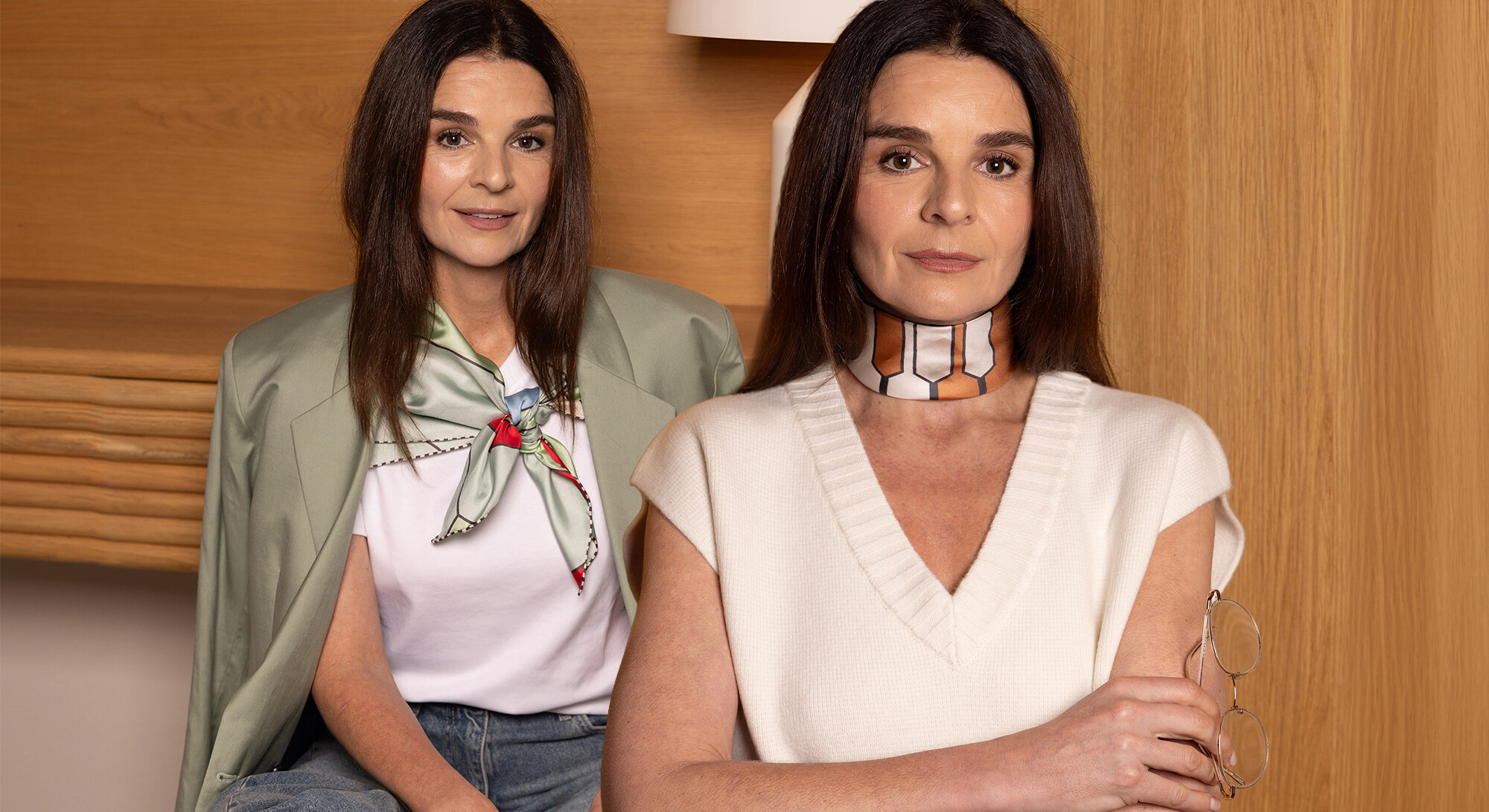
Of all the wonderful things I get to write about, I think highlighting women is the most enjoyable. Especially when they are women who dare to start something new, who take initiative and are willing to take risks. Today, I open the stage for Marloes Nabben, founder of the design label MÀNA Amsterdam.
Marloes, first of all, what a beautiful collection you have. When did you think: I’m going to start a business with this?
Thank you. It actually didn’t start with a business plan, but from a feeling and insight. After years of working as a creative director and brand strategist at the intersection of retail, interior, and design, I saw that people have less and less need for more, but rather for meaning. For that one item that elevates everything: a subtle signature that distinguishes them, without them having to try harder.
That’s when I felt: I want to create this myself. Something beautiful, distinctive, and lasting. Something you can wear, keep, and pass on. That’s how MÀNA was born. Today, I design with that same idea for men and women who want to stand out without shouting. I’m currently doing this with scarves, but ultimately I see MÀNA growing into Maison MÀNA: a world where pattern, textile, and lifestyle come together.
You love subtlety and an effortless way to express something, something that a scarf naturally has. You’re in luck because this is the season for scarves. I’m completely addicted to the phenomenon. Have you always had this love for scarves, a great passion?
Yes, absolutely. Although that applies to me more broadly: I have always had a fascination for accessories like scarves, bags, and shoes. That’s where personality often lies. They are often the pieces that remain while a wardrobe keeps changing.
A good accessory can elevate an entire look without feeling forced. I find that subtle effect amazing. Few items in fashion history have had so much effect with so little as the scarf. The scarf felt to me like the most elegant first carrier, but certainly not an endpoint.
If I were to tell the young Marloes that she would later have this profession, how would she have reacted?
She would have understood it immediately. As a child, I was already engaged in fantasy and writing, patterns, clothing, interiors, and making something out of nothing. My mother sewed everything herself, so creativity was very tangible at home. Our carnival outfits were always completely thematically worked out from A to Z, including the makeup – I looked forward to that immensely.
I was constantly busy with form, color, and details, and how I could bring that together into a visual story. But also with the joy of coming up with something and then really bringing it to life. At the art academy, that took even more shape later on.
What I do now feels like the adult version of that: I design, build brands, tell stories, and undertake around ideas I believe in. I have always had a love for storytelling, seeing possibilities, sensing needs, and connecting loose elements. So the young Marloes would probably have thought: makes sense, this was always the intention.
And what advice would you have liked to give your younger self?
Listen to your own voice earlier. And trust your taste and intuition longer than the opinions of others. What felt obvious to me later turned out to be distinctive.
You aim for an exclusive market and also produce your patterns in limited editions. How do you work when developing a pattern?
That’s correct. My vision of exclusivity comes from a time when dressing was about intention: not about abundance, but about refined choices with signature. One special piece that elevates everything.
My designs arise from a love for storytelling, art, and architecture. I don’t see them as prints, but as a language of forms that can translate into different carriers. From silk and textiles to paper and interior objects.
I want a design to remain fascinating up close and have immediate presence from a distance. Limited editions are naturally part of that, just like quality in material and finishing. Everything must be right.
When I was editor-in-chief of magazines, I always felt a wave of happiness when I saw someone reading “my” magazine. Have you ever seen someone ‘in the wild’ wearing your scarf?
Yes, and that remains special. I love to see how a design gives someone just that little extra. A scarf only truly comes to life when someone makes it part of their identity. Then it suddenly goes beyond fashion and tells a story.
Where is she going, where does she come from, next to which item in the closet does this scarf lie? I love that.
What did you study and did that help you get here?
I graduated as a graphic designer from the Willem de Kooning Academy, after a short detour via the Royal Academy in The Hague. During my studies, I studied for a year in New York, where I ultimately stayed for two years.
The academy taught me to think conceptually, visually translate ideas, and present work strongly. In New York, my work ethic, pace, and international perspective developed. The cliché of the city that never sleeps turned out to be surprisingly true, and if you want to learn a lot, it’s a wonderful place.
After my studies, I continued to develop in the fields of marketing, styling, surface pattern design, and materials. And I still do that to this day. Eventually, I realized that my entrepreneurial drive was greater than my love for working within structures, and so my own design studio was born quite early on.
I recently read career tips from Richard Branson, who believes the most important lesson is to just start and not to want everything to be perfect beforehand. It’s better to take the first step and refine along the way than to possibly push too much ahead in your pursuit of perfection, risking that it ultimately doesn’t happen. What is a piece of advice that you have benefited from?
Start before you are ready. Clarity often arises in movement, not in stillness.
And my father always said: ‘You hope on the toilet.’ Not very poetic, but effective. It taught me that you can take initiative, approach people, and set something in motion yourself. Waiting for opportunities to come along is usually wishful thinking.
How do you manage financially? Do you pay yourself a salary and put the rest into your business, or do you have side activities?
I consciously build with multiple income streams: MÀNA, creative collaborations, and work where my expertise in branding, storytelling, and creative direction comes together. I believe that strong brands arise from vision but grow through smart choices. I see MÀNA as a brand world with room for products, collaborations, and future lifestyle collections.
Is there a situation from your working life that wasn’t pleasant but shaped you nonetheless?
Certainly. Sometimes you work in environments that teach you a lot, but where your energy slowly leaks away or where there is little room to truly grow. That can be painful, but it’s precisely through that you discover where you really belong.
For me, that remains an important lesson: success without passion feels empty. Once you work from your natural talent and energy, everything changes.
www.manaamsterdam.com @manaamsterdam
Photo credit: Bo Balsing | @bybobalsing | Green blazer ‘Tender World’


