


Is the image of tattoo better in 2019 or not?
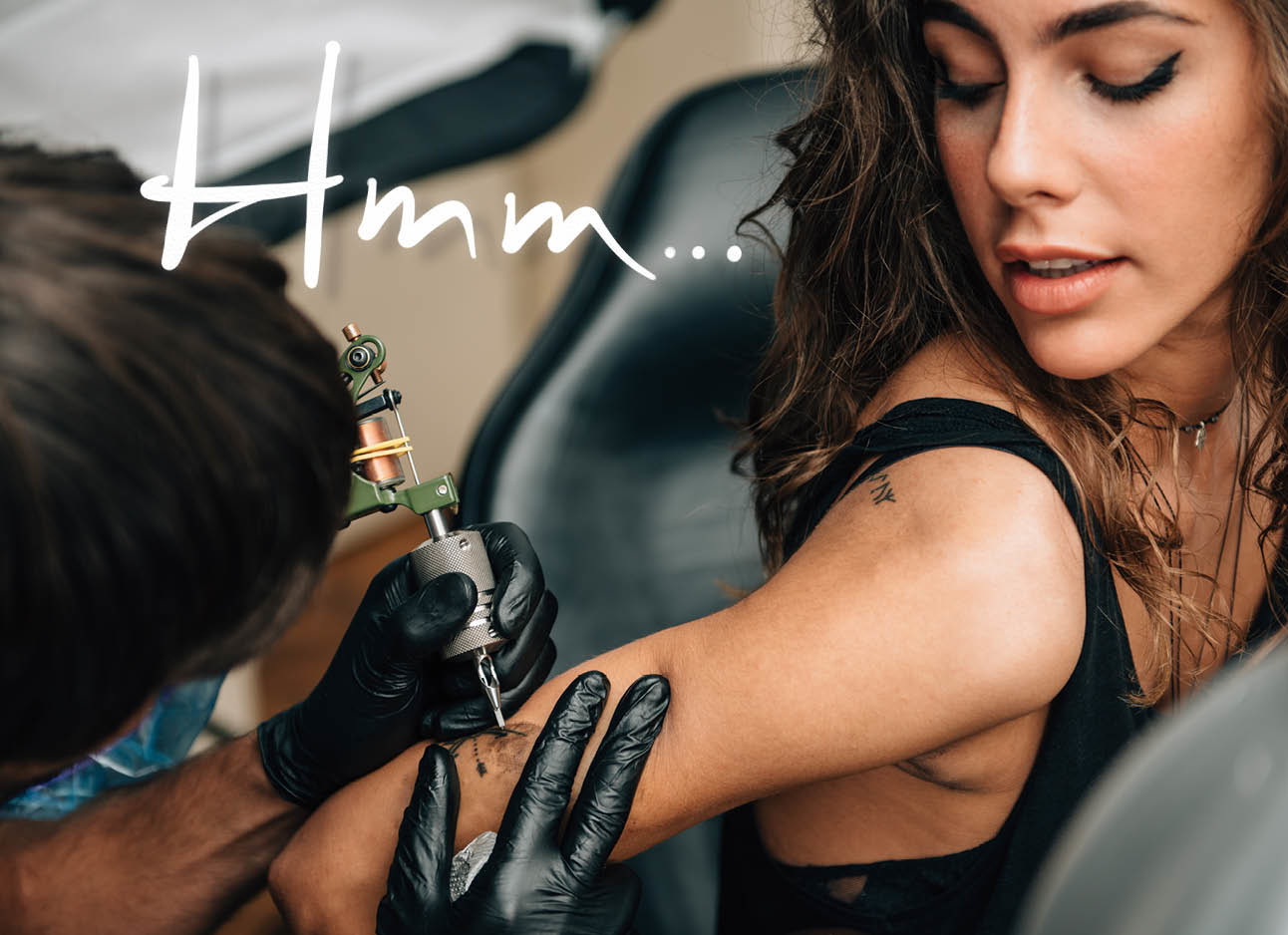
I was fifteen when I was hanging out in the parking lot by the shopping center, where the tattoo shop was on the corner. “I’m just going to do it secretly,” I shouted a bit coolly to my friends. But I didn’t step over the threshold and went home blank, because somewhere I heard the comments from my family, whether I really wanted that good job later and what my boss would say about the ink on my body.
“Addie, do you have a tattoo? Oh, I think it’s really cool.” That’s what she said. Now I didn’t come with the tramp stamp (sorry, but that’s what they’re called in common language) on my lower back that I wanted at fifteen, but with a small and fine geometric compass on my wrist. It could be due to that, but the fact remains that the reaction to a tattoo is now quite different than it was fifteen years ago. Although I suspect May could have appreciated it back then too.
I was in Copenhagen, put myself on the list at Le Fix and went home inked. The most important thing for me is what it stands for. Not that I forget this if I hadn’t immortalized that thought on my wrist, but it’s something I want to carry with me. I love the creative, the outspoken idea, doing it just a little differently, but in the last century, having a tattoo didn’t always turn out positively. With a tattoo, you had an image, you might have been a bit vulgar, had a rough life (led), and it certainly influenced your work. How is it that the image of the tattoo has changed so much in a short time? And: is that actually the case?
Beautify conducted a study on women with tattoos. The respondents were shown three photos: a woman without tattoos, a woman with a few tattoos, and a woman with a sleeve. What turned out? Education, income, and the job were estimated the same for all three. The lady without a tattoo was labeled spontaneous, cheerful, and friendly. With a few tattoos, she was seen as confident, cool, and ambitious. With a sleeve, you were confident, cool, but ambitious was replaced by social. Small disclaimer: the study was conducted among 14 to 40-year-olds. I still wonder what the generation above thinks of my embellishment.
Example. Suppose I want to make a career move and (I’m just mentioning something) want to work as a flight attendant, then an employer can require me to cover my tattoo. That is legally established. But by now, one in ten people in the Netherlands has a tattoo, and even the temp agencies notice that it’s almost no longer a problem. How come? The technique is better, the tattoo artist is seen as an artist (a waiting list of two years is not uncommon), there is more choice in designs, and people are more vain and have more money to make their bodies more beautiful.
It seems that I have waited just long enough to get it done, of which acknowledgment, dear family.
P.S.: This muse of Karl Lagerfeld probably has the most tattoos among top models.
Thanks to: RTL Nieuws, Beautify


