


Why it's a really bad idea to drink mixed drinks
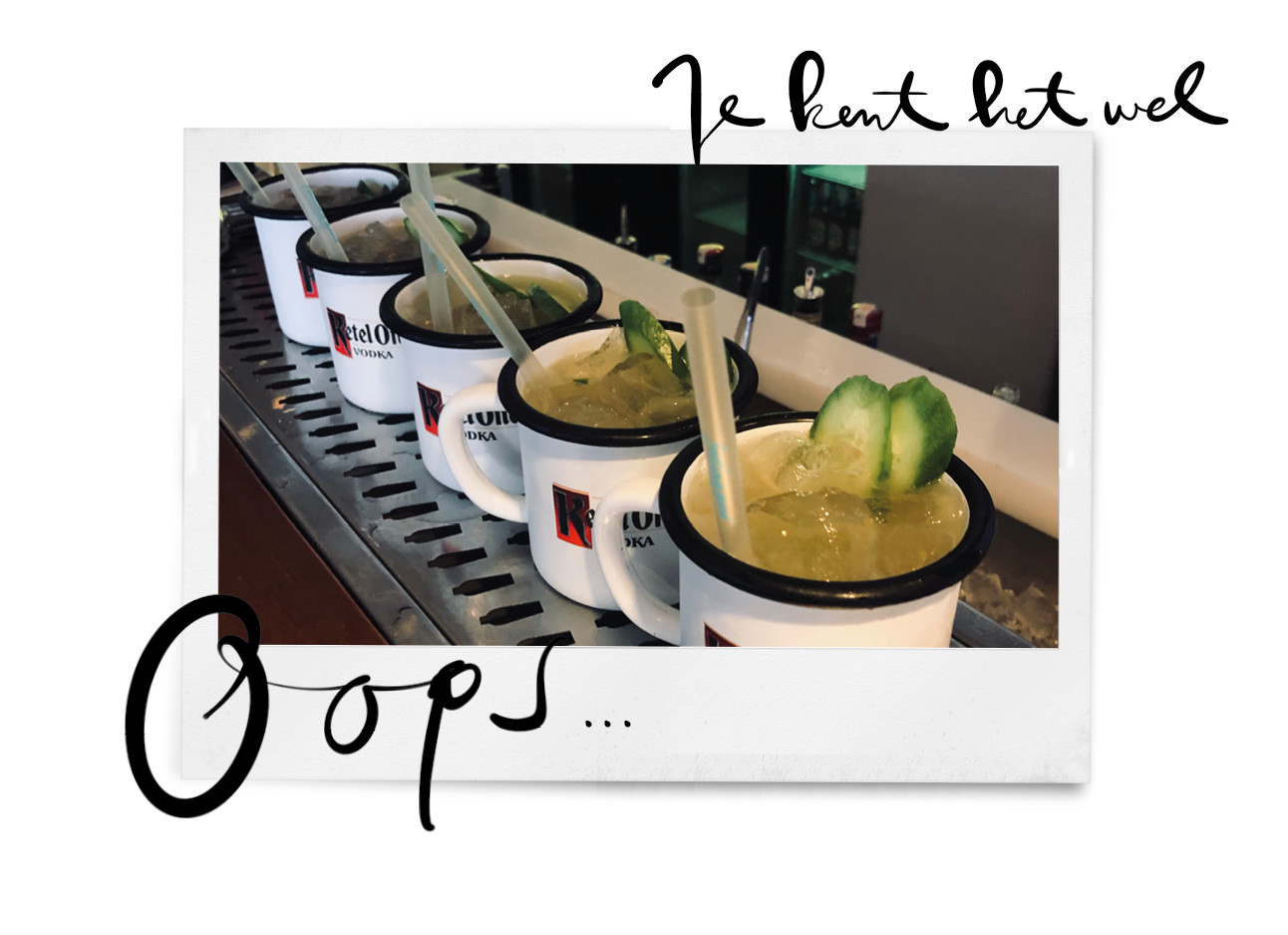
A glass of Whispering Angel to accompany the fish and grilled vegetables at lunch (I could swear it was actually whispering to me), the Moscow Mule tasted like more on our boat trip, bubbles when sitting down at the table at the Pasha, I believe there was even Jägermeister involved at one point when we dared to take a little dance. I have drunk Jägermeister three times in my life and the fact that I still remember this says something about my relationship with this substance: bad news.
Mixing alcoholic drinks, it's one of the basic principles of going out, you might as well avoid it. And yet it happens to me about once (okay maybe two or three) times a year. You would think I know better, but I don't. I call these my never-go-home nights. Let me explain how they work. I plan to have a couple of rather restrained drinks in the beer-wine category at a reasonable hour. to pull a Houdini, but then strong drinks come in between and I (indeed) never want to go home again. No one said these were complicated nights. When I wake up the day after, I solemnly promise myself to never do it again. But why does it seem like you’ve looked deeper into the glasses when you mix drinks? The answer: that’s not the case.
In the end, it’s about the amount of pure alcohol you consume. In the case of a good glass of wine, this is a respectable twelve percent per serving, but if you switch to vodka, tequila, Jägermeister, or Limoncello, you quickly reach 30 to 40 percent alcohol per serving. And there’s your answer. It’s also the case that each body has an individual reaction to certain types of alcohol (I suspect my little Jägermeister is involved here) and voilà, you’re done. It also seems that you don’t get nauseous from beer after wine, but that you just hit your tax and max on alcohol, so if you had stuck to the same drink, your stomach wouldn’t have agreed either.
Good to know before you start drinking gin and tonic through a straw: the absorption of alcohol happens faster when you drink through a straw. With a regular sip, the alcohol evaporates faster and is absorbed less quickly by your stomach and intestines. Through a straw, it works more concentrated, causing the alcohol to entertain your body around your palate. The palate, therefore, which allows the alcohol to be absorbed more quickly into the bloodstream. Drunk earlier, but in the end, it still comes down to that amount, only the effect is felt a bit faster. Cin cin. Oh, and May already mentioned it in our newsletter: if you go to Hillside Beach Club this weekend, the gin and tonic is out. Apologies for that.
Source: Alcoholinfo


