


Tips and tricks for living and working abroad soon
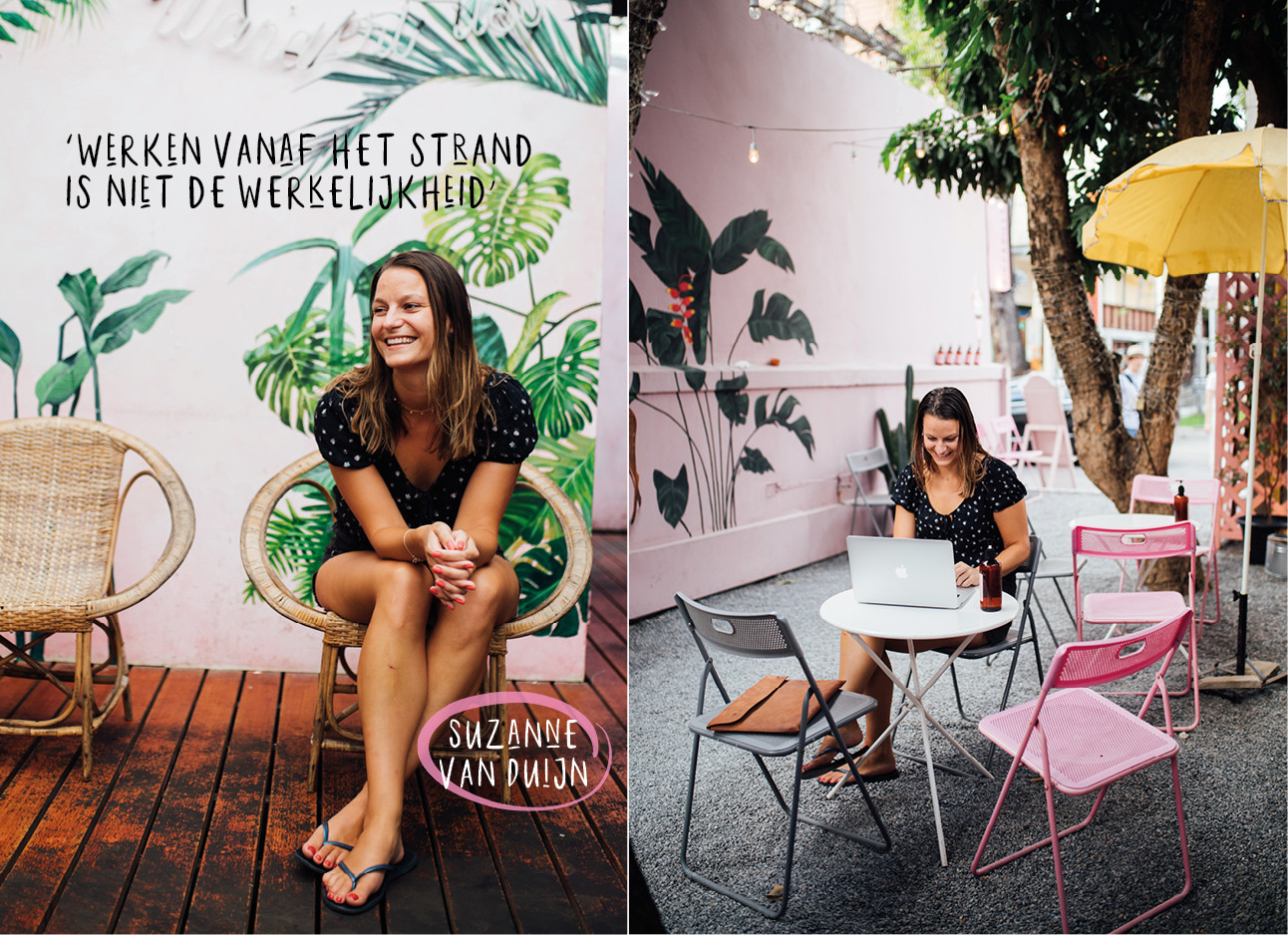
Tell me that you live and work abroad for four months a year and I want to know how you manage that. Especially now during the home sitting, see it as the perfect opportunity to prepare for adventure. I pried some savings tips and travel tricks from Suzanne van Duijn, who really puts this into practice. Who knows, you might be on a plane after that quarantine.
Suzanne first starts with a pitfall you need to avoid. ‘Don't think that working abroad is a vacation, because then you really get stuck and it only gives you stress. You continue your life in another place, so you also have to keep an eye on your money and have a place to do your work. Is it not possible to do forty hours of work in between traveling from a hotel room in the evening?’ she explains. It should be clear: there is a time for work and a time for lounging.
Once this is clear, you need to ask yourself if your work is suitable. Suzanne: ‘Actually, this quarantine is a good time to test that. People who are working from home now suddenly realize that it can work just fine. You find new ways to communicate online and you learn to manage your time more efficiently. The problem is often that it can't be done from your employer or client, but that's actually no longer an argument. No one works in an office for eight hours straight, that's a dream, because you also spend half an hour on Facebook sometimes. Therefore, agree on the result or the goal with your employer and not your number of hours.’ Are you writing along? Result and not the number of hours, check. ‘An employer must be able to trust that you do what you say. That is already the case now and it can also be monitored well. But always do what you promise to the employer or client. Meanwhile, you have no travel time, you start a bit earlier and because there are no distractions, you get work done faster. Also agree clearly on when you have contact, that is more efficient. Ultimately, it results in happier employees.’ Sounds like a plus for all sides.
But then of course a bit about the euros, because life is not free. ‘An easy tip for now is to pause, for example, that ongoing travel insurance and Spotify, just like freezing your gym membership. They may be small amounts, but I already save a hundred euros a month on services that I normally have. Also make a good balance for yourself. What really comes in and what really goes out? You often have more to spend than you think. I save in jars with automatic debits to accounts that I hide. You spend what you see, so it's actually tricking yourself. It's just like with chips: if you have them at home, you eat them. But it has to be a realistic amount. I always bought a lot, thought that being ‘the fashion girl’ at the editorial office was my dream job, but I quickly thought: I'm sitting indoors every day while I find traveling the most fun. I quickly needed money, so I changed my priority. My trip through Australia was a fashion detox, which I have maintained afterwards. A hundred euros may not be much in a store, but it's a ticket within Europe. Keep your eyes on the prize, so make sure to have a nice goal.’
And how do you do that at the destination? Suzanne: ‘I choose a cheaper destination and I don't drink cocktails every day in a beach club in Bali. It seems obvious, but if you live super deluxe, you still end up spending a lot. I rented an apartment in Bali for a month for five hundred euros, it just wasn't a Pinterest villa. It was cleaned every day, had a swimming pool, and because of that, I could eat out three times a day. Sometimes for just one euro in a Warung, which was at least just as tasty. You can't have it all, so you have to make choices. Also, don't forget to check what you can rent out at home, like your car.’
What you must not forget from Suzanne in the end. ‘This is the time to make plans, financially but also in preparation. Your work must be substantively suitable or it must become suitable. You must be autonomous and show it to your employer. But it's mainly the mind shift you need to make. People often find it scary or strange. When you make the switch to move your life to another location, then you go surfing at four o'clock in the afternoon instead of going to Albert Heijn at six. Don't think in objections. If the money runs out, then you are better off in Bali where life is already cheaper.’
Suzanne van Duijn lives and works at least four months a year from abroad. She wrote the book Work hard, travel hardabout how you can do that too and shares her adventures on Vrijemeid.nl.


