


Is it alcohol-free wine or just grape juice?
Say wine, snacks or haute cuisine and the gourmands at online food magazine FavorFlav know where to drink, how to eat it and what to cook. This time our cheffies serve you: is alcohol-free wine really wine?
Most wine lovers shudder at the mere mention of it. Alcohol-free wine, brrr! Or as wine writer Harold Hamersma puts it: “It’s like sex with a blow-up doll.” But the numbers don’t lie: in the past six months, the market for alcohol-free wine has increased by 50 percent. So what exactly is alcohol-free wine? Is it an option if you participate in Dry January? I dove into it for you. It wasn't necessarily fun, but it was educational. Make the most of it.
No grape juice
To start at the beginning: to make alcohol-free wine, you first have to make wine. The big difference between grape juice and alcohol-free wine is the fermentation process. The fermentation of the must (which is the freshly pressed but not yet fermented juice) not only produces alcohol but also many flavors that you won't find in grape juice. Alcohol-free wine is therefore a fermented wine (and thus with alcohol), after which a process takes place to remove the alcohol from the wine. So, to make alcohol-free wine, you need an alcoholic wine.
And then?
The removal of alcohol from wine can be done through various methods, ranging from distillation under vacuum to reverse osmosis (microfiltration). Our sincere apologies in advance if this article feels like a utterly boring chemistry lesson where you – let’s be honest – were only looking forward to drinking pure alcohol (yes, my puberty was rough). Through these state of the art technologies, the removal of alcohol can be done with surgical precision. But is alcohol-free wine tasty? That largely depends on good base wine. And actually, it should be called low-alcohol wine because a little bit, somewhere between 0.5 percent and 0.01 percent, always remains.
Full of flavor
Not every wine is suitable for dealcoholization, as a mediocre wine becomes an even more mediocre alcohol-free wine. Alcohol is a flavor carrier, and with the loss of alcohol, you also lose flavor. This is also the reason why it is so damn difficult to find really tasty alcohol-free wine – yes, I speak from years of mostly disappointing experience. Without the alcohol, the base wine must be full of flavor, with good acids and a good structure. You lose about 15 percent in volume during dealcoholization (the alcohol and a bit of water), but the acids remain present. They thus make up a larger share of the final product, and it is a challenge to find full base wines with low acids. A white wine with high acids will become extra sour and thinner with the removal of alcohol.
The color is also important, as the wine becomes darker through concentration. For red wines, you also need to have a fruity example with low tannins. If you were to strip a heavy red tannin-rich wine of its alcohol, the leftover product would be a hard and bitter drink.
Bubbles as the best
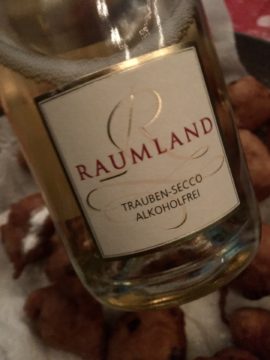
The lack of alcohol is often compensated by adding sugar and carbon dioxide. Of all the alcohol-free wines I have tasted in recent years, sparkling wines are the notable positive outliers. Because not only does sugar help forget the alcohol, carbon dioxide does too. The alcohol-free Raumland that I recently drank at the star restaurant The White Room was even really tasty.
Ideal for the business offices where the adage 'anything above the knee must go' prevails. A neat pair of pants that is loose around the butt and crotch and lets in enough fresh air at the legs.
I personally don’t participate in Dry January or Sober October (with this job, how could I?), but I wholeheartedly support everyone who has made this brave decision. Because alcohol is not healthy, and it takes some backbone in certain circles (the football club, the Friday afternoon drinks at the office, the neighborhood gathering, to name a few) to say that you don’t drink. The initial reactions are often comparable to your first divorce: disbelief and astonishment, followed by ridicule. Screw that. It’s your life. Open that bottle. But then don’t do this: smell it. It doesn’t have that enticing aroma that wine is known for. Alcohol-free wine often smells flat and doesn’t remind you of the taste you then experience. It is therefore no longer wine, so you shouldn’t compare it to that. If you do compare, do it with the number of calories: a glass of alcohol-free wine contains less than 25, compared to a glass of regular wine, which quickly contains 75. Count your gains.
In the articles below, those in the know provide some nice buying tips. Cheers!


