


The next two weeks are all about Queer & Pride Week: what is that actually?
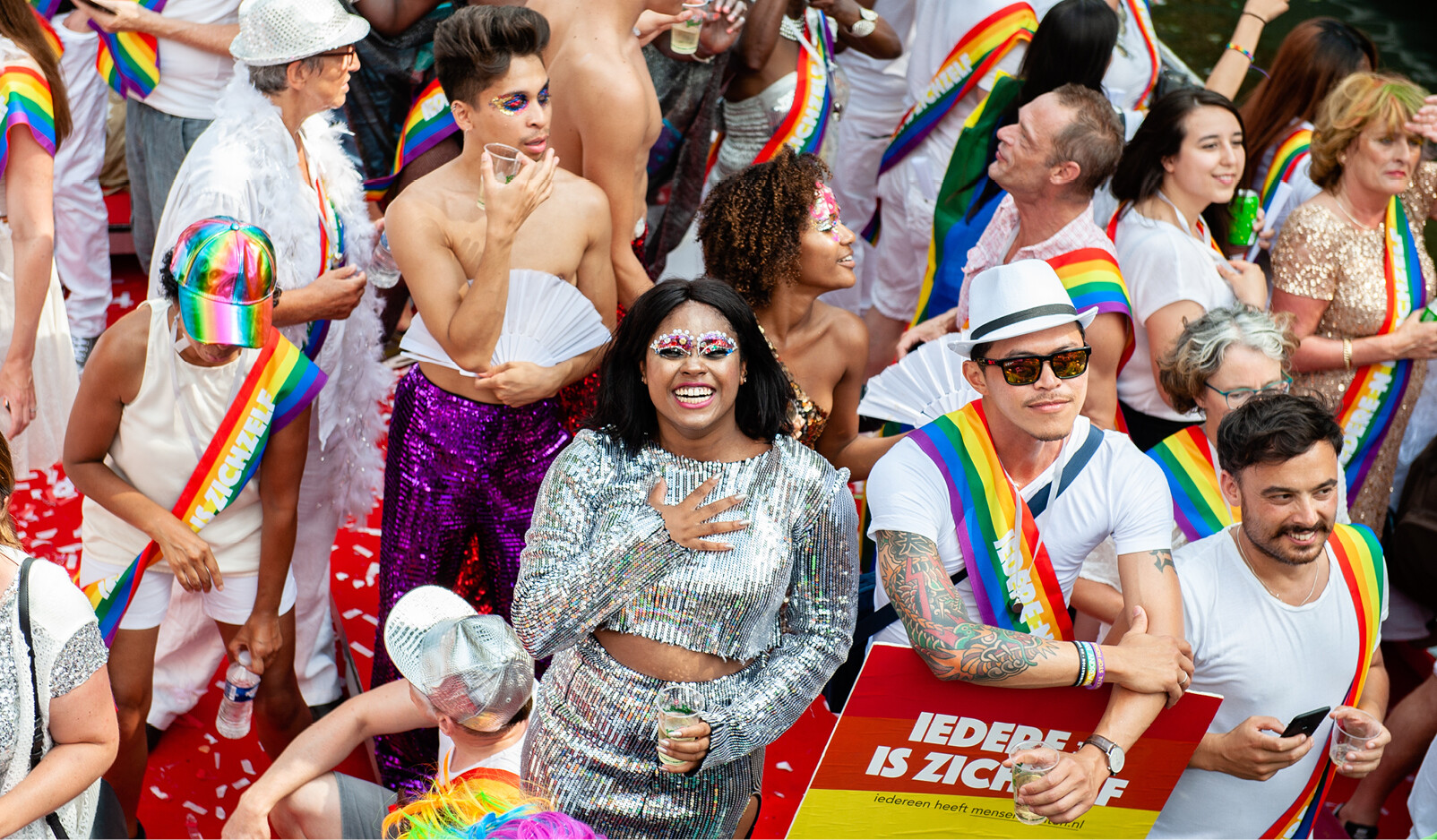
Okay, don't panic now, but as a heterosexual woman from the far east of the country, I know embarrassingly little about Pride Week. Aside from the fact that I completely support it, let that be clear. Still, I found it important to immerse myself in the wonderful world of Queer & Pride Week and learn all about the significance of this time of year. Better late than never, right? So if you're a pride noob like me: read along, because these weeks have much more to them than you might initially think.
July 22 to 28 is Queer Week
This week is entirely dedicated to queerness: in all shapes and sizes, in all colors and forms. Values such as social justice, anti-discrimination, and (inter)national solidarity run like a common thread through this week.
Queer Amsterdam also stands for promoting equality, combating inequality of opportunity, and strengthening the social and economic position of all people who identify as LGBTQIAP+. Queer Amsterdam finds it important to let go of gender, find connection with each other, and create awareness.
August 1 to 6 is Pride Week
During this week, there is plenty of attention for emancipation, culture, sports, celebration, and meeting. Amsterdam Pride will conclude with the world-famous Canal Parade on Saturday, August 5. With Pride, the LGBTQIAP+ community celebrates their freedom and calls for attention to equality.
Since 1996
The first Amsterdam Pride took place in 1996 and was a celebration organized by gay hospitality entrepreneurs to promote Amsterdam as a gay nightlife city and to celebrate the freedom and diversity of the city.
The years-long struggle for equality
That the LGBTQIAP+ community has to fight for equal treatment and opportunities in our society is, of course, absolutely ridiculous. After all, we are all fundamentally human, and one should not have more rights than another. However, this was not always the prevailing thought. The LGBTQIAP+ community has faced many forms of discrimination for years. In 1969, the community fought back against the police in New York for the first time after years of harassment and violence. This resulted in the very first Gay Pride Parade in NYC. In 1977, this trend finally reached the Netherlands, where from that moment on, Pink Saturday was celebrated every year (which became Amsterdam Pride in 1996). It wasn't until 1994 that the discrimination of homosexuals was legally prohibited (yes, only then), and it wasn't until 2001 that same-sex couples were allowed to marry and adopt children. I remember very well when that happened, and that Job Cohen, the then mayor of Amsterdam, married four same-sex couples at midnight: very cool, but also very late. What I think is also way too late: in 2019, the discrimination of transgender and intersex people was finally legally prohibited.
The importance of Queer and Pride Week
Yet there is still much to be gained. Although the LGBTQIAP+ community should now be able to live as they wish according to the law, 29 percent of the Dutch disapprove of people of the same sex seeking each other out in public. This is especially true for young people, those over seventy, and (strict) believers. Continuing to celebrate Queer and Pride Week is therefore just as important now as it was 40 years ago, even if you are not a member of the LGBTQIAP community. In fact: especially if you are not a member of the LGBTQIAP+ community. These are the weeks to show your support and celebrate all people, regardless of orientation, gender, type, or size, in order to ultimately achieve full equality for everyone.
Sources: NU.nl
Queer Amsterdam
Pride Amsterdam


