


Between tradition and trauma: the story behind ‘Uf’
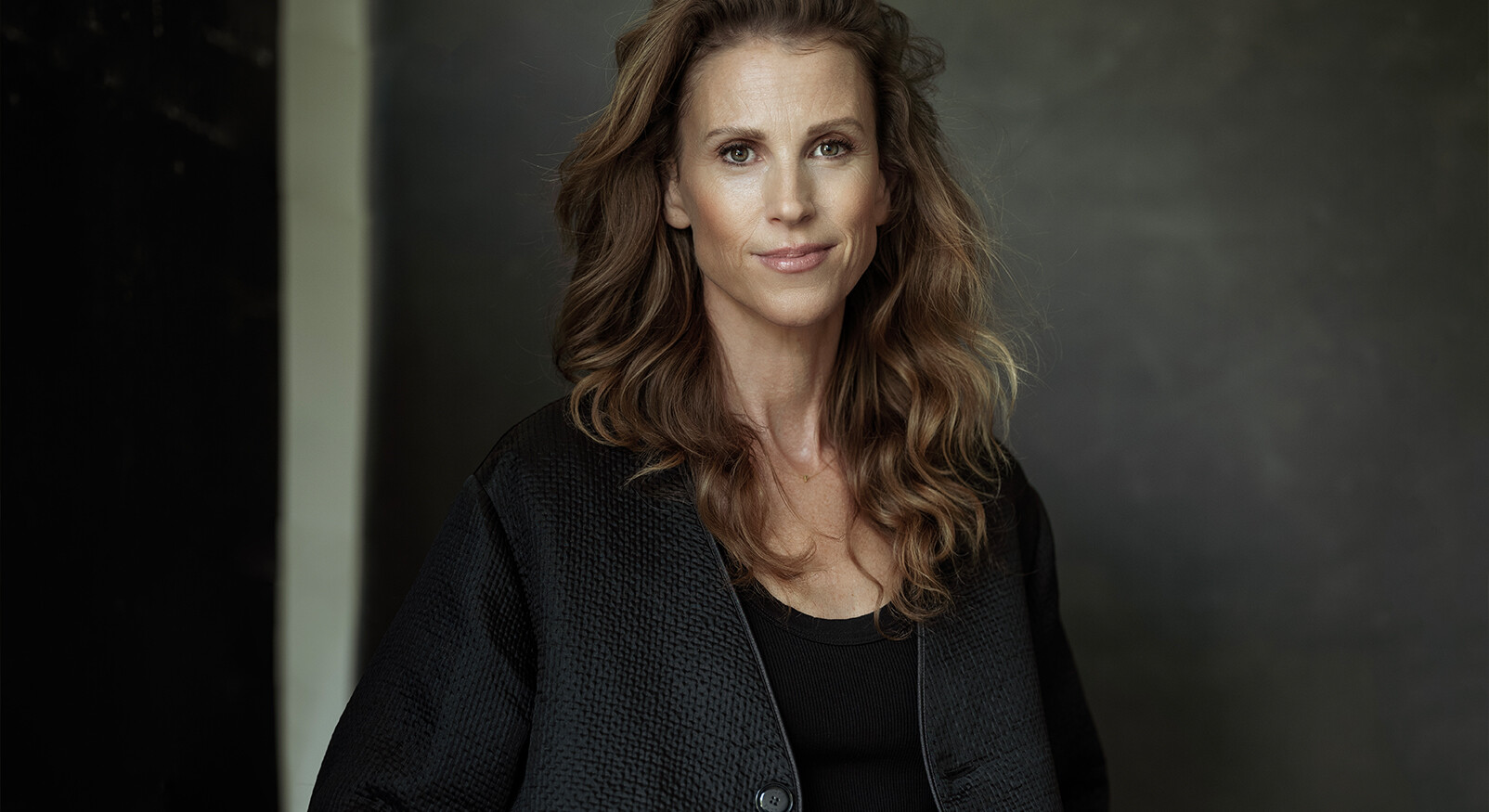
Uf is the novel by Jojanneke van den Berge, referring to UVSV, the Utrecht Female Students Association (of course with a double e), where the female members are sometimes affectionately, but often disdainfully, referred to as ufjes.
She wrote a book that touches on everything: the terrible sides of the fraternity and the beautiful ones. Remarkable, because when it comes to the national fraternities, there seems to be only one opinion: to despise, or to embrace the lesser sides and continue to approve of them. Little moves in between. Jojanneke does that.
Successfully, because the second edition is already in stores and there are discussions ongoing about a film adaptation. “Recently, I walked into bookstore Scheltema and saw my novel on their top-10 shelves. That was quite a moment.”
I was looking forward to this conversation for several reasons. My partner used to work with Jojanneke, I had the pleasure of styling her for a short while – so it was nice to speak with her again – but mainly I wanted to discuss this book. A book that has won over my phone so many times in the past few days that even that new episode of The Morning Show could wait.
Like Jojanneke, I studied in Utrecht, although I lived – studying and following a dance program – in a parallel universe of the fraternity girls.
I have indeed been to parties in De Kroeg or in the Woolloomooloo, but I mainly remember the hateful attitude of the boys there towards me. A woman was already hanging a lot lower on the ladder, and then I was also not a Uf. They could tell. That – in my eyes back then – medieval world did not attract me. I didn't like beer, danced fourteen hours a week, in short: it didn't fit.
On the other hand: I was quite lonely during my student days. I had friends, but I didn't really belong anywhere.
Jojanneke: “That's the beauty of student associations. Young people are looking for a sense of community in a world where there is less sense of community and where society is becoming increasingly individualistic. You end up in a safe lap where you can explore your boundaries as a young adult in a – usually – safe way. You can develop yourself, you grow, so that has very beautiful sides. It remains a place where the elite comes together and where you can make useful contacts for later, that is also an attractive aspect for some. What also attracted me a lot to the fraternity is that they are special places with beautiful traditions, where you can perform at a high level in theater, rowing, or debating. My husband, who has never been a member, always finds it striking that people who have been in the fraternity can all speak so well. Those are all positive things.”
Another reason why I was looking forward to this conversation: this year many children of friends have become members of the fraternity. All children of parents who were never members themselves and are quite critical of student associations. One of them quit on the third day of initiation, the rest thinks it's great.
Jojanneke: “The strange thing is that, despite the excesses like the bangalists and anal ring throwing, popularity is growing.”
I need a time-out. Anal ring throwing?
Jojanneke: “That was in the news some time ago. Boys from the USC – the Utrecht Student Corps – had a stripper come to the society and were throwing rings to land one in her backside. Not tasteful, not smart. But it turns out to be very difficult to change this. A cultural change must come from within, and to achieve that, prominent former members need to speak out much more. And that doesn't happen. Or at least far too little. The association is such a closed bastion. The USC says that the bangalists have nothing to do with their norms and values. What nonsense. I hoped – and hope – to give a push for that speaking out with the book.”
One of the main characters in Uf is David, who struggles with his sexuality but does not dare to come out within the corporate culture – with consequences that affect not only him but also the main character Eline.
Jojanneke: “Many boys from my student days only came out later because heterosexuality is, to put it mildly, the norm at the USC. Amsterdam is much more open in that regard. The strange thing is that it was accepted – and is – when women fell for women. UVSV had the reputation of being a club for lesbians. Enough girls had relationships with each other in the association, that was all very free, but for the men, it was almost unthinkable. I found that very sad. It is deeply rooted in the culture. I also think that parents are an important link in changing the corporate climate. Many parents put a lot of pressure on their children: being a member is not enough, you have to end up in a house and year club or dispute that is held in high regard. And once you have achieved that, you are more likely to participate in things you normally might not do to maintain that position. Just try saying no to that as a young boy when your house elder asks you to make a bangalist or have sex with your door open. If you don't do those kinds of things, you might get kicked out. That's a difficult position.”
In Uf, these kinds of excesses also come up.
I tell Jojanneke about a story I once heard: an adult woman who ended up in bed with a student at a reunion of the fraternity. The next day she came home and heard from her husband that a photo of her was circulating, with the caption ‘milf tackled’.
Jojanneke: “That's all so ugly, and so entrenched in that boys” culture. That's why I think I would really have a hard time if my son wanted to become a member. It's just very difficult for a boy to stand firm in that culture without going along with it. I would have much less trouble with my daughters because that women's culture is much less intense and, as far as I'm concerned, the nice sides of the fraternity prevail there. But it will be a while, my son is only ten. Perhaps things will be a lot better by then."
I am curious what gave Jojanneke the signal to start writing.
Jojanneke: “I actually started writing little pieces down when I was still studying in Utrecht. I thought: this is such a special world, I want to capture it. I have worked on it on and off for the past twenty years and never really knew if I would do anything with it. Sometimes it's nice to let a dream be a dream. But when my father passed away two years ago, I thought: life is not infinite. And then I really started seriously working on it.”
And then the practical question: how do you do that, as a documentary maker and mother of three young children?
Jojanneke: “Writing is just doing it every day, doing, doing. I also occasionally sat with my mother or went to France for a few days to work on it further. I found it a wonderful process – I enjoyed bringing the characters to life and deepening the story. I only found the final process terrible; I am very perfectionistic. Every time you see a period or comma that could be different. I drove myself completely crazy with that.”
I, as a non-fraternity girl, still need some tutoring, so I take my moment. Geru is the Common Room and the pit turns out to be the TV in fraternity language.
Is there in Jojanneke's life now a case of the well-known black hole?
Jojanneke: “Actually not at all. After that final process with commas and periods, my book quickly went to the printer, and shortly after that, the whole media circus with interviews began. The publisher showcased my novel at the Frankfurt Book Fair and possibly an English translation will follow. And there are those discussions about a film adaptation. All very special to experience. So a black hole? No. I'm still right in the middle of it.”
Now that I have Jojanneke on the phone, I want to know how Binkie and Eline have fared. But how that ends, I'll tell you – due to spoiler danger – one-on-one sometime.
Uf is available at better bookstores and also here.
If you would like to give Uf as a gift for Sinterklaas in name and signed with a personal message, such a copy can be here Yes, the heating is high again and my skin is immediately dry. The air is drier, and my shower is hotter. All of this does not contribute to my….


