


Sleep patches: the solution for sleepless nights

Sleeping, I can do it well. Falling asleep at least. I fell asleep on the back of a motorcycle from Zandvoort to Utrecht, on the scooter in Rome and also sometimes in a restaurant on Utrechtsestraat. But falling asleep is one thing, staying asleep, I can't manage that. My beloved - afflicted with the same problem - and I have a spray with melatonin next to our bed. During a nighttime wake-up session, we spray a shot of melatonin like two junkies and then hope that sleep will overpower us again. But that's not what you want, of course. You want a constant, deep sleep. And for that, I think I have now found the solution; sleep patches.
We all want to be able to sleep like a newborn baby (although, they can also be quite rowdy at night), but reality check: about 63% of the Dutch regularly sleep poorly. Yes, you read that right. More than half of us toss and turn, or - like me - spray melatonin as if it’s a nightly perfume ritual. But okay, as chill as that spray sounds, it remains a kind of quick fix. And you only take it because you’ve woken up. Enter: sleep patches. Yes, really, the new holy grail in sleep.
What are sleep patches exactly?
A sleep patch is actually exactly what it says: a small, inconspicuous patch that you stick on your skin before going to bed. But it doesn't stop there: this little powerhouse slowly releases melatonin. So no spike of drowsiness that quickly fades away, but a steady release that allows you not only to fall asleep easily but also to stay asleep. Hello deep REM sleep, goodbye 3:00 AM wake-up moment.
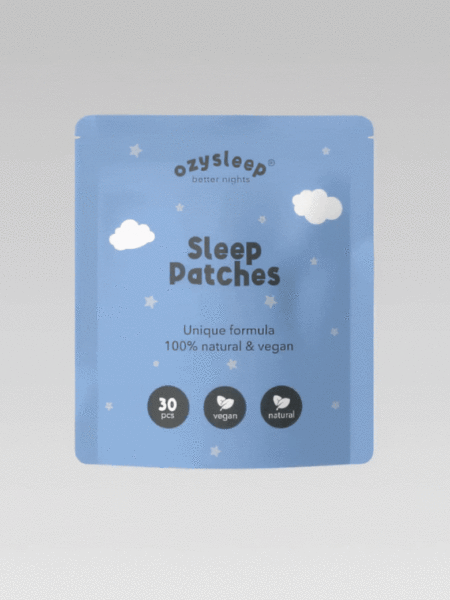
Melatonin: the sleep substance explained
Let’s get a bit nerdy: melatonin is a hormone that your body naturally produces when it gets dark. It sends a simple but oh so important signal to your brain: it’s time to sleep. Due to screens, stress, and - let’s be honest - our chaotic lifestyle, that natural production often gets disrupted. So a little help from the outside comes in handy.
Can you become addicted to melatonin?
Good news: no, you can't. Melatonin is not an addictive substance like sleeping pills can be. You also don’t build up a tolerance to it, so you don’t need to take more and more to feel the same effect. It’s good to know: melatonin works best when you use it wisely. Not every night out of habit, but especially to bring your rhythm back into balance.
Why a patch works better than a pill
You might be wondering: why would I stick a patch on if I can just take a pill? Well, it has everything to do with the release. A pill works quickly, but it also wears off quickly. Result: you fall asleep, but wake up wide awake in the middle of the night (I’m looking at you, 4:12 AM). A patch, on the other hand? It gradually releases melatonin for hours. This keeps your sleep nice and deep and uninterrupted. As if your body hears a soft whispering voice: “Just keep sleeping, everything is okay.”
Who are sleep patches suitable for?
Whether you’re dealing with a jet lag, going through a stressful period, or just chronically sleeping poorly: sleep patches are for anyone who could use a little extra sleep power. They’re also a solution for people who have trouble swallowing pills (because let’s be honest, who feels like doing that when you’re already half knocked out in bed?).
Tips for the best night’s sleep (with or without a patch)
- Turn off your screens at least an hour before bedtime.
- Keep your bedroom cool and dark.
- Create a fixed ritual (read: no more TikTok marathons as a bedtime ritual).
- Use the sleep patch on clean, dry skin for the best effect.
- Stay realistic: a patch is not magic, but it is a little support.
Conclusion: stick it on?
In my opinion, sleep patches seem to be the new must-have on the nightstand. Because if you need something extra to catch sleep, you’d rather have something that supports you all night long. No more nighttime spray sessions, just stick it on once and sleep well.
I immediately ordered two packs, this is going to be our new thing. Just like my new obsession with laundry strips, but I’ll tell you about that another time.
Did you know…?
- About 70% of melatonin supplement users notice an improvement in their sleep quality within a week.
- Sleep problems occur more often in women than in men (believe me, it’s not a myth).
- The ideal time to take (or stick on) melatonin is about an hour before bedtime.
- A good night’s sleep not only improves your mood but also your skin (win-win).


