


Being the editor-in-chief of Vogue and still quitting?
Yeliz Çiçek did it
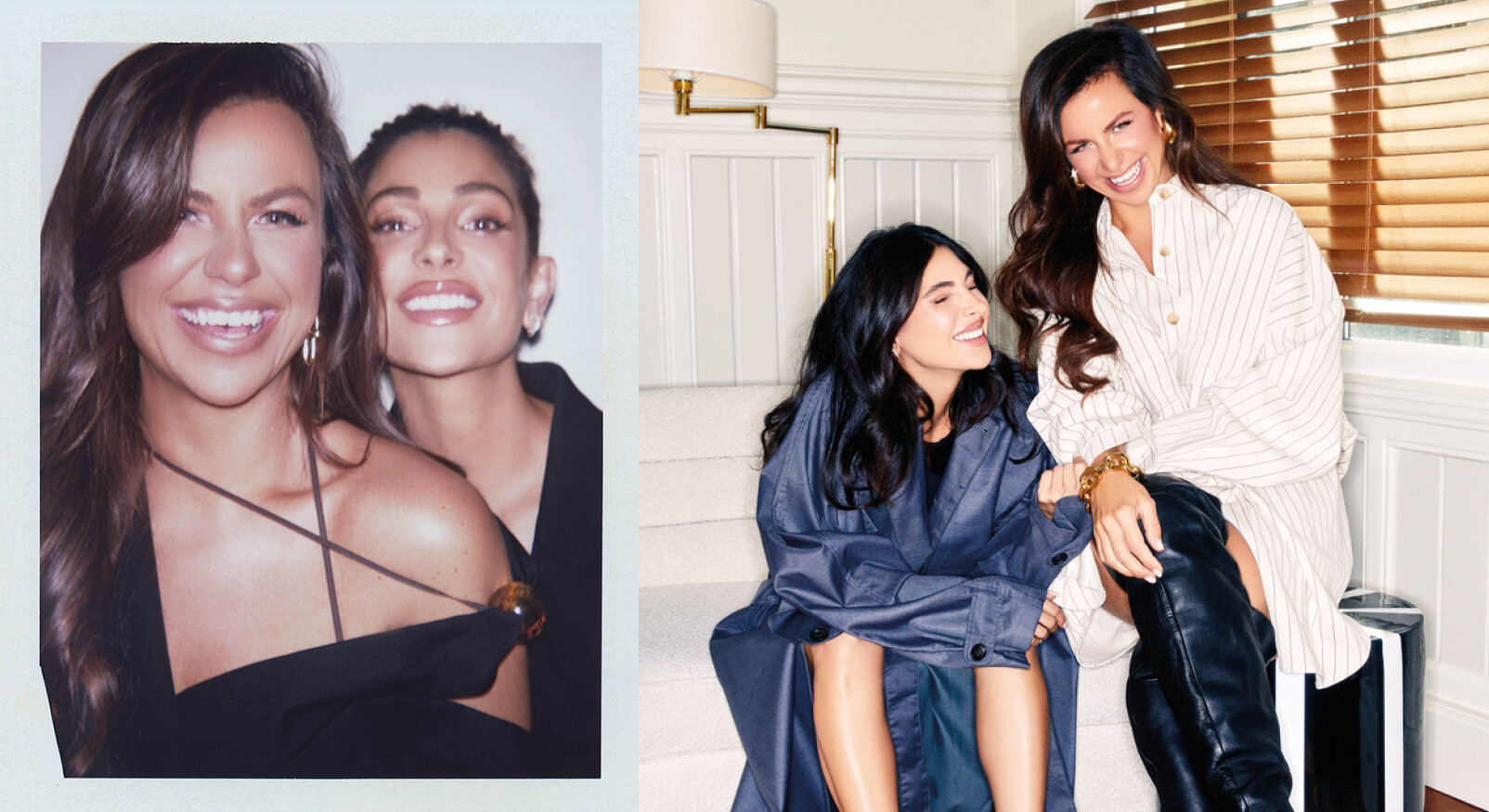
Like a comet, she shot up in the publishing world. From intern at Marie Claire to editor-in-chief of Vogue Netherlands. Because her path was not always completely paved – Yeliz is the opposite of a fake baby – she finds it extra important to help other women build their careers. To that end, she founded a platform with Anna Nooshin: the Female Initiative Business Academy.
Dear Yeliz, how incredibly nice and good that you are doing this. You are extremely busy, so I know you have consciously made time for this in your schedule because you find it important. Tell me…
“At the moment we are launching FI Business Academy and we are further expanding it with masterclasses for all ambitious women who want to learn even more from the fashion and lifestyle industry. So I am definitely not sitting still, but I always enjoy making time for Amayzine.”
Then on to this column, for the inspiration of other young women with a plan. Describe your profession.
“Actually, I don’t see what I do as a profession, my goal is really to educate and inspire people, and I do that among other things by giving talks, writing for the beautiful platform Vogue, thinking strategically, and now also by launching FI Business Academy, which I started together with my friend Anna Nooshin.”
Is it true that you have changed from editor-in-chief to editor at large? Is that also to have more space for these kinds of projects?
“Yes, that’s correct. I have taken on a different role and am connected to Vogue as an editor who thinks along and works on important projects such as Voice and Talents. And I host talks on important topics, such as Women Empowerment, entrepreneurship, and inclusivity. That is really what I love to do and I am very happy to stay connected to Vogue in this way. My heart really lies in educating and inspiring people and teaching them something. With FI Business Academy, Anna and I are going to do that even more, and that’s why I had to create space to really expand FI.”
How many hours do you work per week?
“Well… a lot of hours. I can hardly count them at the moment, I work so much. But of course, they are all my own projects that give me a lot of energy. So it doesn’t always feel like work, because it’s something I am building for myself where I can do what I want, write what I want, make videos that I want, and record podcasts on topics that really bring something. The idea that I am building my own business for the long term, for the future, feels really good.”
Did you imagine as a little girl that this would be your profession?
“Yes, I have always dreamed of working in magazines as a little girl, at least in fashion magazines. I used to cut and paste my own magazines. I spent all my pocket money on fashion magazines, even on very expensive ones. I really loved fashion and writing, so I always dreamed of it. Although, of course, as a little girl, you don’t know that such a job really exists, or at least that such a job might also be available to you. So it was really more of a dream. And later, when I really started studying, I thought: oh, this is really something I can do, become a fashion journalist. So yes, then I went for it completely.”
What education have you followed and did you benefit from it?
“I studied communication sciences. After that, I did Artemis for two years, and I also took a course in fashion styling. I gained quite a bit from this. After my bachelor’s, I really wanted to gain practical experience because communication sciences was so theoretical, and I found that in Artemis where I learned a lot because you just go into the field. During that time, I started assisting during Fashion Week in the summer and I did an internship with Ilja Visser. Eventually, I also did an extra internship at Marie Claire. So definitely. But I think especially the internships you do as part of these programs take you far. Through this practical experience, I rolled into the fashion world. With the courses we now offer online through FI Business Academy, Anna and I really want to give women practical tools that help them realize that dream job or career.” Danie Bles gaan assisteren tijdens Fashion Week in de zomer en ik ben nog een stage gaan lopen bij Ilja Visser. Uiteindelijk deed ik dus ook nog een extra stage bij Marie Claire. Dus zeker. Maar ik denk dat vooral de stages die je als onderdeel van deze opleidingen doet je ver brengen. Door deze praktijkervaring ben ik de modewereld in gerold. Door de cursussen die we nu online via FI Business Academy aanbieden, willen Anna en ik ook echt vrouwen praktische handvatten geven die je helpen om die droombaan of carrière te realiseren.”
You have talked in interviews about your Turkish background struggle that you often experience, so the life at home and the life in the fashion world at places like Marie Claire. You have had difficulties with that, but you have learned a lot from it. What are the three most important lessons?
“Well, the most important is that you should always follow your heart, no matter how silly that sounds. I really started to doubt myself because they were two such different worlds, and where do I belong? But in the end, I belong in both. I feel good in both, I am both. I don’t have to choose. I can follow my heart. I can do all of that. So my biggest lesson is just that it is so important to embrace yourself and not let yourself be driven crazy by how different another world may be for you. That is of course sometimes easier said than done, but I think that is my biggest lesson. Keep following your heart, keep believing in yourself. Don’t let anyone tell you that you don’t belong somewhere. Even when you work at a higher level later on, and also in my role as editor-in-chief, I have kept working on myself. I continue to do the necessary self-work, regularly visit a coach or psychologist. You just need that to stand strong in your shoes.”
“Furthermore, my biggest lesson – I really learned this by working with my father – is to not be above anything. And that has also taken me very far in the fashion world because on set or wherever you just have to work hard and show that you are hands-on and not feel too good for anything. Just go get the coffee, move a ladder, steam clothes. That’s how you start as a junior. And then you just show what you can do. And you learn that of course also in the hospitality industry like nowhere else, just get to work.”
What advice would you give your younger self?
“Don’t make it too heavy for yourself. I am just an overthinker, so I would think a lot about… Do I belong here? Where do I belong? Shouldn’t I already be there? Shouldn’t I be further along in my career? Shouldn’t I work even harder? But you don’t have to do anything at all. Do what you enjoy, what makes you happy, follow your heart and then the path will unfold as it should. You don’t need to endlessly overthink it because it will go as it should.”
Are you the type that separates work and private life or does everything mix together?
“The latter. Everything mixes together for me. And that’s because I enjoy everything I do work-wise. And I also work with a few friends in the fashion world, like now I am working with Anna on FI, who is also a good friend of mine. We also often travel together for work, for example. And yes, then we just go out to dinner together in an Italian restaurant when we are in Milan for Fashion Week. So that mixes a bit. I do try to always take a break from work on the weekends. At least no events or anything like that. I mean, emails are a different story, but then I do something fun with family, or with my boyfriend or with other best friends I still know from the past. Then I try to disconnect from work. That was a challenge in the past few months because we were so busy recording our first masterclasses on FI, but now that they are live, I really try to create more balance again.” zijn voor Fashion Week. Dat loopt dus een beetje door elkaar. Ik probeer wel altijd in het weekend rust te nemen van werk. In ieder geval geen events of wat dan ook. Ik bedoel, mails vind ik nog een ander verhaal, maar dan ga ik wel echt met familie, of met mijn vriend of met andere beste vriendinnen die ik nog van vroeger ken iets leuks doen. Dan probeer ik me dus wel af te sluiten van werk. Dat was de afgelopen maanden even een uitdaging omdat we zo druk bezig waren met het opnemen van onze eerste masterclasses op FI, maar nu die live staan probeer ik echt weer meer balans te creëren.”
Always reachable or type ‘two phones and Monday you’re the first’?
“No, always reachable. Yes, that is a very bad trait. I actually think that should be different. Sunday is a bit sacred for me, then I am quite absent. Well, I don’t respond on apps, but if you call me and it’s urgent, I definitely will.”
What do you wear on a workday?
“A well-tailored suit. You have some really nice Dutch brands now, like Rohe or Frenken, but I also wear a lot of suits from Acne Studios. Anine Bing fits me really well too. So a lot of people who sketch my style also see a suit in there. Wearing a suit radiates professionalism and I always try to find one with a cool cut or something. Or a nice color, a nice fabric, or something that makes it a bit more exciting.”
Do you think about perfume and hairstyle? I can imagine that you occasionally want to make a strong statement with your look.
“I don’t do anything too crazy with my hair. I do go to the hairdresser every week and have it blown out. Just a very strong, good blow-out. Really a kind of Hollywood curls. And then it looks good for a few days. If it really can’t be done at the end of the week, because I don’t want to wash it too often, then I put it in a tight bun. So don’t come to me for hairstyle or beauty inspiration. Eyeliner and my hair well blown out, that’s about it.”
We know it’s true: talking about money is not chic, but it’s nice for the next generation to know what it roughly pays, this work. So can you give a rough indication? Are we above or below the Balkenende norm?
“It varies a lot because I am self-employed. So it depends on how many campaigns I have, how many days I work. Now I also have FI, where I have a management fee, which is again a very different income stream. Yes, so that varies a lot, I really can’t put a finger on it. But I am very happy that I am doing well.”
And another point of attention: being a woman. Have you experienced a glass ceiling? The idea that you had to prove yourself more?
“Yes, definitely. There is a glass ceiling and nowadays also something like a cliff, especially for women of color. I see around me that it is difficult to stay afloat once you are at the top, because you are often still the only woman of color at that top. Unfortunately, you are often already the only woman at the top in large companies. In publishing houses, it is often still the case that the upper layer of the management consists solely of men. Also, if you look at the numbers, we are just not there yet. It is nonsense to say that there is no glass ceiling for women because there is. In the Netherlands, we are still lagging behind countries like Sweden when it comes to having children and getting time to lay the foundation of your family, without it detracting from your career or position.”
Has there been a moment in your career that has been decisive for your career? Where you were quite proud of your action in hindsight?
“I had a very lucrative freelance existence as a fashion consultant for large companies like G-Star. Then there were only two days available as a contributing editor at Vogue, so I had to go back to the editorial office, and there weren’t that many days. But still, I thought: I just have to do this because that’s where my heart lies. And then I suddenly have 4K less per month, because that made a huge difference. I had to follow my feelings and take this leap, so I am very happy and proud of myself that I did that.”


