


Leila turned her life around
"Being happy is more important than status or money"
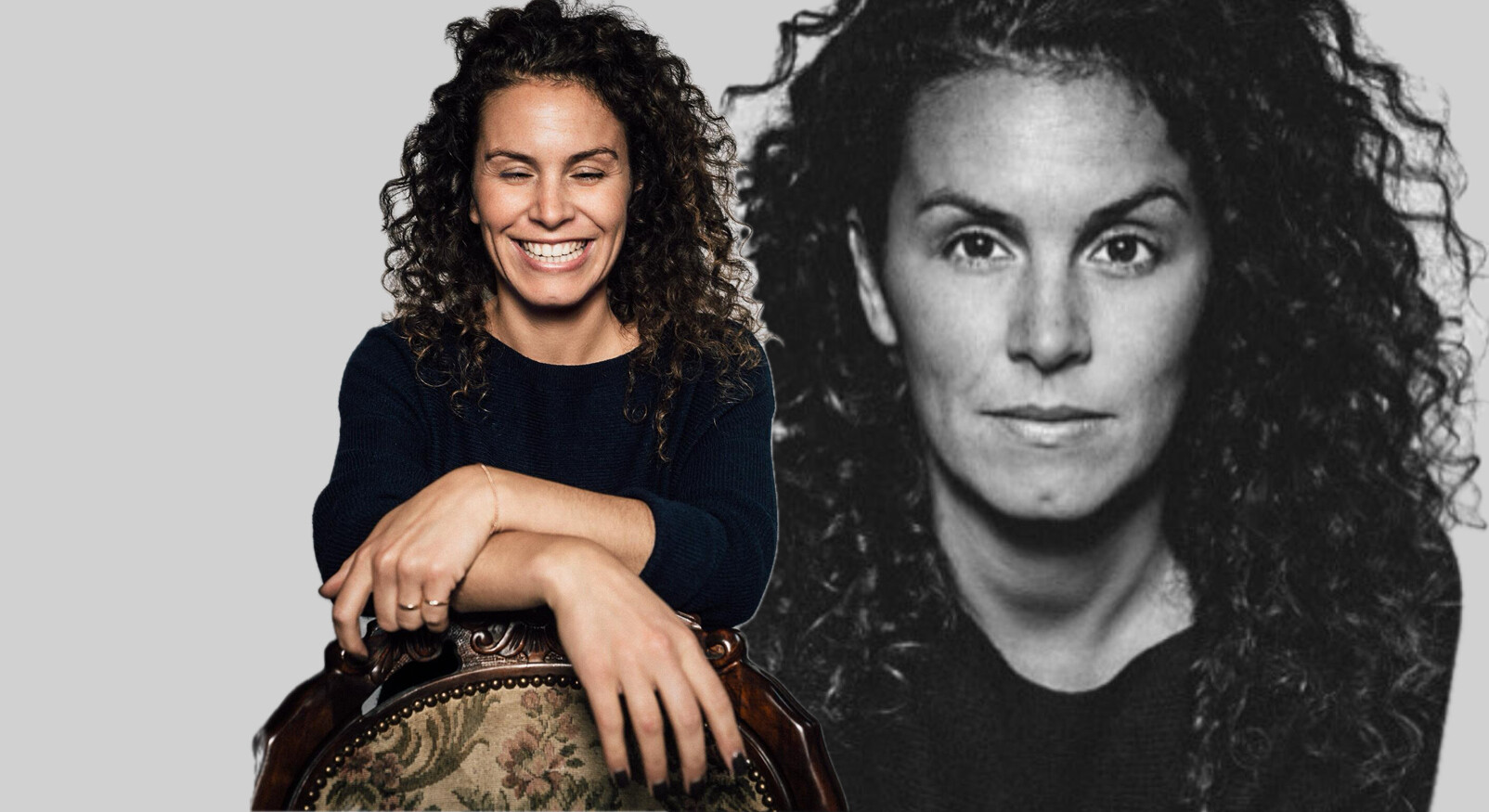
Leila could have been a lot in her life. There is a bizarrely good cook inside her and she has – rightly so – often been asked by the school principal if she would please consider becoming a teacher. And I haven't even mentioned her taste and style and her warm heart. But she is an event manager at Hortus Botanicus in Amsterdam, where she can fully express her multitasking self.
Describe your profession in three sentences.
“I am the event manager of the Hortus Botanicus in Amsterdam, jokingly I say that I organize parties. That sounds so cozy and it is. My job goes from 0 to 100 and back again. Sometimes I am very busy and then again it's calm.”
How many hours do you work per week?
“I have a contract for 24 hours a week, during the summer I naturally work many more hours because we have a lot of events then. In the winter I usually manage to get close to 24 hours, although it is usually more.”
Did you imagine as a little girl that this would be your profession?
“Singing is my greatest passion and my greatest talent, but I am just too shy. So even if I wanted that very much, I knew very early on that that wouldn't happen.”
What education have you followed and did you benefit from it?
“High school, I followed a vocational training for management assistant and then did Social Work to become a welfare worker. I don't use much from that last training (as an event manager), but being a management assistant has brought me quite a bit, especially with the focus on organizing and arranging, I notice that now.”
What advice would you give your younger self?
“Think before you act and think before you talk. That still applies. I still say and do too quickly and often think afterwards: maybe you should have thought about that a bit more.”
With a job like yours, you can't really speak of an average day. But take one that is reasonably representative and tell how it looks.
“I always start with a cup of coffee in the garden or in the greenhouse with my colleague and friend Filippa. Then we go through all the requests that come in. I also often have to speak with a supplier and I always have an appointment with a client to go through a script or to show them around and let them see what is possible. Well, then my day is already filled. If I am at an event myself, it is of course a whole different story.”
Are you the type that separates work and private life or does everything flow together?
“Work and private life do mix. I don't mind if I get called or emailed on a day off and sometimes have to go to the Hortus.”
What do you wear on a workday?
“Because I often walk through the garden, I don't wear trousers or my Gucci loafers. I dress quite casually, except at an event itself, then I really dress nicely. And for an appointment, I also make a bit more effort.”
Do you think about perfume and hairstyle? You have to be presentable, but you are also on the move, so heels to the sky is probably not an option.
“Always, although my hair is what it is, so it's either the bush of curls or I wear it up. If I have an appointment with clients, I put on a bit more makeup. I usually go for a pretty natural look, although I do love special perfumes and I find those at Skins Cosmetics.”
We know it: talking about money is not chic, but it's nice for the next generation to know what it roughly pays, this work. So can you give a rough indication? Are we above or below the Balkenende norm? Or what is your daily rate?
“I didn't come to work at the Hortus for the money, I am well below the Balkenende norm, but if you go for the money, you shouldn't choose this profession. I mainly enjoy it.”
And how did you combine your work with having children?
“I find this work so diverse and so well combinable with my private life that I actually want to keep it this way. Even when the manager position became available, I decided not to apply for it. My boys are now so big that I no longer have to take that into account. They even sometimes come to pick me up for a day when we go to the movies afterwards. Sometimes they even help at an event.”
Has there been a moment in your career that has been decisive for your career? A moment you were quite proud of afterwards?
“I consciously chose a job at the municipality of Haarlem as an assistant to the general director for a while when we wanted to buy our house and the children were very small. I didn't find that a very exciting job, but I had a good income, worked close to home, had fixed hours and little work after hours, so with small children that was good. At some point, I got so fed up with that that I quit and started working at the Tolhuisstuin (a location for films, concerts, and cultural activities). That was a foundation, which of course also meant a much lower income, but there I made the switch to a more creative and cultural work environment. There I decided to never do anything again that I don't enjoy and that pays well, because that is what ultimately makes me happy and that is more important to me than status or money.”


