


Total shock: how intense is Netflix series The Manson Tapes
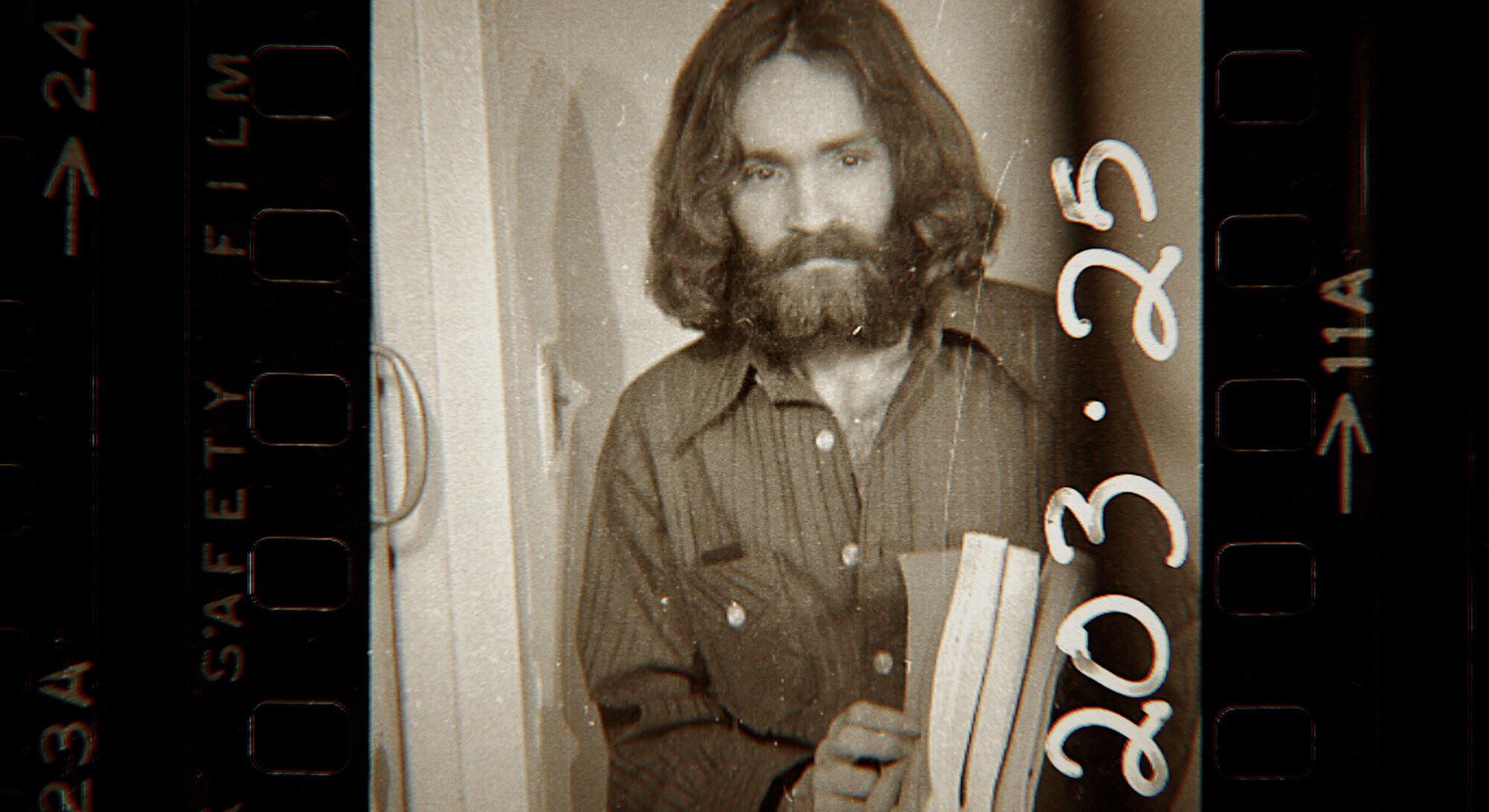
I knew it was ‘very bad’ with ‘that’ Charles Manson. I knew about the cult, the girls, and that horrific murder of Sharon Tate (stabbed to death eight months pregnant) but that women, especially women, committed these horrific murders, I learned from the new Netflix series Conversations With a Killer: The Manson Tapes.
Who was Charles Manson?
Charles, or Charlie as his girls called him, Manson was the man who had been in and out of prisons his whole life before he ever became a cult figure. Manson grew up without solid ground under his feet, his mother was still a teenager when he was born, and he spent most of his youth in juvenile facilities and later in prison for theft, fraud, and pimping. By the time he was released in the late sixties, he had learned how to read people and how to give them what they were missing. In San Francisco, in the midst of flower power and free love, he found a generation of young women who were looking for just that.
How did Charles Manson get the women to follow him?
This is the part that sticks with me the most. These girls were not separate, disturbed exceptions. They were daughters of respectable, ordinary families who were suddenly released into a world without boundaries at the end of the sixties. Parents who no longer knew what the rules were, children who ran away from home to a commune where someone finally saw them. Manson gave them exactly that feeling. He called it family, he called it love, and in the meantime, he broke them down piece by piece. Drugs, group sex, sleep deprivation, constant control over who spoke to whom and who could leave the house. By the time he asked them to kill, they were no longer independent thinking women he was directing, but people who had given up everything to belong to him.
Why did Charles Manson murder Sharon Tate?
The bitter irony is that it was probably not personal. Manson had a score to settle with Terry Melcher, a music producer who had previously rejected him for a record deal and who had lived at the address on Cielo Drive before Tate and Polanski moved in. Manson sent his followers to that house, partly to sow a climate of fear that, according to his delusion, was supposed to unleash a race war, partly just to show who had the power. Sharon Tate was eight months pregnant at the time and begged for the life of her unborn child. It didn't matter.
What sentences did the women of the Manson Family receive?
Susan Atkins, Patricia Krenwinkel, and Leslie Van Houten all received the death penalty, which was shortly thereafter commuted to life imprisonment when California temporarily abolished the death penalty. Atkins died in prison in 2009 from cancer, she was never released. Van Houten, who joined the Family as a teenager, was only released in 2023, after 53 years and dozens of denied parole applications. Krenwinkel, the longest-serving female prisoner in all of California, finally received a positive parole recommendation last year, although the final decision still lies with the governor. All three have publicly expressed regret at some point and stated that they were completely under Manson's influence at the time, which is still viewed with suspicion by the victims' relatives.
Who was Sharon Tate before her death?
Before she became the most famous victim of one of the most notorious murders ever, Sharon Tate was on her way to stardom. She was discovered as a model, had her breakthrough in Valley of the Dolls, and was considered one of the most promising actresses of her generation, with the beauty and talent to become Hollywood's next big name. She married director Roman Polanski in 1968, who was already celebrated for Rosemary's Baby at that time. Polanski survived the night of the murders because he was filming in London. His life after Tate's death remained marked by tragedy and scandal; in 1977 he was charged with the rape of a thirteen-year-old girl, after which he fled to Europe and has avoided the United States to this day.
What makes The Manson Tapes different from other Manson documentaries?
What sets The Manson Tapes apart from everything that has been made about this case is the 137 phone calls that Manson made in the last nine years of his life with a retired detective, never before made public. Director Joe Berlinger, known for previous installments in this series about among others Ted Bundy, who is considered one of America's most gruesome murderers, and Jeffrey Dahmer, concludes his entire true crime series with Manson. The real heart of the series, in my opinion, lies in the women who are still alive and are now telling their stories in detail for the first time, former Family members like Catherine Share and Dianne Lake who show from the inside how such a thing could happen. Civilized, nice, smart, strong women who still managed to be molded and broken.
What lingers after watching The Manson Tapes?
What stuck with me the most after watching is how malleable and fragile people actually are. If Charles Manson had had a normal childhood, surrounded by love instead of juvenile facilities and neglect, he probably would never have become the monster he became. And if the parents of these women had not completely let them go into communes, “from the moment we moved into the commune, I was no longer their child but a part of the commune,” they too would probably not have been so open to a sick man pretending to give love while he was actually manipulating and controlling them completely.
So: is The Manson Tapes worth watching?
Absolutely. Conversations With a Killer: The Manson Tapes is available on Netflix and is a must-see if you understand how convincing manipulation can look, and how thin the line is between a normal girl from an ordinary family and a murderer. Anyway, I'm all in. If you're just like me back from vacation and need to recover a bit, then this is the perfect binge-watching material.
Image: Netflix


