


The book that helps when you are grieving
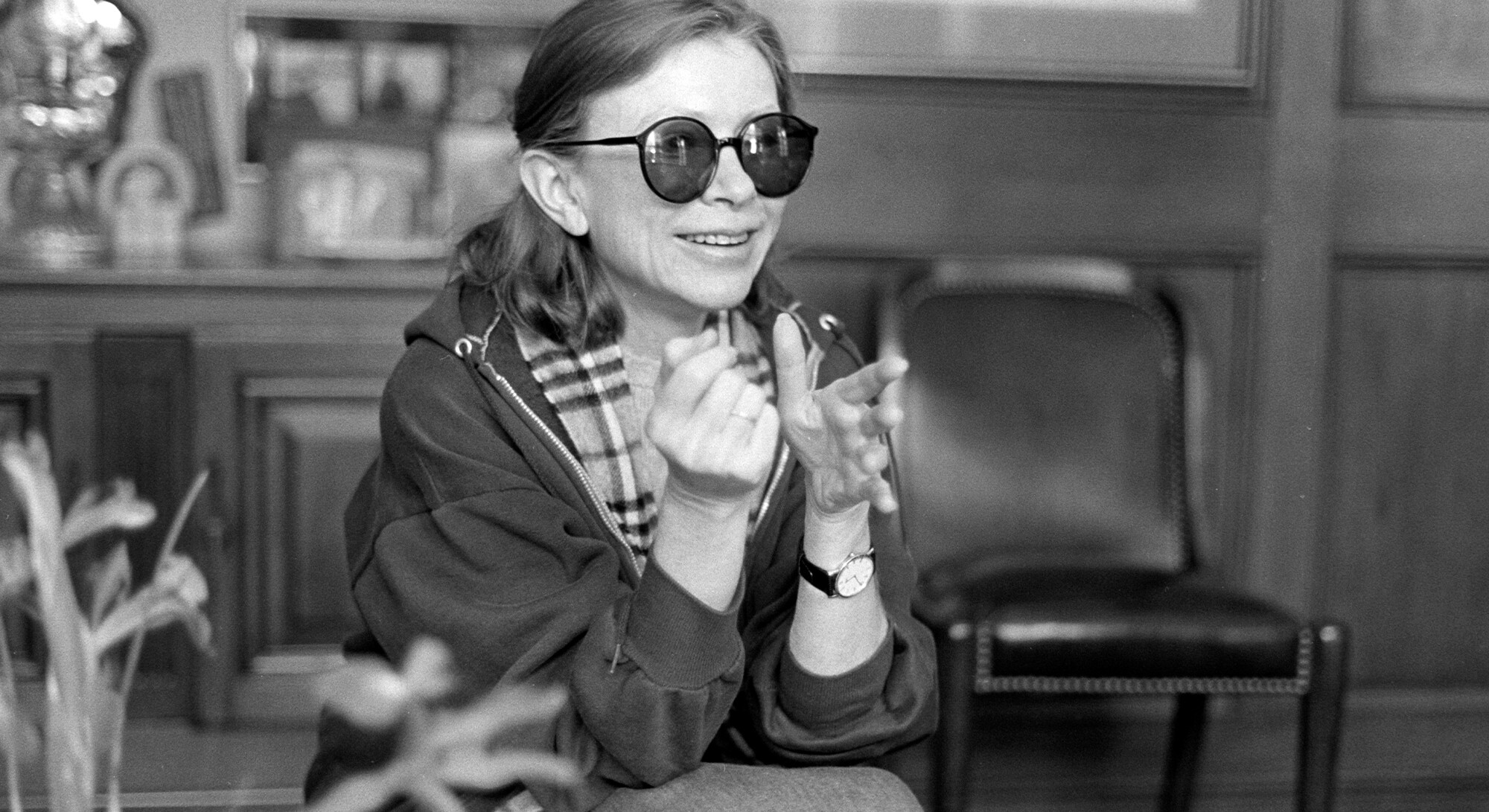
Deep sorrow, eventually we all experience it at some point. You can try to hide from it, but no one can escape it. If you are truly going through a valley of grief, the only thing that offers comfort is talking to people who understand you. Like-minded individuals. People who don't say stupid things, people who sometimes say nothing at all. Who just sigh with you and sometimes cry, but not harder than you do. And when those people are not around, fortunately, there is a book that does exactly that: The Year of Magical Thinking by Joan Didion.
I listened to Sheltering in Beauty, the podcast by Matthijs van Nieuwkerk in which he asks people about places or things that provide them comfort. In one of the episodes, Ellen Verbeek was a guest, who unexpectedly lost her husband last year during one of their many sailing trips. Ellen shared that she used to avoid ‘grief literature’ at all costs, but now that is the only thing she can take in. She can't read novels, nor listen to music, but she devours ‘griefcasts’ (which are indeed podcasts where people talk about grief) and books about people who have to miss a loved one. Her “favorite book,” and coincidentally Matthijs's as well, is The Year of Magical Thinking by Joan Didion, and that triggered me to dive into both the book and the author.
What is The Year of Magical Thinking about?
The Year of Magical Thinking It describes the year after Didion's husband, the writer John Gregory Dunne, collapsed at the dining table and died of a heart attack at the end of December 2003. When it rains, it pours, they say, and that proves to be true here as well. They had just returned home from the hospital, where their only daughter Quintana was in a coma in intensive care. Didion had to grieve while also keeping vigil by her child's bedside, and that impossible combination makes the book so poignant. The title refers to the ‘magical thinking’ she caught herself doing. She couldn't get rid of his shoes, because what if he came back, then he would need them. Her mind knew better, but the sorrow paid little attention to that.

Why does this book help when you are grieving?
What makes the book so comforting is that Didion does not offer comfort. She doesn't provide a step-by-step plan and doesn't promise that everything will be alright, because that simply isn't the case. She looks at her own distress with a journalistic eye, reads medical literature, analyzes her own thoughts, and writes everything down with a precision that is almost clinical, and precisely because of that, everyone who has ever lost someone recognizes themselves in it. The book won the National Book Award and was later adapted into a play featuring Vanessa Redgrave. A heartbreaking detail is that daughter Quintana passed away shortly before the book's release, about which Didion wrote years later Blue Nights .

How did Joan Didion start her career at Vogue?
Joan Didion wrote down everything she saw as a little girl. In her final year studying English at Berkeley, she won the “Prix de Paris,” an essay contest by Vogue, with a piece about William Wilson Wurster, who was not only an architect but also a professor at Berkeley. The grand prize was actually two weeks Paris (sounds delightful), but Didion wanted to go to New York and instead of the trip, asked for a job at Vogue. She was hired for 45 dollars a week. In the seven years that followed, she worked her way up from promotional copywriter to associate feature editor. Her famous essay On Self-Respect she wrote in 1961 to fill a gap in the magazine. It's bizarre how something very successful can be born out of necessity.

Why was Joan Didion so special?
At a time when female writers were expected to write about home, fashion, and relationships, Didion delved into the dark side of America. She wrote about the hippies in Haight-Ashbury, about the Manson murders, about the Black Panthers, and later about the war in El Salvador. She was mentioned in the same breath as Hunter S. Thompson and Tom Wolfe, the men of New Journalism, and did so with a cool, sharp pen that no one expected from her. She was small and slender, but precisely because of that, no one saw her coming, and she used that cleverly. A woman who never allowed herself to be pinned down to ‘women's topics,’ but also never let herself be used as a figurehead. Beautiful circle: at eighty, she became the face of a Céline campaign, with her sunglasses and black sweater. She passed away on December 23, 2021 (my birthday!) in New York, at the age of 87.
I ordered the book immediately. Not that I need it right now, but it seemed like a safe idea that if sorrow knocks at the door, there is a band-aid nearby. But now that I have dived even deeper into the Didion dossier, I think I might just start tonight.
Image: Getty images


